Implantation Bleeding or an Early Period? How to Tell the Difference
Implantation bleeding is light pink or brown spotting about 10 to 14 days after ovulation. How to tell it apart from a period, and when to test.

Four days before her period is due, a friend finds a smear of pale brown on the tissue. By the next morning there is nothing. She spends the rest of the week refreshing the same three websites. If you have been there, you already know how loud a few spots of blood can get when you are hoping for a positive test.
Implantation bleeding is light spotting that can happen when a fertilised egg settles into the lining of the womb. It is real, it is harmless, and it is also badly over-diagnosed on the internet. Plenty of women who spot before a period are simply having a light period. This guide covers what implantation bleeding actually looks like, how the timing works, and the one thing that will give you a straight answer instead of another week of guessing.
What implantation bleeding is
After fertilisation, the early embryo travels down the fallopian tube and burrows into the endometrium, the soft lining your body builds up every cycle. That lining is dense with tiny blood vessels. When the embryo attaches, a few of those vessels can break, and the small amount of blood released takes a day or two to make its way out. That delay is why the colour is usually brown or dusty pink rather than fresh red.
It is not a sign of anything going wrong, and it is not a mini period. It also does not happen to everyone. The Cleveland Clinic puts it at roughly one in four pregnancies, which means three out of four women who conceive never see a single spot. Not spotting tells you nothing at all.
Implantation bleeding vs your period
This is the comparison everyone wants, so here it is in one place.
| Implantation bleeding | A period starting | |
|---|---|---|
| Timing | About 10 to 14 days after ovulation, usually a few days before the period is due | On or near the expected date |
| Colour | Light pink, brown or rust | Starts brownish, turns bright or dark red within a day |
| Flow | Spotting only, seen on tissue or underwear. Does not soak a pad | Builds up and needs a pad |
| Duration | A few hours up to about two days | Usually four to seven days |
| Clots | None | Common |
| Cramps | Mild if present, milder than period pain | Familiar period cramping |
The single most useful line in that table is the flow one. Implantation bleeding gets lighter and stops. A period gets heavier. If you are unsure on day one, wait twelve hours and look again. Blood that is picking up pace is your period.
The timing, and why it trips people up
Implantation happens roughly 10 to 14 days after ovulation. In a textbook 28 day cycle, that lands somewhere between day 24 and day 28, so within a few days of when the period is expected. This is the whole reason the confusion exists. The spotting arrives almost exactly when you were already watching for blood.
Cycles in real life are rarely textbook. If you ovulate on day 19 instead of day 14, everything shifts by five days, and a stretch of anxious searching follows. Working from your actual ovulation date rather than the calendar makes the picture much clearer. Our free ovulation calculator maps your fertile window from your own cycle length, and if you have been tracking with LH strips you will already know the date. Our guide to ovulation signs and timing goes deeper into reading your own body's cues.
One important detail: spotting that shows up five or six days after ovulation is too early for implantation. That is more likely to be a small hormonal dip mid-cycle.
When to test after spotting
Here is the part that saves you money on tests. hCG, the hormone a home test looks for, only starts being produced after implantation. On the day you see the spotting, the level in your urine is often still too low for a strip to catch. Testing that evening is how women end up with a negative result and no peace of mind.
Wait three to four days after the spotting stops, then test on first morning urine, which is the most concentrated of the day. If you can hold out until the day your period is actually missed, the result is more reliable still.
Everything below is stocked and shipped in plain packaging with cash on delivery.
| Test | Type | Price |
|---|---|---|
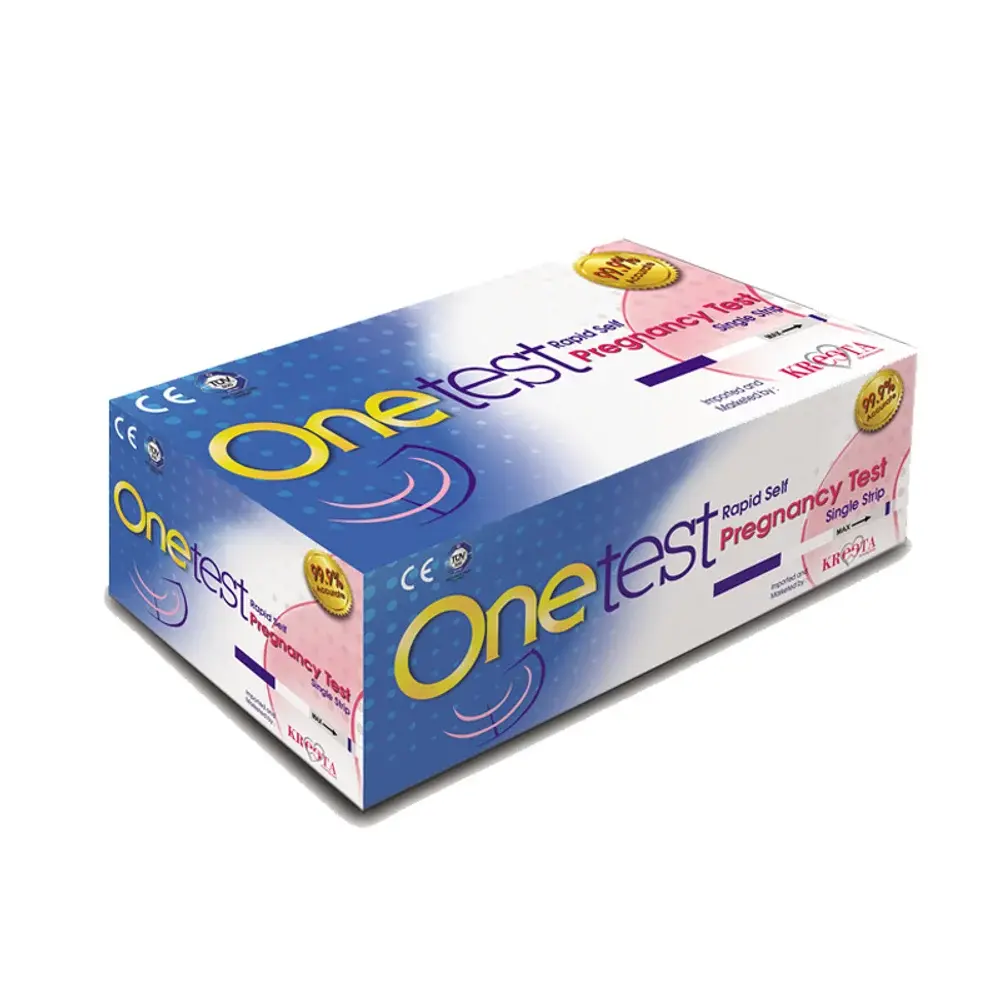
| Klimax One Test Pregnancy Strips (3 strips) | Dip strip | Rs 60 |
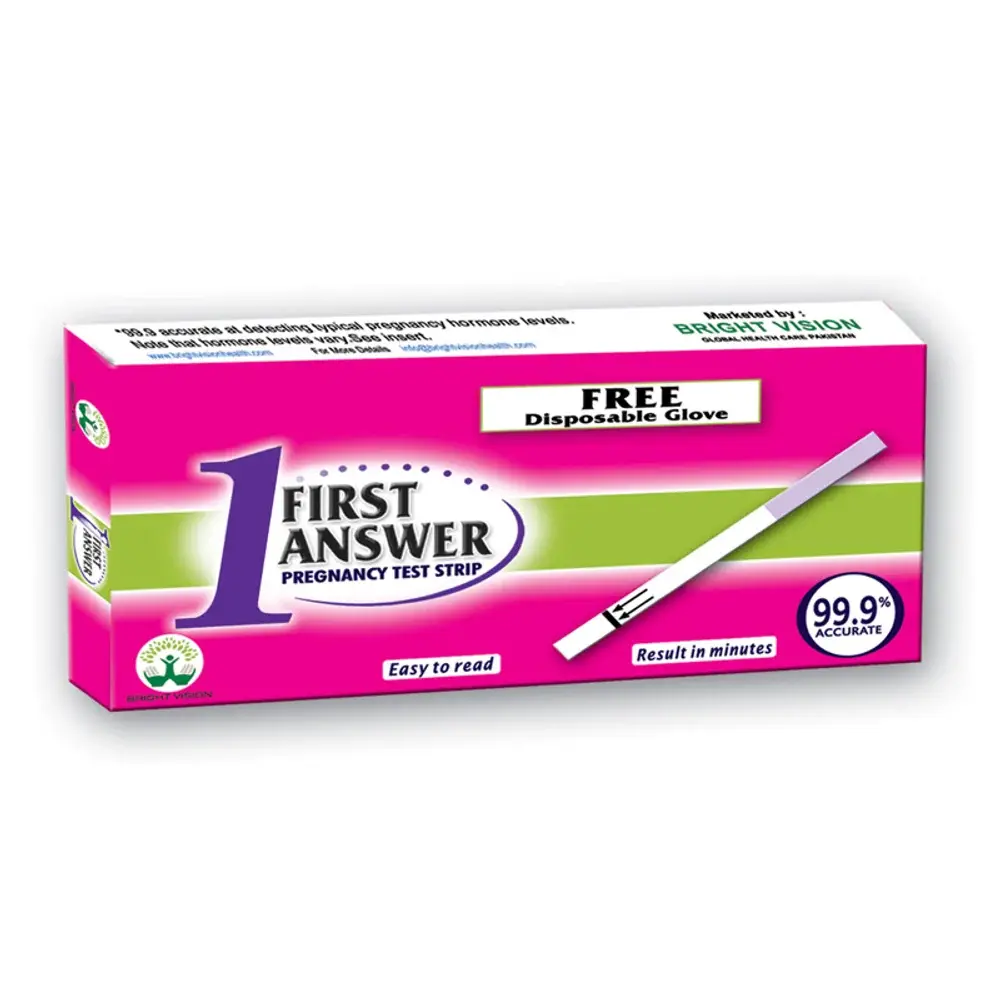
| Bright Vision First Answer Strip | Dip strip | Rs 80 |
| Yellow Pink Test Strips (pack of 5) | Dip strip | Rs 399 |
| Kreeta Klear Rapid Midstream Test | Midstream | Rs 390 |
| Ovulation + Pregnancy Combo Kit (7 LH + 2 hCG) | Strips | Rs 999 |
| Clearblue Rapid Detection (2 tests) | Midstream | Rs 4,999 |
| Clearblue Digital with Smart Countdown (3 tests) | Digital | Rs 7,999 |
Buying a three pack rather than one strip is the sensible move here, because you will almost certainly want to retest in a few days. The chemistry inside a cheap strip and an imported digital test is the same. What you pay extra for is a screen that says the word instead of a line you have to squint at. Our full pregnancy test guide covers how to use each format and how to read a faint line.
If the test is positive
Two lines, even a faint second line, counts. Start folic acid the same day if you are not already on it, and book an antenatal appointment. Our folic acid guide explains the dose, and the prenatal vitamins guide compares what is available locally. A complete pregnancy care bundle covers the first stretch in one order.
Then put your last period date into the free pregnancy calculator to get your due date, your current week and the scan schedule you should be following. Our roundup of early pregnancy symptoms is worth reading next, since implantation spotting is often the first of several changes you will notice in the coming fortnight.
Other reasons for spotting before a period
Most spotting is not implantation. Common causes worth ruling out:
- Ovulation spotting. A brief hormonal dip mid-cycle, roughly two weeks before the period, can cause a spot or two.
- Hormonal imbalance. Thyroid trouble, PCOS or a short luteal phase all cause erratic spotting. Our guide to hormonal imbalance in women covers the tests worth asking for.
- Contraception. Breakthrough bleeding is normal in the first three months on the pill, and after an emergency pill.
- Infection. Cervical or vaginal infection can cause spotting, often with discharge, itching or burning. See our notes on white discharge and on urine infections.
- Stress, travel or sudden weight change. Any of these can push ovulation later and make a cycle behave strangely. Our piece on irregular periods goes through the pattern.
When to call a doctor rather than reach for a test
Light spotting that stops on its own does not need a clinic visit. Some things do, and quickly. The NHS lists these as reasons for urgent care: bleeding heavy enough to soak a pad soon after putting it on, severe abdominal pain, pain in one shoulder, or feeling faint and dizzy. Shoulder tip pain with bleeding is the classic sign of an ectopic pregnancy and needs emergency attention the same day, not an appointment next week.
Also call your gynaecologist if spotting keeps repeating cycle after cycle, if bleeding comes after intercourse every time, or if you have had a positive test and then start bleeding with cramps. Our guide to miscarriage signs explains what that last one can mean and what happens at the clinic.
Quick answers
How many days does implantation bleeding last?
A few hours to about two days. Anything running past three days and building in flow is a period or something else.
Can implantation bleeding be bright red?
It can be, briefly, if the blood exits quickly. Bright red that continues for more than a few hours is more likely to be a period.
Can there be clots?
No. Clots point to a period or to something that needs checking.
Can I take a test during the spotting?
You can, but a negative at that point means very little. Retest three to four days later.
Does implantation bleeding hurt?
Some women feel mild pulling or a dull ache low in the abdomen. It should be gentler than period pain. Sharp one-sided pain is not normal and needs a doctor.
The short version
Watch the flow rather than the colour. Something that stays light and stops within two days, arriving a few days before your period was due, fits implantation. Something that builds fits a period. Either way the argument settles itself in about four days. Keep a strip in the drawer and test on a morning when the answer will actually mean something.
This article is for education and does not replace medical advice. Reviewed for accuracy by our medical review board.
Liked this one? Get the next in your inbox.
One fortnightly note from the editors, new pieces, restocks, and the routines we're actually using. Unsubscribe any time.