Duphaston Tablet Uses in Pakistan: What It Treats, Doses and Side Effects
Duphaston tablet uses explained: what dydrogesterone treats, the dose schedules on the label, its side effects, and what the evidence shows in pregnancy.

Someone hands you a strip of small white tablets after a scan, says take two a day, and the appointment is over. You get home, turn the foil over, and it says Duphaston. Nobody explained what it is, what it is supposed to do, or when you stop.
Duphaston is one of the most prescribed tablets in Pakistani gynaecology clinics and one of the least explained. Here is what the label says it treats, the dose schedules printed on it, and what the research has and has not shown for the early pregnancy use it is most often handed out for.
What Duphaston is
The active ingredient is dydrogesterone. Abbott, which makes Duphaston, describes it as "a type of progestogen, a hormone similar to the naturally occurring progesterone in the body". It comes as a 10 mg film-coated tablet and a 20 mg modified-release tablet.
Progesterone is the hormone your ovary makes after you ovulate. Its job is to turn the lining of your uterus into something a pregnancy can implant into, then hold that lining steady until either a pregnancy takes or the hormone falls away and you bleed. Dydrogesterone stands in when your own supply is low, or when a doctor wants control over when the lining sheds.
The UK summary of product characteristics for dydrogesterone 10 mg calls it an orally active progestogen that "causes full secretory transformation of the estrogen-activated endometrium", and notes it "has no estrogenic, androgenic, thermogenic, anabolic or corticoid effects". Put plainly, it works on the uterine lining without the extra hormonal baggage some older progestogens carry, which is much of why it is prescribed so freely.
Duphaston tablet uses on the label
Abbott's patient leaflet for Duphaston 10 mg and the dydrogesterone SmPC frame the indications the same way: conditions linked to a shortage of progesterone. The table below is what those documents state, not a prescription. Your doctor may use a different schedule for a reason specific to you, and the instruction on your own strip is the one to follow.
| What it is prescribed for | What the label states |
|---|---|
| Painful periods (dysmenorrhoea) | 10 mg twice daily, days 5 to 25 of the cycle |
| Irregular cycles | 10 mg twice daily, days 11 to 25 |
| Premenstrual syndrome | 10 mg twice daily, days 12 to 26 |
| Endometriosis | 10 mg two or three times daily, days 5 to 25 or continuously |
| Heavy or dysfunctional bleeding, to stop an episode | 10 mg twice daily for 5 to 7 days |
| Heavy or dysfunctional bleeding, to stop it returning | 10 mg twice daily, days 11 to 25 |
| Secondary amenorrhoea (periods that have stopped) | 10 mg twice daily, days 11 to 25, with an oestrogen prescribed alongside |
| Infertility from luteal insufficiency | 10 mg twice daily, days 11 to 25, for at least three cycles |
| Hormone replacement therapy, with an oestrogen | 10 mg daily for the last 14 days of a 28 day cycle |
Abbott's global product page adds threatened or habitual miscarriage to that list. That use gets its own section below, because it is the one Pakistani women are most often handed Duphaston for and the one where the evidence needs care.
Why days 11 to 25 keeps appearing
Those numbers are not arbitrary. They cover the second half of a textbook 28 day cycle, the stretch after ovulation when your own progesterone should be doing the work. If your cycle is shorter or longer than that, the calendar shifts, which is why your doctor's start day may not match the number on a leaflet.
Day 1 is the first day of proper bleeding, not the brown spotting the day before. Getting that wrong throws the schedule off, and it is the commonest mistake women make with cycle-timed tablets. Our ovulation calculator will map your own cycle days, and if the phrase luteal phase is new to you, this guide to the luteal phase explains what should be happening in it.
Duphaston in early pregnancy: what the research shows
This is the part worth reading slowly. Duphaston is very commonly given to women here who start bleeding in the first trimester, and the hope attached to it is enormous. The research is more mixed than the prescription makes it feel.
A Cochrane network meta-analysis of progestogens for preventing miscarriage, covering seven randomised trials and 5,682 women, concluded that dydrogesterone "probably makes little or no difference to the live birth rate when compared with placebo" in threatened miscarriage: moderate-certainty evidence from one trial of 406 women, risk ratio 0.98, confidence interval 0.89 to 1.07 (Devall and colleagues, Cochrane Database of Systematic Reviews, 2021).
A later network meta-analysis of 18 randomised trials, in the International Journal of Gynecology and Obstetrics, came out more favourably. Oral dydrogesterone lowered the odds of miscarriage against placebo (odds ratio 0.5, confidence interval 0.32 to 0.76) and against vaginal progesterone in women with a first threatened miscarriage. That same analysis found no significant difference between any progestogen and placebo for live birth (Zhao and colleagues, 2024).
Read those two together and the honest summary is this. The tablet is well tolerated, the miscarriage signal shows up in some analyses and not others, and the outcome that actually matters to you, a baby in your arms, has not been shown to improve. That does not make taking it wrong. It does mean it is fair to ask your doctor why it is being used in your case, rather than assuming it is the thing holding the pregnancy together.
The hardest fact, worth saying gently, is the NHS position that "a miscarriage cannot be stopped once it has started". Most early miscarriages happen because of a problem with how that particular pregnancy was developing, and no tablet changes that. If you are bleeding in early pregnancy you need a scan and a doctor, not reassurance from a strip of foil. Our guide to miscarriage signs and what happens next covers that appointment.
Duphaston after IVF or IUI
The strongest evidence for dydrogesterone sits somewhere most people do not look: luteal phase support in fertility treatment. In the LOTUS II trial, 1,034 women undergoing IVF at 37 centres took either oral dydrogesterone 30 mg daily or 8% micronised vaginal progesterone gel. Fetal heartbeat at 12 weeks was present in 38.7% of the oral group and 35.0% of the gel group, with live birth rates of 34.4% and 32.5% (Griesinger and colleagues, Human Reproduction, 2018). A later pooled analysis of individual participant data found higher ongoing pregnancy and live birth odds with the oral tablet (PLoS One, 2020).
Worth knowing when you weigh that up: both studies were funded by Abbott and several authors were Abbott employees, which the papers disclose. The practical appeal holds anyway. A tablet you swallow is easier to keep taking for twelve weeks than a vaginal gel, and compliance is half the battle in a cycle you have paid a great deal for. If you are costing out treatment, our guides to IUI in Pakistan and IVF costs set out the rest of the bill.
Four things Duphaston does not do
It is not a contraceptive. Contraception appears nowhere in the indications on either the SmPC or Abbott's leaflet. If you are taking it in the second half of your cycle and having unprotected sex, you can conceive.
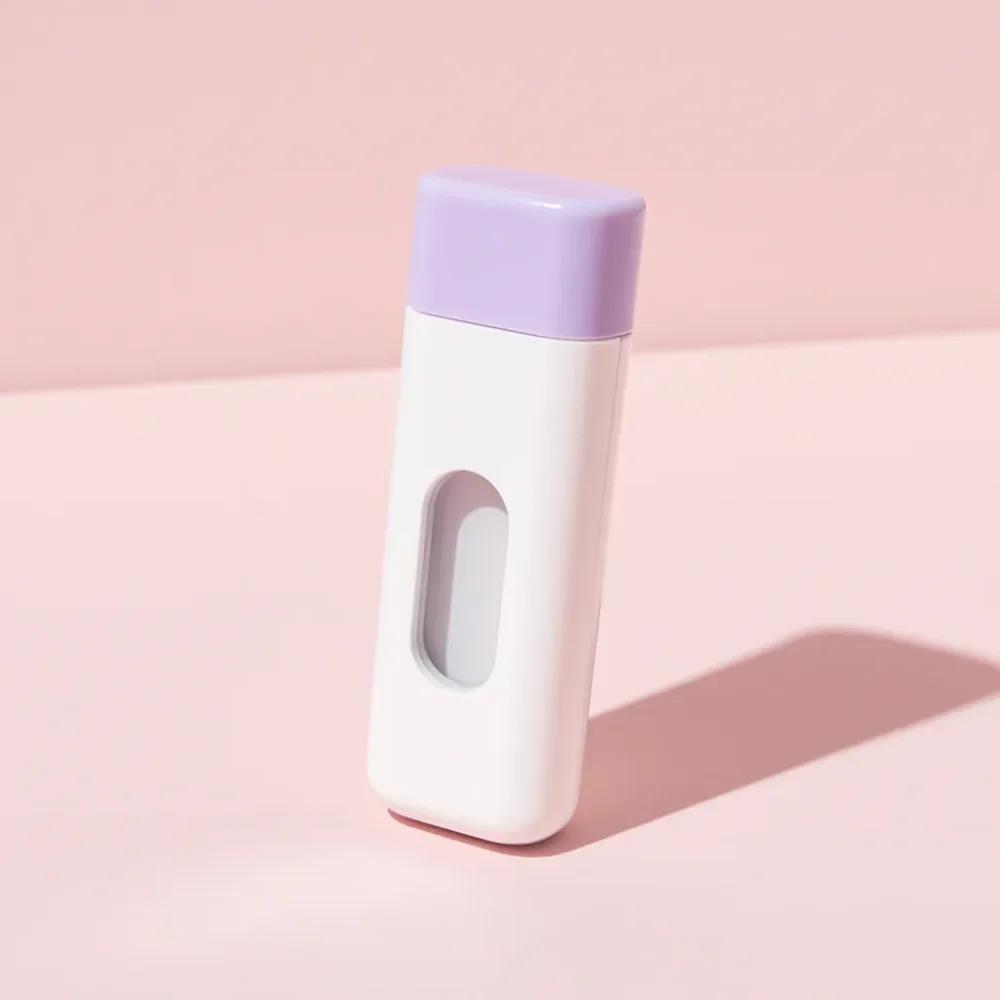
It will not bring on a period if you are pregnant. Women often take a progestogen expecting a withdrawal bleed, get nothing, and assume the tablet failed. Test before you assume. A midstream pregnancy test (Rs 250) detects hCG at a sensitivity of 25 mIU/ml, reads in three to five minutes, and is over 99 percent accurate in lab testing from the first day of a missed period.
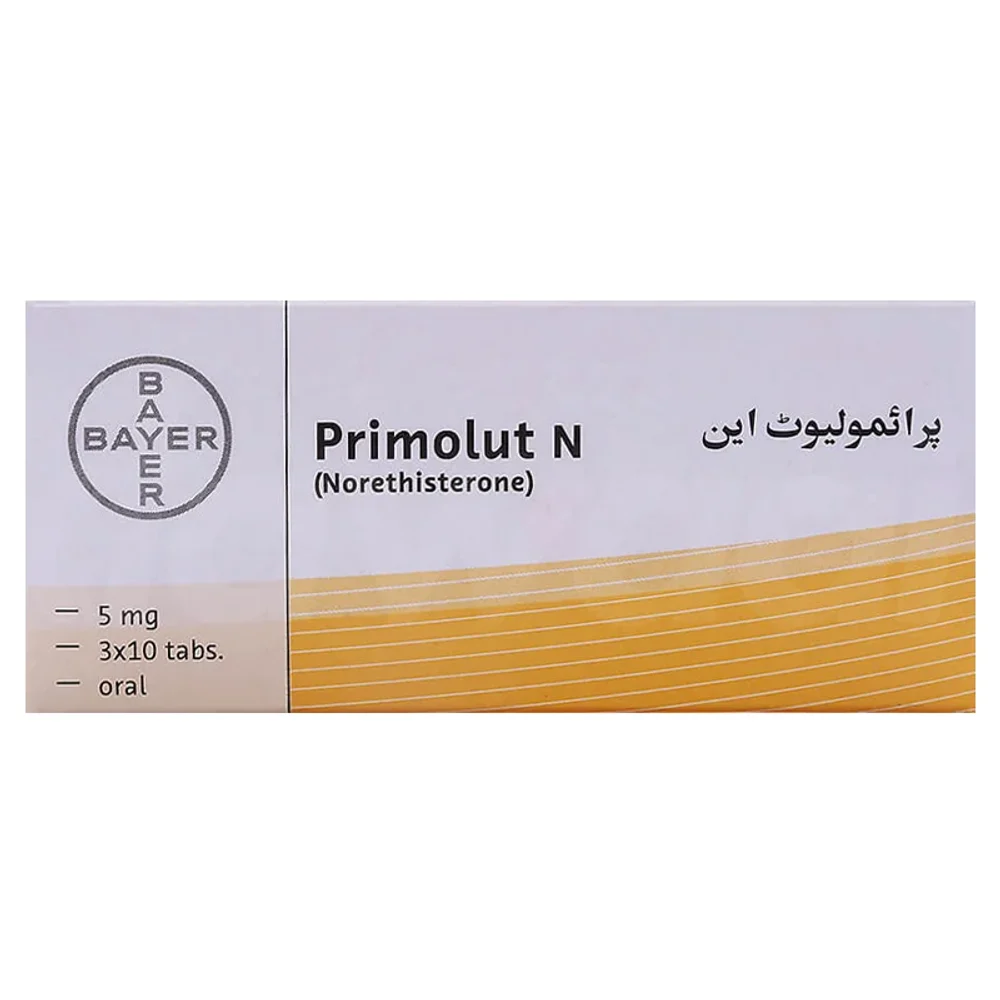
It is not the same as Primolut-N. The two get confused constantly here, because both are progestogen tablets prescribed around periods. Primolut-N (Rs 410) is norethisterone 5 mg from Bayer, a box of 30 tablets in three strips, prescribed mainly to postpone a period for Umrah, a wedding or exams, and for heavy or painful periods. Different molecule, different job, and like Duphaston it is a prescription medicine, so the dose and start day come from your doctor.
It does not make you ovulate. Dydrogesterone supports the second half of the cycle. It does not trigger the release of an egg, so it is no substitute for ovulation induction if that is what your cycles need.
Side effects and who should not take it
The SmPC classes these as common, affecting between 1 in 100 and 1 in 10 women: headache and migraine, nausea, breast pain or tenderness, and menstrual changes including breakthrough bleeding, heavier periods, or periods stopping altogether. Abbott's leaflet also warns you may feel slightly sleepy or dizzy, and says not to drive if that happens.
The labelling lists these as reasons not to take it: known hypersensitivity, progestogen-dependent tumours such as meningioma or a history of one, vaginal bleeding your doctor has not investigated, severe liver disease or liver tumours, and thromboembolic disease. Abbott's leaflet says not to take Duphaston while breastfeeding.
One honest wrinkle. Labelling differs between markets. The UK-licensed dydrogesterone SmPC says the product "is not authorised for use in pregnancy", while Abbott's own Duphaston materials list threatened and habitual miscarriage among its uses and note that more than ten million pregnancies have been exposed to dydrogesterone with no signal of harm. Both statements are on the record, and your prescription follows what is approved in Pakistan. It is a fair thing to ask your doctor directly.
What to ask before you start the strip
Four questions cover most of it:
- What is this treating in my case, specifically?
- Which cycle day do I start, and how many days do I take it?
- What should happen when I stop, and by when?
- If it works, what is the plan after this course?
That last one matters most. If you were given Duphaston for irregular periods, it controls the bleeding pattern while you take it but does not touch the reason your cycles are irregular. PCOS, thyroid problems and raised prolactin are the usual culprits here, and each is confirmed with a blood test rather than guessed at. Our guides to irregular periods, PCOS and hormonal imbalance go through what to ask for.
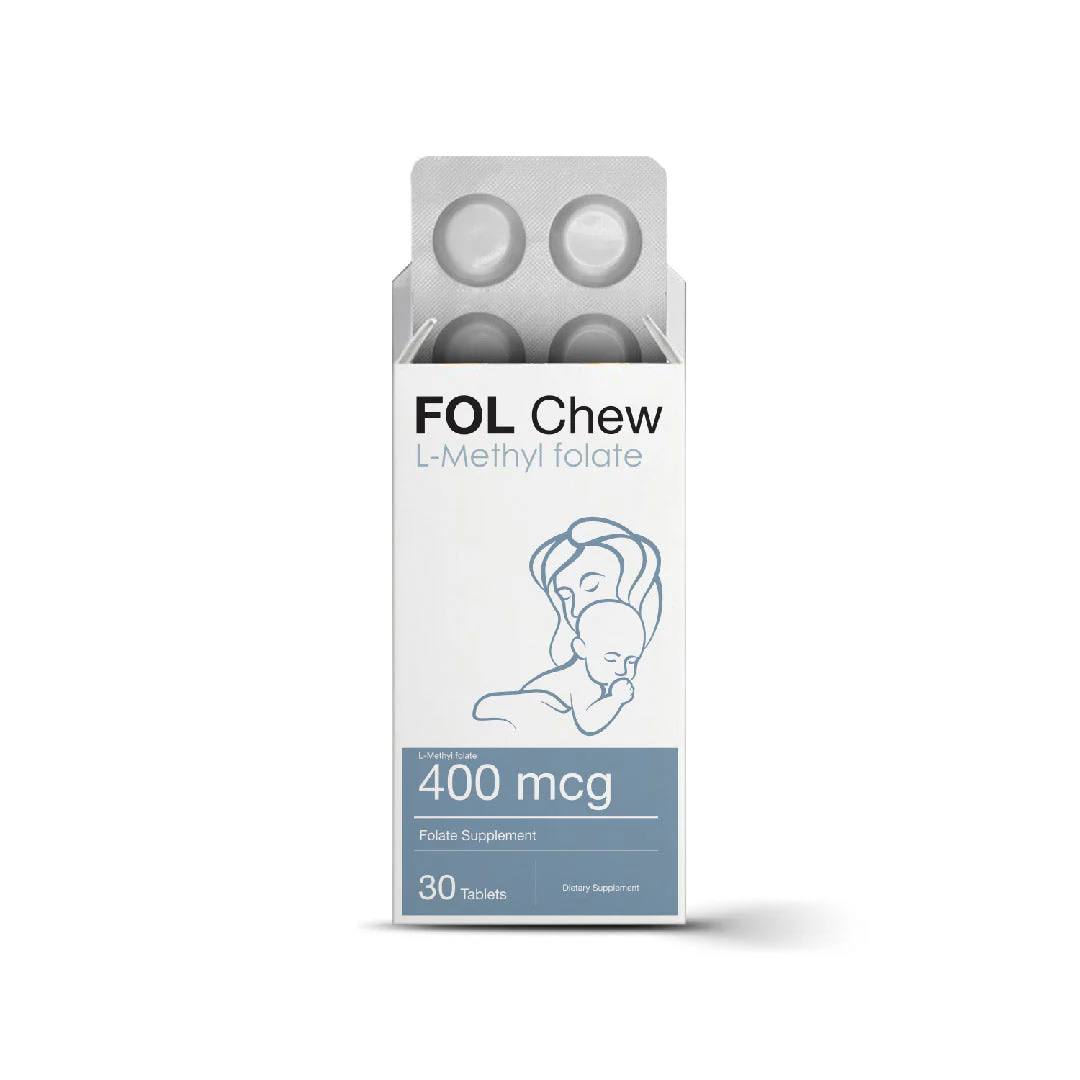
If you are on it because you are trying to conceive, get folate in place at the same time. FOL Chew (Rs 485) is a chewable tablet with 400 mcg of L-methylfolate, the active form, which skips a conversion step some people cannot carry out efficiently. Once you do see two lines, our pregnancy calculator will date the pregnancy from your last period.
Duphaston is a well tolerated tablet with real jobs it does well, particularly in fertility treatment and in controlling problem bleeding. It is not a charm against miscarriage, and it is not a diagnosis. Take it as prescribed, then ask the question the strip cannot answer: what is causing this in the first place?
Liked this one? Get the next in your inbox.
One fortnightly note from the editors, new pieces, restocks, and the routines we're actually using. Unsubscribe any time.