IUI Treatment in Pakistan: Procedure, Cost and Honest Success Rates
IUI treatment cost in Pakistan for 2026: what one cycle really runs, who the procedure suits, and the success rates clinics rarely print.
If a doctor has mentioned IUI to you, you are probably somewhere between hope and confusion right now. Hope, because it is the most affordable fertility procedure there is. Confusion, because most of what you find online is either a clinic advertisement or an American article quoting prices in dollars. Here is what IUI (intrauterine insemination) actually involves, who it genuinely helps, what it costs in Pakistan, and the honest success numbers no billboard will print.
Shop the picks in this guide (5)
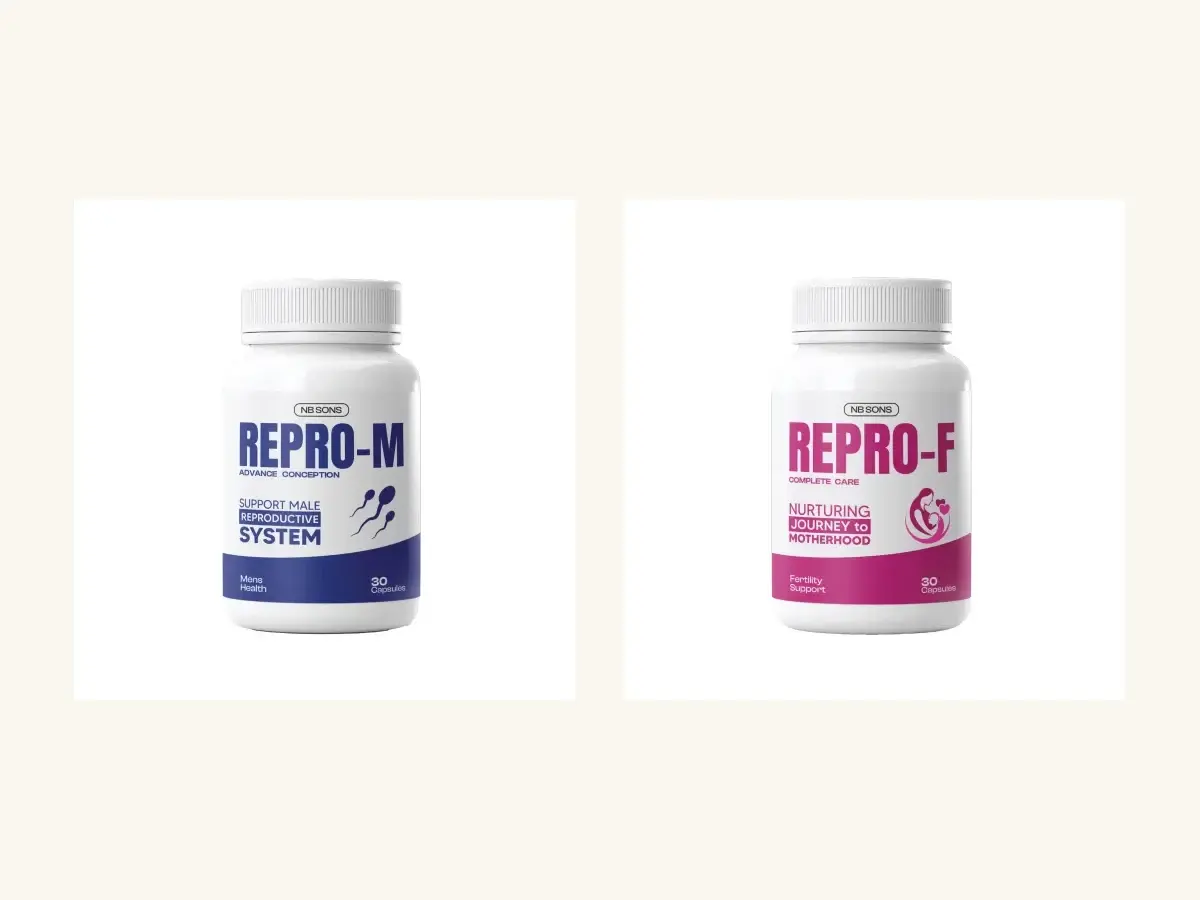
- Trying-to-Conceive Couple's Pack (Repro-M + Repro-F), Rs 2,290, the three-month preparation most couples start with, one box for him and one for her
- Ovulation + Pregnancy Test Combo Kit (7 LH + 2 hCG), Rs 999, for tracking your own cycle before the first clinic appointment
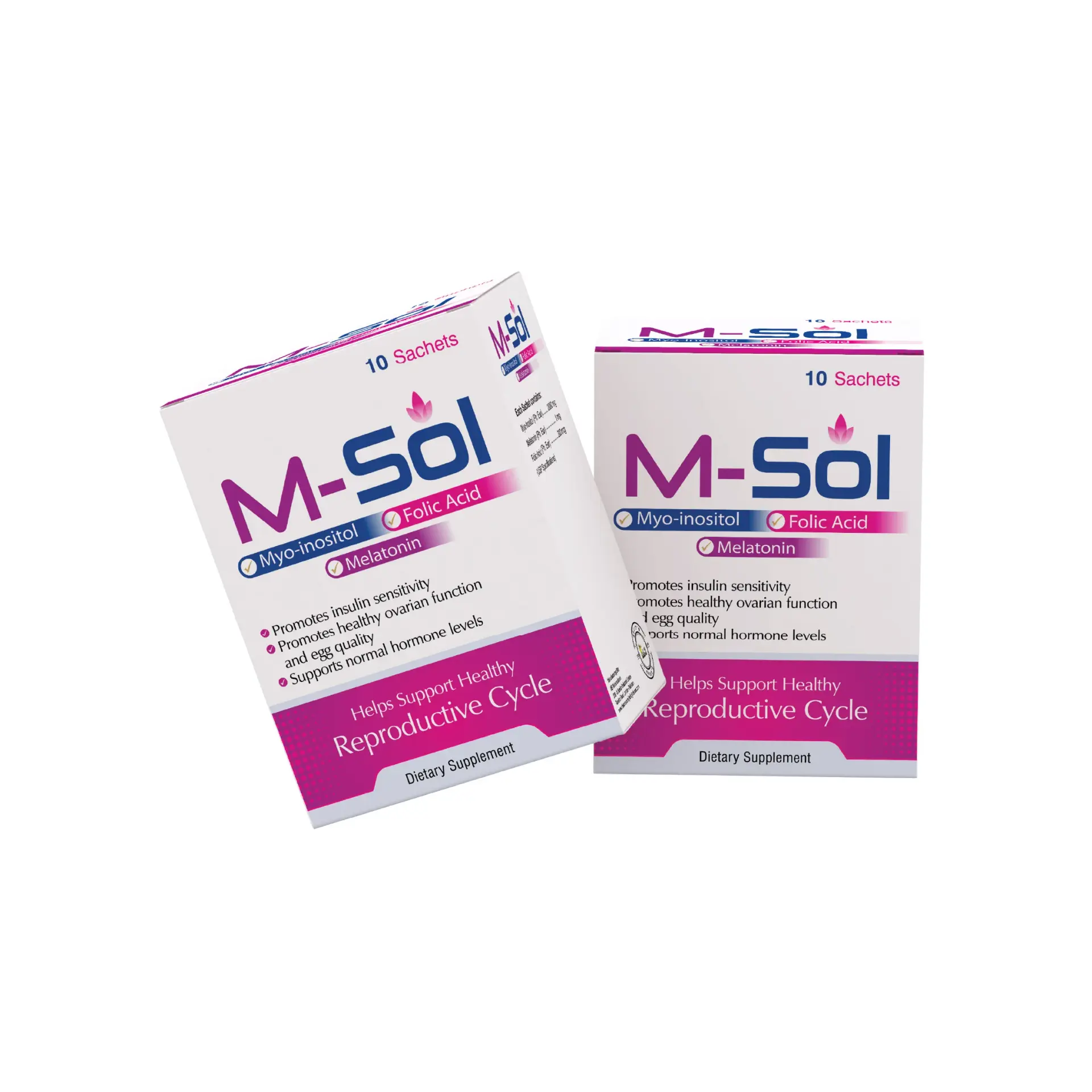
- M-Sol Myo-Inositol Sachet, Rs 950, for her if cycles are irregular or PCOS is in the picture
- Repro-M Men's Fertility Supplement, Rs 1,300, for him on his own if she is already taking a prenatal
- FOL Chew Chewable Folate, Rs 485, active folate for the months before conception
What IUI actually is
IUI is a simple idea: give the sperm a head start. On the day you ovulate, a prepared sperm sample is placed directly inside the uterus with a thin, soft tube. That is the whole procedure. No operation, no anesthesia, no egg collection, no lab-made embryos. The sperm still has to swim to the egg and fertilise it on its own, which is why doctors describe IUI as assisted natural conception rather than artificial conception.
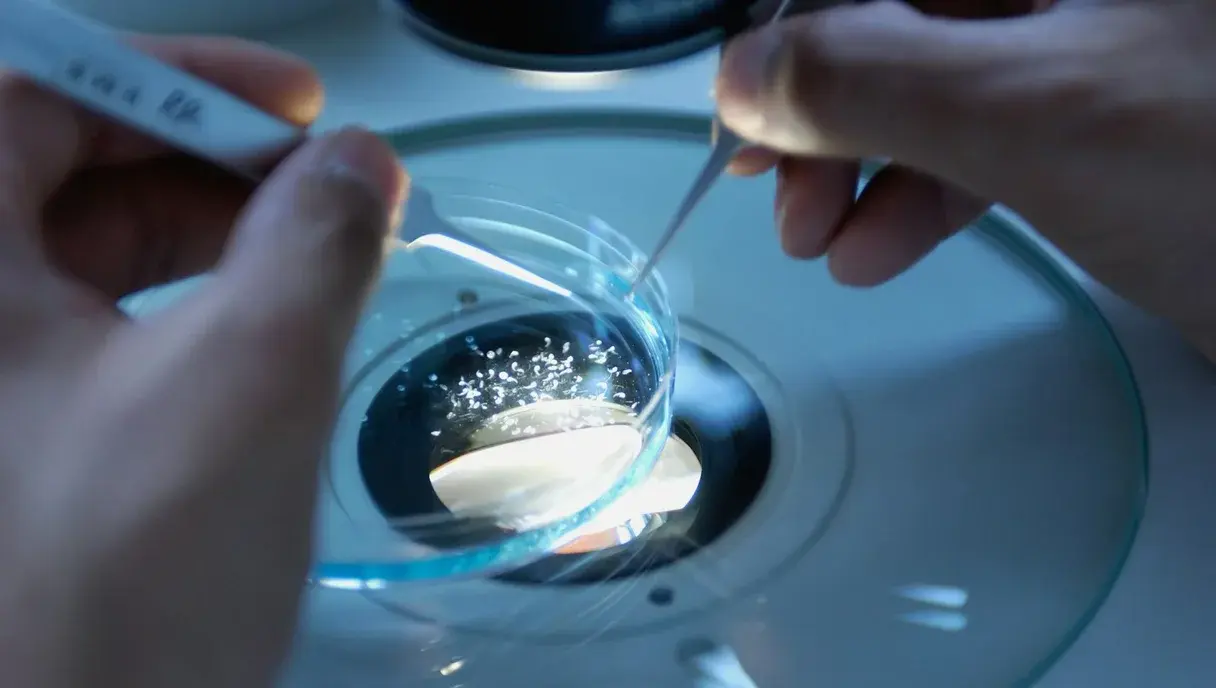
The "prepared" part matters. Before the insemination, the lab washes the semen sample: it concentrates the sperm and removes the seminal fluid, which the American Society for Reproductive Medicine notes can cause cramping if it is put into the uterus. So the uterus receives a selected team rather than the whole crowd, placed past the cervix, which for some couples is exactly the barrier that was causing trouble.
Who IUI helps (and who it cannot)
IUI has a specific job description. ASRM lists unexplained infertility as the most common reason it is used, along with cervical problems that stop sperm getting through, difficulties with ejaculation, and cycles where ovulation has to be brought on with medication, which is where PCOS usually comes in. Mild male factor, where count or motility is somewhat low but not severely so, is the other common reason a Pakistani doctor will suggest it.
On timing: ASRM advises starting a fertility workup after a year of trying, or after about six months if the wife is 35 or older, so as not to delay treatment that may be needed. Donor sperm is not an option here on religious and legal grounds, so in Pakistan IUI is always done with the husband's sample.
IUI cannot help when the fundamentals are missing. Blocked fallopian tubes are the clearest case: the sperm and egg physically cannot meet, and no amount of better placement fixes that. Severe male factor infertility, significant endometriosis, and very low egg reserve also respond poorly. This is why doctors order tests before recommending it: a tube patency test for her, and a semen analysis for him.
Skipping the tests and going straight to IUI is how couples spend three cycles' worth of money on a procedure that never had a chance. If you are still at the stage of working out whether anything is wrong, our free two-minute fertility quiz is a sensible place to start before any clinic visit.
The procedure, step by step
A typical IUI cycle runs about two weeks and looks like this. Days 2 to 5 of the period: the doctor may start ovulation-stimulating medication, usually tablets, sometimes injections, to mature one or two follicles. Around day 10 to 12: one or two ultrasounds track follicle growth. When a follicle reaches size, a trigger injection sets ovulation for a known time, and the insemination is booked for the window when ovulation is expected, usually the next day or two.
On the day: the husband gives a sample after the abstinence gap the clinic asks for, normally a few days, and the lab prepares it, which ASRM says can take up to two hours. The doctor then passes a soft catheter through the cervix and releases the sample into the uterus. It takes a few minutes, feels like a Pap smear, and you rest for a short while and go home the same day.
No bed rest is required afterwards, whatever the aunties say; normal life does not shake the sperm loose.
Two weeks later, a blood pregnancy test gives the answer. Tracking your cycle beforehand helps the timing conversation with your doctor; our ovulation calculator and an at-home ovulation and pregnancy test kit make that easier if you have irregular cycles and want data to bring to the first appointment.
IUI cost in Pakistan (2026)
Prices vary by city and clinic tier. These ranges come from published rates at fertility centres and doctor listing platforms, collected in August 2026 and spot-checked against clinic price pages in September 2026. Clinic pricing moves and packages differ, so confirm the total in writing before you book.
| Item | Typical cost | Notes |
|---|---|---|
| Initial consultation | Rs 1,000 to 8,000 | Higher end is senior specialists in Lahore and Karachi |
| Pre-IUI tests (semen analysis, ultrasounds, tube test) | Rs 8,000 to 25,000 | Often already done during workup |
| IUI procedure alone | Rs 25,000 to 50,000 | Includes sperm washing and insemination |
| Full cycle with medication and monitoring | Rs 45,000 to 55,000 | The number most clinics quote |
| Three cycles (realistic planning figure) | Rs 135,000 to 165,000 | Simple arithmetic on the full-cycle range above |
IVF costs several times that per cycle, which is why doctors often try IUI first when the case suits it. We do not print an IVF number here, because clinic packages differ so much that any single figure misleads; what drives the bill up or down, and when going straight to IVF is actually the cheaper path, is in our IVF cost in Pakistan guide.
Success rates: the honest numbers
Published studies are more sober than clinic billboards. A review of 1,437 IUI cycles found a pregnancy rate of 10.9% per cycle and 19.4% cumulatively across the couples treated, and a separate series reported 8.5% clinical pregnancies per cycle. So think in terms of roughly one cycle in ten working, not one in three. Any clinic advertising a 50% single-cycle rate is counting something else.
Age moves those odds more than anything the clinic does. In that second series, women under 40 had a 9.3% clinical pregnancy rate per cycle against 2.5% at 40 and over. The same paper concludes that three to four IUI cycles is a reasonably cost-effective run before moving to higher-complexity treatment.
Worth knowing how the cumulative number is built: the per-cycle chance does not improve with repetition, so the odds add up only because you are buying more attempts, and in the larger study 95% of couples had stopped by the third cycle. If the wife is in her late thirties, that conversation about IVF should happen sooner rather than after cycle six.
What can you do to help the odds? The boring things work best, and they need a runway: sperm take roughly three months to mature, so preparation started now shows up in the sample three months from now. That means no smoking, decent sleep, weight in a healthy range, and a daily antioxidant routine for both partners.
Many couples use a combined preparation like the Trying-to-Conceive Couple's Pack, which puts Repro-F (folic acid, iron, inositol) with her and Repro-M (maca, L-carnitine, CoQ10 and antioxidants) with him. If her cycles are irregular or PCOS is part of the picture, M-Sol myo-inositol sachets are the usual addition on the ovulation side, and FOL Chew covers active folate on its own if she is not taking a full prenatal yet.
These support the preparation; they do not treat a fertility diagnosis, so ask your doctor what fits your specific case.
Choosing a clinic without getting fleeced
Three questions separate serious fertility centres from IUI mills. First, will you do a semen analysis and confirm my tubes are open before recommending IUI? A no, or a shrug, means walk away. Second, what is your per-cycle success rate for couples like us, and how do you count it? A clinic that answers with a specific, modest number is being honest; one that says 50% is not.
Third, what is the total cost including medication and monitoring? Get it in writing; the Rs 35,000 headline price that becomes Rs 60,000 by insemination day is a known move. Established centres now operate in Lahore, Karachi, Islamabad, Multan and Peshawar, and enough of them quote over the phone that comparing two or three before you commit is worth the afternoon.
Frequently asked questions
Is IUI painful?
Mostly no. The catheter passing the cervix can cause a brief cramp, similar to strong period pain for a few seconds, and some women have light cramping for a day after. No anesthesia is needed and you walk out within the hour.
How much does one IUI cycle cost in Pakistan?
Between Rs 45,000 and Rs 55,000 for a complete medicated cycle at established centres, covering monitoring, sperm washing and the insemination itself. The bare procedure without medication runs Rs 25,000 to 50,000 depending on city and clinic. Those are published rates checked in August 2026 and spot-checked in September 2026; see the 2026 table above for the full breakdown and get your own quote in writing.
How many IUI attempts should we try before IVF?
Three to four cycles is the run the published cost-effectiveness data supports. Repeating does not raise the odds of any single cycle, so the cumulative chance climbs only by paying for more attempts. If the wife is in her late thirties, or three well-timed cycles have failed, the usual advice is to discuss IVF rather than repeating IUI indefinitely, because the money spent on cycles five and six usually buys better odds put toward IVF.
Is IUI allowed in Islam?
IUI using the husband's sperm within a valid marriage is considered permissible by mainstream scholars of all major schools in Pakistan, since no third party is involved. Donor sperm is not permitted. If this weighs on you, discuss it with a scholar you trust; clinics here work within these boundaries as standard practice.
Can we do anything at home instead of IUI?
If your tests are normal and the issue is timing, yes: many couples conceive by accurately timing intercourse to ovulation for a few months. Learn the signs in our guide to ovulation signs and timing, and an ovulation and pregnancy test kit takes the guesswork out of the fertile window. IUI earns its cost when timing alone has already failed or a specific barrier exists.
Does IUI increase the chance of twins?
The insemination itself does not, but the medication used to stimulate the ovaries can. ASRM reports that with injectable gonadotropins, used alone or with IUI, up to 30% of pregnancies involve twins or more, against 1% to 2% of pregnancies conceived naturally. Tablets are the milder option and the usual starting choice here. Good monitoring is the safeguard: if too many follicles develop, the doctor may cancel that cycle.
If you are three months out from a cycle, or still deciding, the useful thing to do today is start the preparation for both of you. The Trying-to-Conceive Couple's Pack is the simplest way to do that in one order, and the rest of the range sits in women's health and men's health. Cash on delivery across Pakistan, and delivery is free on orders over Rs 5,000 in Punjab.
This article is for education and does not replace medical advice. Speak to a doctor or pharmacist about your own situation.
Liked this one? Get the next in your inbox.
One fortnightly note from the editors, new pieces, restocks, and the routines we're actually using. Unsubscribe any time.