Ovulation Kit in Pakistan: How to Use It and When to Test
How to use an ovulation kit at home in Pakistan: when to start testing, how to read the lines, PKR prices, and why PCOS causes false positives.
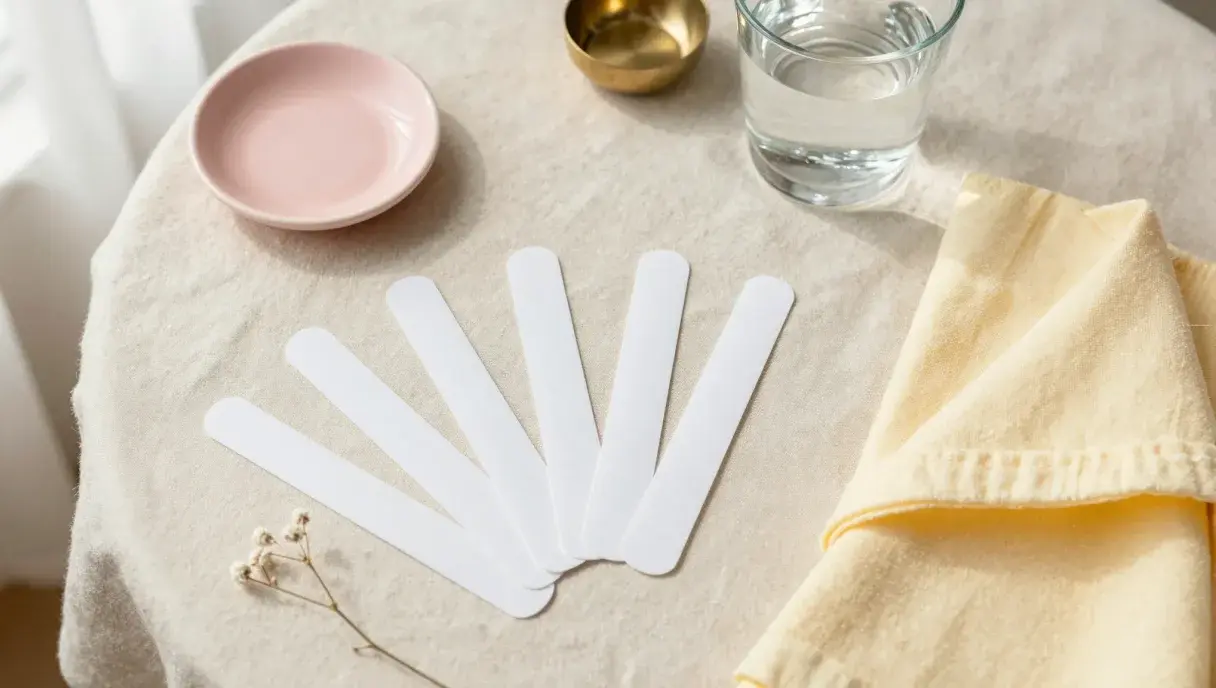
Most women in Pakistan buy their first ovulation kit after a few months of trying, test on day 14 because someone told them day 14 is the day, see one faint line, and decide the strips are fake. The strips are usually fine. The timing is what went wrong.
An ovulation kit is a cheap, genuinely useful tool if you understand what it is measuring and when to hold it under the stream. Here is how to use one properly, what it costs here, and where it tends to mislead.
What an ovulation kit actually measures
It does not detect ovulation. It detects luteinising hormone (LH), which your body releases in a sharp burst shortly before an egg is released. That burst is called the LH surge.
According to MedlinePlus, a positive ovulation test means you should ovulate in the next 24 to 36 hours. So a positive strip is a warning shot, not a confirmation. The egg has not dropped yet. You still have time.
That distinction matters because of what the fertile window looks like. The American Society for Reproductive Medicine puts the fertile window at roughly six days ending on the day of ovulation, with the best odds coming from intercourse in the two days before the egg is released. Sperm survive in the reproductive tract for days. The egg does not. Which is why testing to catch the surge beats waiting for symptoms.
When to start testing in your cycle
This is where most packs get wasted. Testing too late means you miss the surge entirely and conclude you are not ovulating. Testing from day 1 burns through seven strips before your body has done anything.
Ovulation usually happens about 14 days before your next period starts, not 14 days after your last one began. MedlinePlus recommends starting 3 to 5 days before you expect to ovulate, which is day 11 for a textbook 28-day cycle.
Take your usual cycle length and subtract 17. That is your first test day.
| Your cycle length | Start testing on cycle day |
|---|---|
| 21 days | Day 4 |
| 24 days | Day 7 |
| 26 days | Day 9 |
| 28 days | Day 11 |
| 30 days | Day 13 |
| 32 days | Day 15 |
| 35 days | Day 18 |
Cycle day 1 is the first day of proper bleeding, not spotting. If your cycles vary, use your shortest cycle from the last six months so you start early rather than late.
Our free ovulation calculator will do this arithmetic for you and give you a fertile window to test around. If you have never mapped your cycle before, the guide to ovulation signs and timing covers the body signs that line up with the strips.
How to use the strips so the result means something
The mechanics are simple, but four habits change the outcome.
- Do not use first morning urine. This is the opposite of a pregnancy test. LH is typically made in the morning and shows up in urine later, so late morning to early evening is the better window. Somewhere between 11am and 8pm works for most women.
- Test at roughly the same time daily. Consistency is what lets you see a line getting darker across days.
- Cut back on fluids for about two hours before. Drinking a jug of water dilutes your urine and can flatten a real surge into a faint line.
- Test twice a day near your expected surge. The surge can be short. Once mid-morning and once in the evening catches it far more reliably than a single daily test.
Collect urine in a clean dry cup, dip the strip to the marked line for the seconds the leaflet specifies, lay it flat, and read at the stated time. Reading it an hour later is not a result.
Reading the two lines
Every strip has a control line (C) and a test line (T). The control line just proves the strip worked.
Unlike a pregnancy test, a faint test line is negative. Your body always carries some LH, so a light line is normal background. The test is positive only when the test line is as dark as the control line or darker. If you are squinting and asking your sister whether it looks darker, it is not positive yet. Keep the strips lined up in order so you can see the progression.
You got a positive. Now what?
Ovulation is likely in the next 24 to 36 hours. In practice that means the day you see the positive and the following day are your two best days.
ASRM notes that intercourse every one to two days across the fertile window produces similar pregnancy rates to daily attempts, so there is no need to turn the week into a schedule. Aim for the day of the positive and the next day, and stop testing for that cycle once the surge is confirmed. Save the remaining strips.
About two weeks later, if your period has not arrived, test with an hCG strip. The pregnancy test guide covers how early is too early and how to avoid a false negative from testing on day 22.
Why PCOS and irregular cycles throw the strips off
This is the single most common reason women here get confused by ovulation kits, and it deserves a warning before you spend money.
Many women with PCOS carry a raised baseline LH level all month. The strip cannot tell the difference between a real pre-ovulation surge and a chronically high background level, so you can get positive after positive after positive without ever releasing an egg. MedlinePlus lists false-positive results among the known risks of these kits, and irregular cycles as a reason the surge may be missed altogether.
If you are getting repeated positives, or none at all across two or three cycles, the strips have told you what they can. That is the point to move on to a proper assessment rather than buying another pack. Start with the PCOS symptoms and treatment guide, and read up on what drives irregular periods. A gynaecologist will usually want a day 2 or day 3 hormone panel and a pelvic ultrasound before saying anything definitive.
Certain medicines also interfere. Estrogen and progesterone (including anything in birth control pills) push LH down, while clomiphene citrate pushes it up. If you are on a fertility medicine, ask your doctor how it changes your strip readings before you trust them.
Our two-minute fertility quiz is a reasonable starting point if you are not sure whether your pattern is worth investigating.
What an ovulation kit costs in Pakistan
Plain LH dip strips are the cheapest and most sensible way in. You will use several per cycle, so buying singles at a pharmacy counter gets expensive fast.
Our ovulation and pregnancy test combo kit is PKR 999 for 7 LH strips plus 2 hCG pregnancy strips, which comes to roughly PKR 111 per ovulation test with the pregnancy strips included for the wait afterwards. That covers one cycle of twice-daily testing around the surge, or two cycles if you test once a day.
Loose strips from a pharmacy usually land in a similar per-strip range, though quality and expiry dates vary a lot depending on where you buy. Digital readers such as Clearblue cost several times more per test and are mostly stocked in larger Karachi, Lahore and Islamabad pharmacies. They remove the guesswork of comparing line darkness, which some women find worth the money, but they do not measure anything a paper strip does not.
Two practical notes on buying: check the expiry date, because slow-moving stock sits on shelves here, and keep strips sealed and away from heat. A pouch left in a Karachi handbag through June is not going to give you a reliable read.
Mistakes that waste a whole pack
- Testing only on day 14 regardless of cycle length.
- Using first morning urine and getting a run of negatives.
- Calling a faint line positive and mistiming the whole window.
- Testing once a day and missing a short surge, then assuming there was no ovulation.
- Stopping the folic acid because "we are still trying". Folate needs to be in your system before conception, not after the positive pregnancy test. See the folic acid dosage guide and the prenatal vitamin comparison if you have not started.
When to put the strips away and see a doctor
ASRM's guidance is straightforward on this. Seek an evaluation after 12 months of unprotected intercourse without a pregnancy, or after 6 months if you are 35 or older, because fertility decline picks up speed with age.
Bring your strip results with you. A gynaecologist can read three cycles of dated photos far faster than a verbal summary, and it saves a month of repeat testing. If male-factor questions come up, the semen analysis guide explains what that test involves and what it costs locally.
The short version
Start testing on cycle day (your cycle length minus 17). Test in the afternoon or evening, not first thing. Only call it positive when the test line matches or beats the control line. Try on that day and the next. If you get nothing but positives or nothing but negatives for two or three cycles, stop buying strips and book an appointment, because at that point the information you need is not on a piece of paper.
You can browse the full range of fertility and cycle-tracking products in our women's health section, and map your dates with the free ovulation calculator or pregnancy calculator.
Sources
Liked this one? Get the next in your inbox.
One fortnightly note from the editors, new pieces, restocks, and the routines we're actually using. Unsubscribe any time.