Hirsutism in Women: Facial Hair Causes, Tests and Treatment in Pakistan
Hirsutism means coarse, dark hair on a woman's face or body. Here is what causes it, the blood tests to ask for, and what actually works.
The threading appointment that used to be once a month is now every ten days. There is a tweezer in your handbag, and you have learned which side of the car mirror shows the chin most clearly. Coarse dark hair on the face is one of the most common reasons Pakistani women end up in a dermatology or gynaecology waiting room, and it is also one of the most misread. Salons treat it as a grooming problem. Most of the time it is a hormone signal.
Here is what hirsutism actually is, what usually causes it, which blood tests are worth asking for, and what the evidence says about each treatment option. A few of the patterns below need a doctor quickly.
What counts as hirsutism
Hirsutism is coarse, dark hair growing in the places where men typically grow it. The NHS lists the face, neck, chest, tummy, lower back, buttocks and thighs. The soft, light hair that everyone has all over their body is not hirsutism, and neither is the fine down on the upper lip that runs in many families.
Doctors put a number on it with the Ferriman-Gallwey score. According to a review on the NIH Bookshelf, nine body areas are each scored from 1 to 4 by hair density, giving a maximum of 36, and a total above 7 counts as abnormal. The same review puts hirsutism at nearly 10% of women in the United States, though the figure moves depending on the cut-off and the population.
That distinction matters. If your cycles are regular and your score is normal but you dislike the hair on your upper lip, the Endocrine Society's clinical practice guideline suggests against running androgen blood tests at all. That is a cosmetic preference rather than a hormone problem, and the treatment list is shorter.
PCOS has a new name, and it changes what you will read
In May 2026, polycystic ovary syndrome was formally renamed polyendocrine metabolic ovarian syndrome, or PMOS. A consensus paper in The Lancet describes the process behind it: 56 academic, clinical and patient organisations, and surveys answered by 14,360 people with the condition and health professionals worldwide. The old name pointed at cysts that are not really cysts, and pulled attention away from the hormonal and metabolic side of the condition, which affects about one in eight women.
For the next few years you will see both names. Pakistani labs, pharmacies and doctors mostly still say PCOS, so that is the word to use when you book an appointment. If your report or a newer article says PMOS, it is the same condition.
What is actually causing it
Hair growth in this pattern is almost always androgens, the hormones every woman has, either at higher levels or acting more strongly on the follicle.
- PCOS (PMOS) is by far the biggest cause, accounting for roughly 75% of all cases according to the NIH Bookshelf review. It usually travels with irregular or missed periods and acne.
- Idiopathic hirsutism covers about 10% of cases, and around half of mild ones. Cycles are regular, blood work looks normal, and the follicles are simply more sensitive to ordinary androgen levels.
- Non-classical congenital adrenal hyperplasia, a milder adrenal enzyme problem, accounts for a small share and is ruled out with one blood test.
- Certain medicines, including some epilepsy drugs and steroids. The NHS also lists Cushing's syndrome, acromegaly and hormone-producing tumours as rarer causes.
When to see a doctor quickly
The NHS advises an urgent appointment if hair growth has come on suddenly alongside signs such as a deepening voice or a noticeable increase in muscle bulk. Gradual growth over years is the usual pattern. Fast growth over a few months is not, and it needs a proper look rather than a laser package.
The tests to ask for, and when in your cycle
The Endocrine Society guideline suggests testing androgen levels in every woman whose hirsutism score is abnormal. The NIH Bookshelf review lists the usual panel as total testosterone, DHEAS, androstenedione, LH and FSH, 17-hydroxyprogesterone and SHBG, and it is specific about timing: early follicular phase, meaning day three to day six of your cycle, early morning, fasting.
Write that timing down before you go to the lab, because a sample drawn on the wrong day can send you back for a repeat. If your periods are too irregular to count day three, say so when you book and let the doctor pick the day. Our guides to the FSH test and the prolactin test explain those numbers once the report comes back, and the irregular periods guide covers the cycle side.
What actually works
The Endocrine Society's position is the opposite of how most people approach this. For women whose hirsutism still bothers them after cosmetic measures, the guideline suggests starting with medication and then adding hair removal such as electrolysis or laser for extra cosmetic benefit. Most women in Pakistan do it the other way round, paying for laser sessions while the hormone driving the growth goes untreated.
| Option | What it does | How long before you see it | Worth knowing |
|---|---|---|---|
| Shaving, threading, waxing, plucking, depilatory cream, bleaching | Removes or disguises hair that is already there | Immediate | The NHS lists all of these as reasonable home methods. None change the cause, and none make hair grow back thicker |
| Combined oestrogen and progestin contraceptive pill | Lowers ovarian androgen production | Around 6 months | Suggested by the guideline for most women as first-line medication. Which pill suits you is a prescribing decision |
| Anti-androgen (for example spironolactone) | Blocks androgens at the follicle | Many months | Add after 6 months if the pill alone is not enough. The guideline recommends against using one alone without reliable contraception |
| Eflornithine cream (prescription) | Slows new facial hair growth | Weeks to months | Applied twice daily. It does not remove existing hair, so it is used alongside another method |
| Laser or intense pulsed light | Long-term reduction in hair density | Multiple sessions | The guideline suggests this for most women who choose a procedure, and favours a long-wavelength device such as Nd:YAG or diode. Suits dark hair best |
| Electrolysis | Destroys individual follicles | Many sessions | Now used mainly for coarse white or light hair, which lasers do not pick up well |
| Insulin-lowering drugs | Metabolic effect | n/a for hair | The guideline suggests against using these specifically to treat hirsutism, though they may be prescribed for other reasons |
One more from the NHS list: losing weight, where there is weight to lose, can help hormone levels settle. Our BMI calculator gives you a starting number and the weight loss guide covers the desi-diet side without the crash-diet nonsense.
Where supplements fit, honestly
Inositol comes up constantly in Pakistani PCOS groups, so here is what the research shows for hair specifically, rather than for PCOS in general.
A 2024 meta-analysis in Endocrine pooled six randomised trials covering 388 women, comparing metformin plus inositol against metformin alone over three to six months. The combination produced a lower modified Ferriman-Gallwey score, with a mean difference of about one point, and better cycle regularity. One point on a 36-point scale is real but small, and it took months to get there. A 2026 review in Clinical Endocrinology found inositol lowered testosterone and raised SHBG, with the clearest effect in women whose BMI was under 25.
So inositol is a reasonable addition to whatever your doctor has prescribed, and not a replacement for it. Anyone promising it will clear your chin in a month is selling something. Our myo-inositol guide and PCOS guide go deeper.
What we stock, if you and your doctor decide to try it:
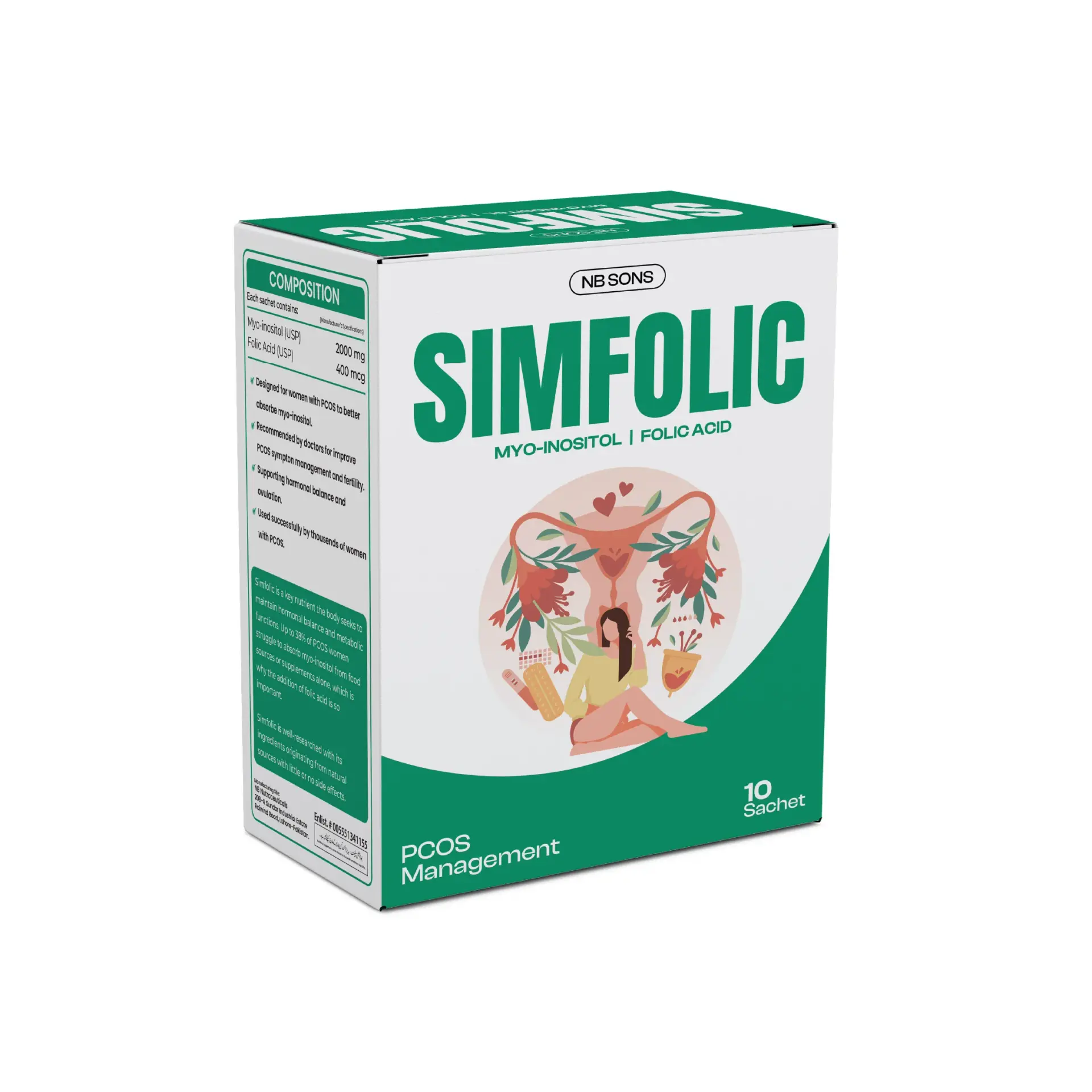
- Simfolic Myo-Inositol + Folic Acid (Rs 1,390) pairs 2,000 mg of myo-inositol with 400 mcg of folic acid in one daily dose. It is the simplest version of the formula.
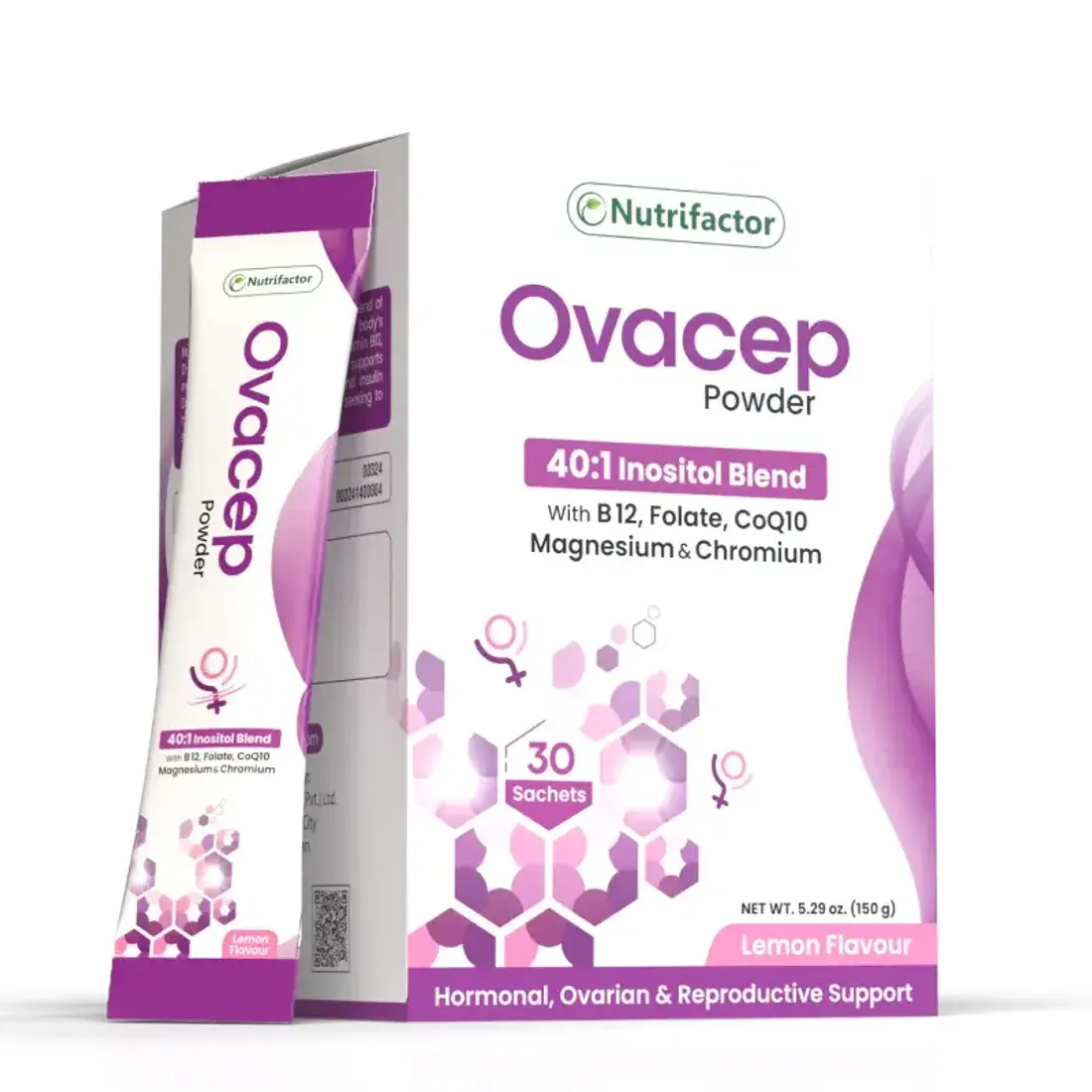
- Nutrifactor Ovacep 40:1 Inositol Blend (Rs 4,000) gives 2,000 mg myo-inositol with 50 mg D-chiro-inositol per 5 g sachet, in the 40:1 ratio used in the research, plus CoQ10, zinc and vitamin D3. 30 sachets per box.
Both are food supplements rather than medicines, and the label on each says so. Check with your doctor first, particularly if you are already on a prescribed pill or planning a pregnancy.
On spearmint tea, which every PCOS group in Pakistan recommends: a randomised trial of 42 women, published in Phytotherapy Research, had them drink it twice daily for 30 days. Free and total testosterone did fall significantly and the women reported feeling less hairy, but the objective Ferriman-Gallwey score did not shift. The authors' own explanation was that 30 days is far too short for a hair follicle to respond.
How long before anything changes
This is the part nobody tells you, and it is why so many women give up in week six. A follicle works on a slow cycle, so a medicine that switches off the signal today does nothing to hair already sitting in the skin. The NIH Bookshelf review is blunt: the effect of drug treatment appears only after one to two years, and improvement on spironolactone is slow enough that many women stop taking it.
Practically: keep up your usual threading or shaving while the medication works underneath, judge progress at six months rather than six weeks, and take a photo at the start. Memory is a terrible measuring tool for something this gradual. Our hair removal cream guide covers the at-home side safely, including how to patch test.
Where to start this week
Book a blood test for day three to six of your next cycle, early morning and fasting, and ask for total testosterone, DHEAS, 17-hydroxyprogesterone, LH, FSH and SHBG. Take a clear photo of the areas that bother you most, in the same light, so you have a baseline. Keep threading or shaving meanwhile, because there is no medical reason to suffer through the wait. Then take the report to a gynaecologist or dermatologist and let the order follow the evidence: medication first, cosmetic procedures on top.
Hirsutism responds slowly, but it does respond.
Sources
- NHS, Hirsutism
- Hirsutism, StatPearls, NIH Bookshelf
- Evaluation and Treatment of Hirsutism in Premenopausal Women: An Endocrine Society Clinical Practice Guideline
- Polyendocrine metabolic ovarian syndrome, the new name for polycystic ovary syndrome, The Lancet
- Metformin with inositol versus metformin alone in PCOS, a meta-analysis
- Metabolic phenotype predicts biochemical response to inositol supplementation in PCOS
- Spearmint herbal tea has significant anti-androgen effects in PCOS, a randomised controlled trial
Frequently asked questions
Does shaving make facial hair grow back thicker?
No. Shaving cuts hair at the surface, leaving a blunt tip that feels coarser for a few days. The follicle itself is untouched.
Is laser safe on Pakistani skin?
Devices differ. The guidance favours a long-wavelength laser such as Nd:YAG or a diode, and the technique suits dark hair best. Ask the clinic which device they use and whether they have treated your skin tone with it before, rather than booking on price.
Which supplement is best for facial hair from PCOS?
No supplement treats facial hair on its own. Inositol has trial evidence for a small reduction in hirsutism score over three to six months when added to prescribed treatment, and that is the honest ceiling. Simfolic (Rs 1,390) and Nutrifactor Ovacep (Rs 4,000) are the inositol options we carry.
Will my cycles improve too?
Often, if PCOS is the cause. The same meta-analysis that found a lower hirsutism score also found better cycle regularity. If you are trying to conceive, our fertility quiz and ovulation calculator are a sensible starting point alongside your gynaecologist.
Liked this one? Get the next in your inbox.
One fortnightly note from the editors, new pieces, restocks, and the routines we're actually using. Unsubscribe any time.