FSH Test: What It Measures and What Your Result Means
The FSH blood test is a standard part of fertility and menopause workups. Why it must be done on day 2 or 3 of your cycle, what high and low results mean, and how it compares with the AMH test.
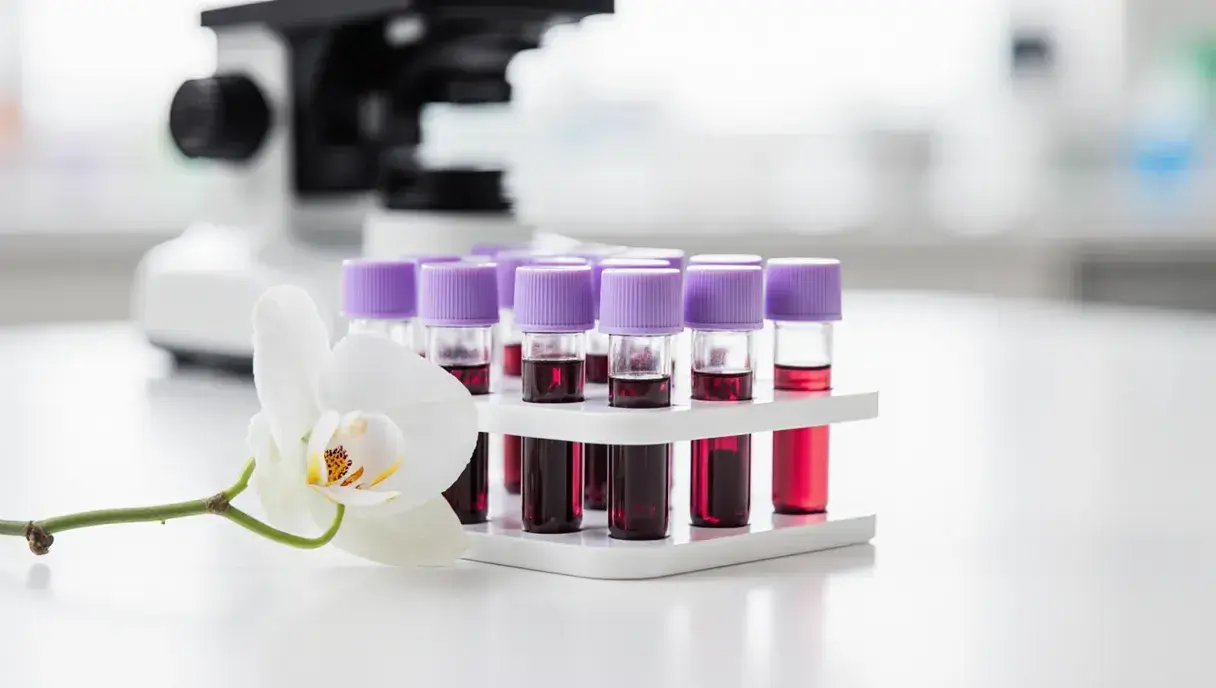
FSH is usually one of the first blood tests a doctor orders when a couple is investigated for infertility, when periods become irregular in the late 30s or 40s, or when menopause is suspected. It is a simple, inexpensive test, but its result only makes sense if it is taken on the right day and read alongside the rest of your picture. This guide explains what FSH measures, why day 2 or 3 matters so much, and what high or low numbers actually tell you.
What FSH is
FSH (follicle-stimulating hormone) is made by the pituitary gland. Its job is to tell the ovaries to grow follicles, the small sacs that each contain an egg. The pituitary and the ovaries run a feedback loop: when the ovaries respond easily, a small FSH signal is enough. When the ovaries respond less easily, the pituitary raises its voice and FSH climbs. That is the key to reading the test: a high FSH means the pituitary is having to shout, which usually reflects a lower remaining egg supply.
Why day 2 or 3 of your cycle matters
FSH changes throughout the cycle, surging around ovulation. The standard, comparable measurement is taken on day 2 or 3, counting the first day of full flow as day 1. A sample taken mid-cycle can read high for completely normal reasons and cause needless worry. If your cycles are very irregular or absent, tell the lab and your doctor; they will advise on timing or lean more on other tests.
What the numbers mean
Lab ranges differ, but as a broad guide for a day-3 sample: under about 10 IU/L is reassuring, 10 to 15 is borderline and worth discussing, and repeatedly above 15 to 20 suggests diminished ovarian reserve. Levels above 30 to 40, together with a year without periods, are consistent with menopause. Before menopause, one high reading is not a verdict: FSH swings from cycle to cycle, and doctors usually repeat it or pair it with other tests before drawing conclusions.
High FSH: what it does and does not mean
A confirmed high FSH in a woman under 40 can indicate primary ovarian insufficiency, and in the 40s it usually reflects the natural approach of menopause. What it does not mean is that pregnancy is impossible. FSH describes the size of the response the pituitary needs, not the quality of every remaining egg. Women with raised FSH do conceive, though usually with more urgency about seeking help. If conception is your goal and FSH is raised, see a fertility specialist sooner rather than later; our infertility and IVF guide explains what that pathway looks like in Pakistan.
Low FSH
A low FSH with absent periods usually points upstream of the ovaries: significant stress, being markedly underweight, over-exercise, or less commonly a pituitary issue such as high prolactin. These causes are often very treatable once identified, and periods commonly return when the underlying cause is corrected.
FSH or AMH: which test is better?
They answer the same question from different directions, and most fertility clinics in Pakistan now use both. AMH is made by the follicles themselves, can be tested on any day of the cycle, and moves less from month to month, which makes it the more stable single number. FSH is cheaper, available at practically every lab, and remains the standard for diagnosing menopause. Our AMH test guide covers that side in detail, including what results mean at different ages.
Cost and where to test in Pakistan
An FSH test costs roughly Rs 1,000 to 2,500 at major private laboratories, with results in a day. It is often ordered together with LH, prolactin, TSH and estradiol as a hormonal profile; the combined panel costs less than the tests ordered separately at most labs.
What to do with your result
Take the report to a gynaecologist or fertility specialist rather than interpreting it alone, especially if you are trying to conceive. Meanwhile the practical basics still matter: regular cycles tracked well, timing intimacy in the fertile window, and overall health. The free Fertile Days Finder maps your fertile days in seconds, and the trying-to-conceive guide pulls the whole plan together.
This article is for education and does not replace medical advice. Reviewed for accuracy by our medical review board.
Liked this one? Get the next in your inbox.
One fortnightly note from the editors, new pieces, restocks, and the routines we're actually using. Unsubscribe any time.