Gestational Diabetes in Pakistan: Symptoms, the OGTT Test and What to Eat
Gestational diabetes affects about one in six pregnancies in Pakistan. Here is who needs the OGTT test, how it works, and what to eat after a positive.
Most women who develop gestational diabetes feel completely fine. There is no pain and no obvious warning. It shows up in a blood test at around week 24, often to a mother who has had an easy pregnancy so far, and the news lands as a shock.
That is why the test exists, and it matters more here than in most places: being South Asian is itself one of the risk factors the NHS lists, alongside age, weight and family history. Pakistani women start the pregnancy already in the higher-risk group.
What gestational diabetes actually is
Pregnancy makes your body resistant to its own insulin. That is normal and deliberate: it pushes more glucose across to the baby. For most women the pancreas simply produces extra insulin to keep up. Gestational diabetes is what happens when it cannot, and blood sugar drifts higher than it should.
It is a pregnancy condition rather than a diagnosis you carry for life, and in most cases it resolves after delivery. What it leaves behind is a raised long-term risk of type 2 diabetes, which is the part women are least often told about.
How common is it in Pakistan
A 2024 systematic review in BMC Pregnancy and Childbirth, by researchers at the National Institute of Health in Islamabad, pooled nine studies covering 27,034 pregnant women across all four provinces. Their pooled prevalence was 16.7 percent (95% CI 13.1 to 21.1), roughly one pregnancy in six. The regional spread was wide:
| Region | Reported prevalence |
|---|---|
| Balochistan | 35.8% |
| Islamabad | 23.9% |
| Khyber Pakhtunkhwa | 17.2% |
| Sindh | 13.2% |
| Punjab | 11.4% |
The authors noted that the studies used different diagnostic criteria, which drags the numbers around: estimates ran to 26.3 percent under Carpenter criteria and 23.9 percent under ADA. Some of the variation is real and some of it is that Pakistani clinics do not all screen the same way. Their conclusion was that the country needs an agreed screening standard.
Who is more likely to develop it
The NHS risk list is the clearest one to check yourself against. You are at higher risk if you are over 40, if your BMI is above 30, if you have previously had a baby weighing 4.5 kg or more, if you have had gestational diabetes in an earlier pregnancy, if a parent or sibling has diabetes, or if you are of South Asian, Black, African-Caribbean or Middle Eastern origin. Previous weight-loss surgery is on the list too.
MedlinePlus adds one that a lot of women here will recognise: polycystic ovary syndrome. If you were managing PCOS before conceiving, mention it at your first antenatal visit and ask whether you should be screened earlier than the standard window.
Our BMI calculator will place your pre-pregnancy weight in a few seconds. It is a blunt tool, but 30 is the threshold clinicians actually use when deciding whom to screen.
The symptoms are easy to miss
Usually there are none. When blood sugar does run high enough to cause something noticeable, the NHS lists increased thirst, needing to pass urine more often, a dry mouth, tiredness, blurred vision and genital itching or thrush.
Read that list again and you will see the problem: thirst, exhaustion and frequent urination also describe an ordinary second trimester. Nobody can tell the difference by feel, which is why the diagnosis comes from a test.
The OGTT: how the test works
Screening is done with an oral glucose tolerance test between 24 and 28 weeks of pregnancy. If you are not sure which week you are in, our pregnancy calculator will place you from your last period date.
You fast for 8 to 10 hours first, so almost everyone books a morning slot and comes in without breakfast. Blood is taken, you drink a measured glucose solution, and blood is taken again after two hours. Some labs add a one-hour draw. You sit in the lab for the waiting period rather than going home, so it takes a morning.
The drink is sweeter than anything you would choose and can make you queasy on an empty stomach at 24 weeks, so take someone with you. And do not cut carbohydrates in the days beforehand hoping for a better result. An unrepresentative result helps nobody.
What it costs
Prices vary by lab and city. Chughtai Lab's 75 g glucose tolerance test for pregnant patients was listed at Rs 1,750, with an online booking price of Rs 1,400, when we checked in September 2026. Budget around that at the larger chains, and check whether your antenatal package already covers it before paying separately. If you also need an HbA1c test, some labs price the pair together.
What the numbers mean day to day
If the result is positive, you will be given a home glucose meter and asked to test before breakfast and one hour after each meal. The American College of Obstetricians and Gynecologists targets that most clinicians work to are 95 mg/dL or less before a meal, 140 mg/dL or less one hour after a meal, and 120 mg/dL or less two hours after. Your own doctor may set slightly different numbers for you, and theirs are the ones that count. Keep a written log, because patterns across two weeks tell a doctor far more than any single high reading.
Eating for steadier blood sugar in a Pakistani kitchen
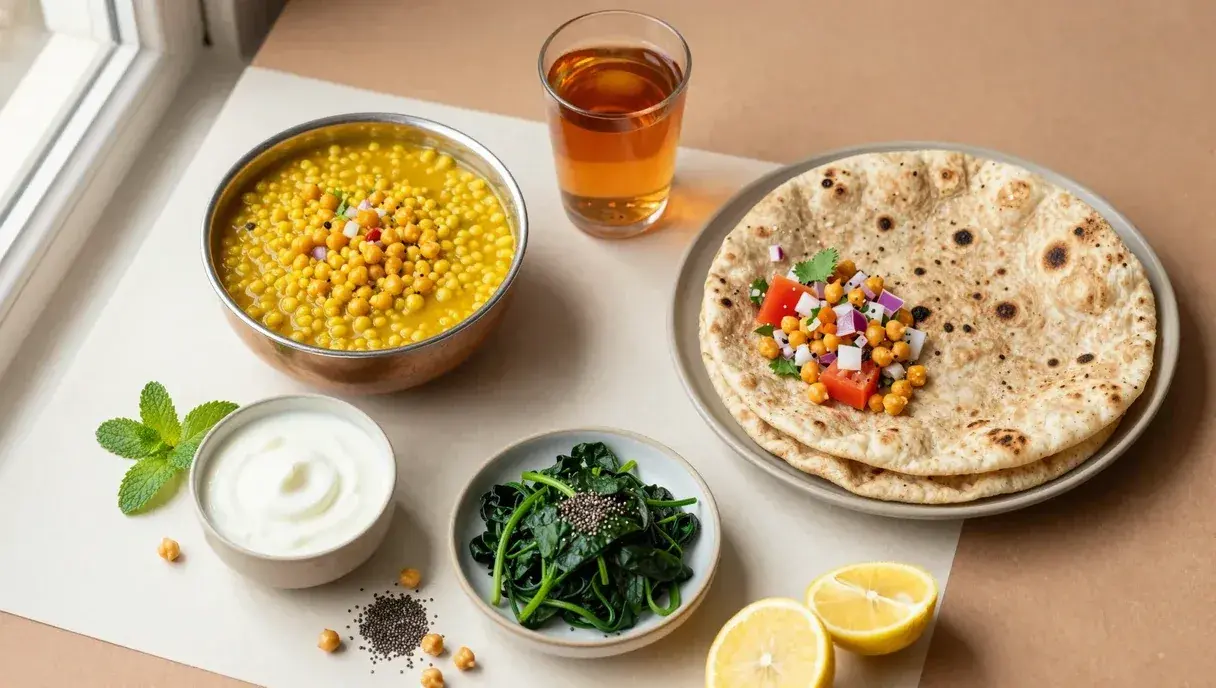
The NHS advice on managing gestational diabetes is built around low glycaemic index starches that release sugar slowly: brown rice, wholewheat pasta, pulses, beans, lentils and plain porridge, with at least five portions of fruit and vegetables a day and sugary drinks cut out. Translated into what is actually on the table here:
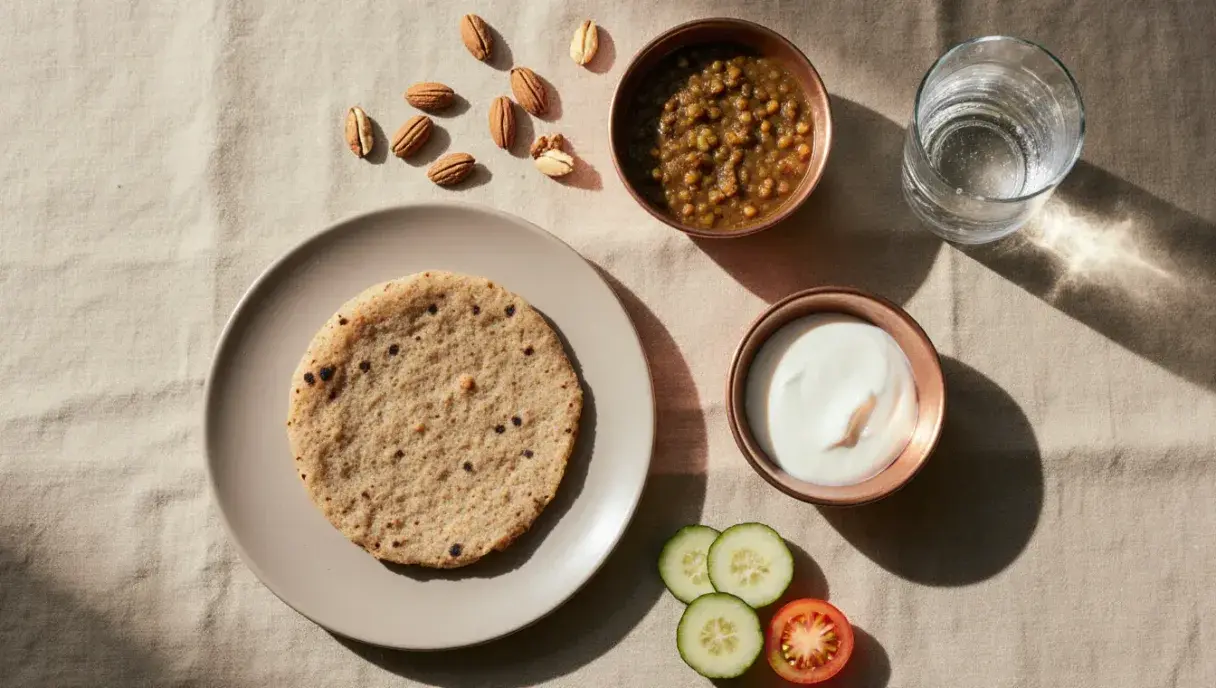
- Roti over naan, and chapati atta with the bran left in. Maida behaves like sugar. Whole wheat does not.
- Daal and chana are your allies. Pulses are on the NHS low GI list and they are already in your kitchen. A bowl of daal with roti steadies a meal that plain rice would spike.
- If you eat rice, eat it after the salad and the salan, not first, and keep the portion to a cup. Order of eating changes the curve more than most people expect.
- Protein at breakfast. Anda, yoghurt or leftover chicken does more for a mid-morning reading than parathas and chai.
- Fruit whole, not juiced. A mango in a sensible portion is fine. A glass of mango juice is a sugar delivery system.
The chai problem
Two or three cups a day at two spoons of sugar each adds up to a meaningful amount of sugar that nobody counts as food. This is usually the easiest single change to make, and swapping to a zero-calorie sweetener keeps the ritual intact. Stevoice (Rs 1,750) is a plant-based stevia powder in 50 sachets that stirs into chai, coffee or a dessert without adding calories. Ask your doctor first if you are on any medication, and treat it as a swap for sugar rather than a reason to drink more chai. Our guide to stevia goes into the detail.
Fibre and prenatal nutrition
Fibre slows how quickly a meal releases sugar, and pregnancy constipation is common enough that most women want more of it anyway. Food first: pulses, vegetables, oats and whole grains. If your intake is genuinely short, Fybosim (Rs 390) is a natural fibre sachet mixed into a full glass of water, and the brand says it helps maintain blood sugar and cholesterol levels that are already within the normal range. It is a food supplement rather than a treatment for gestational diabetes, and anything you add during pregnancy should be cleared with your doctor first.
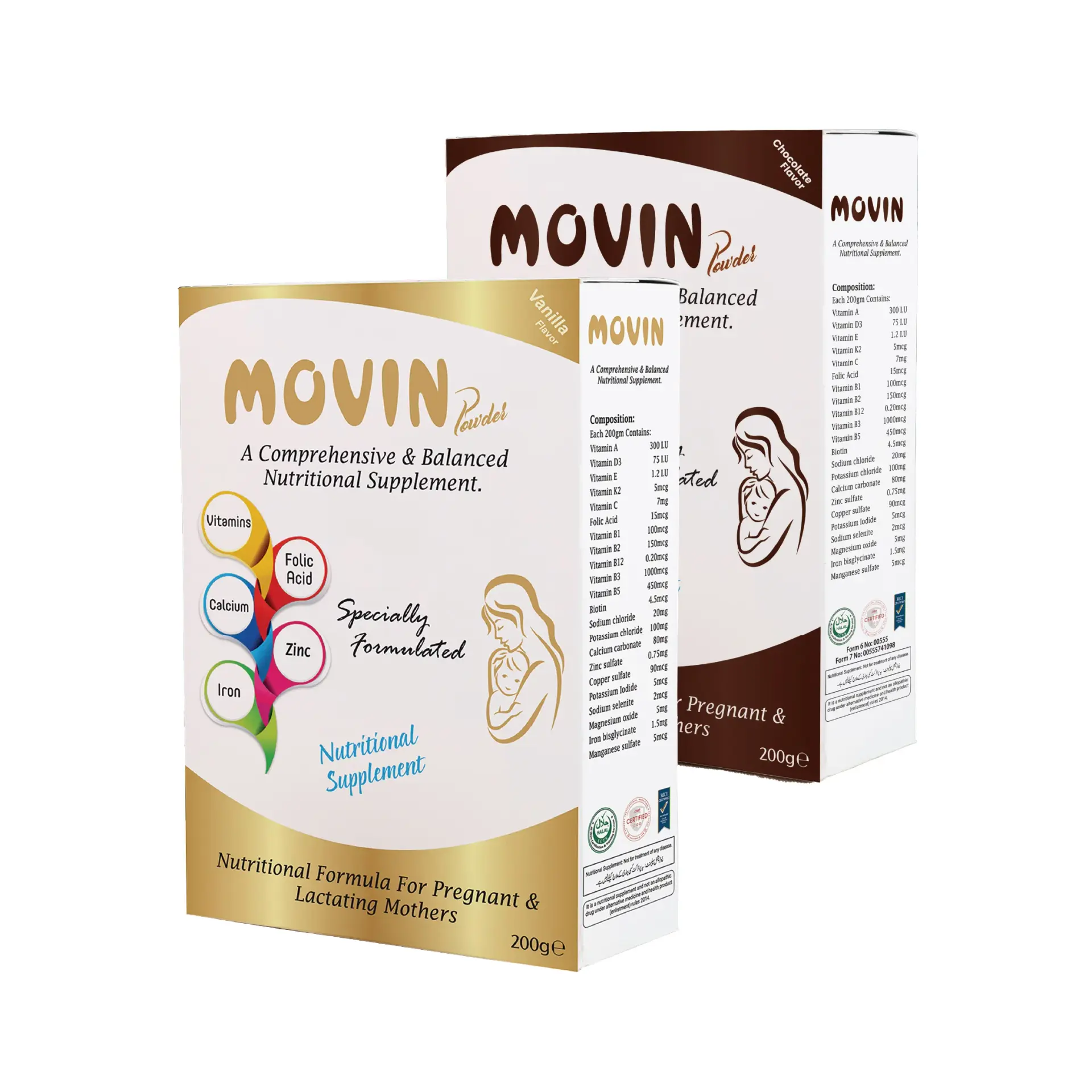
Your underlying prenatal needs do not change with the diagnosis. Movin (Rs 870) is a maternal nutrition powder with vitamins A, C, D3, E, K2 and B-complex plus calcium, iron, zinc, magnesium, iodine and electrolytes, taken alongside meals through the prenatal and postnatal months. Our prenatal vitamins guide compares the options.
Movement
The NHS target is at least 150 minutes of moderate activity a week plus strength work on two or more days. For a woman at 26 weeks in Lahore in September, that realistically means a walk after dinner rather than a gym plan. A 15 to 20 minute walk after your largest meal is the most useful single habit, because it blunts the post-meal rise directly. Check with your doctor first, particularly if you have been advised to rest.
When medicine is needed
Diet and activity are tried first. The NHS says medicine is considered if blood sugar is still not stable one to two weeks after changing diet and exercising regularly, or if levels are very high at diagnosis. That means tablets or insulin, prescribed and dosed by your doctor. Insulin is safe in pregnancy, and needing it is not a personal failure: some women's bodies will not get there on diet alone.
You will also be scanned more often. The NHS schedule is a scan at 18 to 20 weeks, then at 28, 32 and 36 weeks, with regular checks from 38 weeks onward, mainly to watch the baby's growth.
After the baby arrives
This is the part that gets skipped. Blood sugar usually returns to normal after delivery, everyone is busy with a newborn, and the follow-up test quietly never happens.
The NHS advises a blood test 6 to 13 weeks after giving birth and then once a year. MedlinePlus puts the first test at 4 to 12 weeks postpartum with rescreening every one to three years. Whichever window your doctor uses, set the reminder before you leave the hospital. Gestational diabetes is one of the strongest predictors of type 2 diabetes later, and the years right after it are when the odds are still movable.
The short version
Book the OGTT between 24 and 28 weeks even if you feel perfectly well, and especially if PCOS, family history or a BMI over 30 applies to you. If the result is positive, most women get their numbers where they need to be with roti instead of naan, smaller rice portions, less sugar in chai and a walk after dinner. Then take the postpartum test. That one appointment is the difference between knowing where you stand and finding out a decade later.
Our pregnancy and women's health range sits in the women's health category. This article is general guidance and does not replace advice from your own doctor or pharmacist.
Frequently asked questions
Will I need a caesarean?
Not automatically. Well-controlled gestational diabetes often ends in a normal delivery. The risk rises mainly when blood sugar stays high and the baby grows large, which is what the extra scans are watching for.
Does gestational diabetes mean my baby will have diabetes?
No. Babies are checked for low blood sugar in the first hours after birth. There is a somewhat higher chance of type 2 diabetes for the child later in life, which is a reason to build good family eating habits rather than a reason to panic.
Can I still fast during Ramadan?
That is a decision for you and your doctor together, not something to settle from an article. Pregnancy with diabetes changes the calculation, and many scholars recognise medical exemption.
Liked this one? Get the next in your inbox.
One fortnightly note from the editors, new pieces, restocks, and the routines we're actually using. Unsubscribe any time.