Protein Rich Foods in Pakistan: What to Eat and How Much You Need
The best protein rich foods in Pakistan with real numbers per serving, how much you need each day, the cheapest sources per rupee, and when powder helps.
Two rotis, a katori of masoor daal and a cup of doodh patti. That is lunch for a lot of people in this country, and it comes to roughly 14 grams of protein. If you weigh 60 kg you need about 48 grams across the entire day just to stop your body breaking down its own tissue. So that plate, filling as it feels going down, has covered under a third of the bare minimum.
Protein is the nutrient most Pakistani plates run short on while still looking full. Roti, chawal, aloo salan, chai and a rusk at 5 pm deliver plenty of calories and very little of what keeps muscle on your frame and your blood sugar steady between meals. Below is what to eat instead, with real numbers per serving and what each gram actually costs in rupees.
How much protein do you actually need in a day
The figure nutrition bodies work from is 0.8 grams of protein per kilogram of body weight per day. The Harvard T.H. Chan School of Public Health is clear that this is a floor, the amount that prevents deficiency, and that many people do better somewhere above it.
Run your own weight through it:
| Your weight | Bare minimum | Sensible daily target |
|---|---|---|
| 50 kg | 40 g | 60 to 75 g |
| 60 kg | 48 g | 72 to 90 g |
| 70 kg | 56 g | 84 to 105 g |
| 85 kg | 68 g | 100 to 125 g |
Those higher targets, around 1.2 to 1.5 g per kg, are what you want if you lift weights, if you are cutting calories and would rather lose fat than muscle, or if you are past 50 and want to keep your strength into your seventies. Sedentary and healthy? The lower end is fine. If you have never looked at your daily calorie budget, run it through our calorie calculator or the more detailed TDEE calculator, then fit protein inside that number. The BMI calculator gives you a rough starting point for where your weight sits.
Pregnancy pushes the requirement up. The joint FAO, WHO and UNU report on energy and protein requirements adds very little in the first trimester, around 9 extra grams a day by the second and roughly 31 extra grams by the third. In food terms that is two eggs and a glass of milk. Our pregnancy calculator will tell you which trimester you are in, and the guide to prenatal vitamins in Pakistan covers what supplements belong alongside the food.
Protein rich foods in Pakistan, with the actual numbers
Every figure below is for a serving you would recognise rather than a laboratory portion, using standard food composition values.
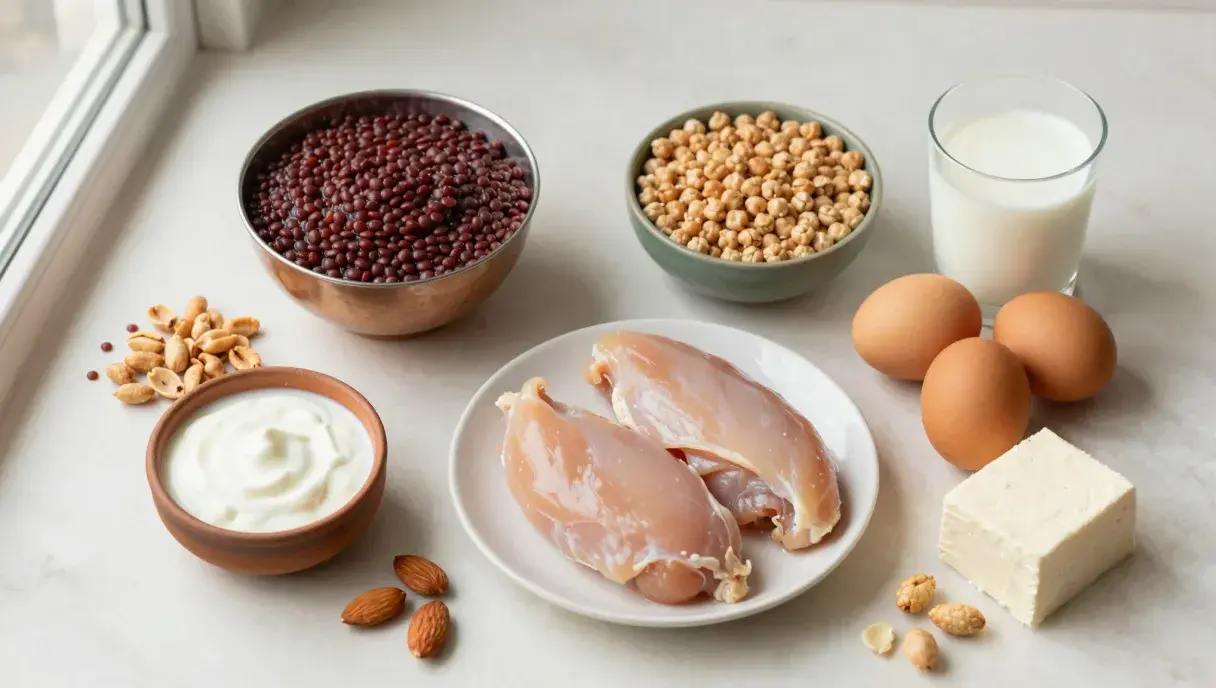
| Food | Typical serving | Protein |
|---|---|---|
| Egg, boiled | 1 large | 6 g |
| Chicken breast, boneless, cooked | 100 g | 31 g |
| Beef, lean, cooked | 100 g | 26 g |
| Fish such as rohu, cooked | 100 g | 22 g |
| Masoor daal, dry weight | 100 g (about half a cup) | 24 g |
| Chana daal, dry weight | 100 g | 20 g |
| Kabuli chana, boiled | 100 g | 9 g |
| Rajma, boiled | 100 g | 9 g |
| Milk | 250 ml glass | 8 g |
| Dahi, plain | 200 g katori | 7 g |
| Paneer | 100 g | 18 g |
| Peanuts | 50 g mutthi | 13 g |
| Almonds | 30 g | 6 g |
| Roti, whole wheat | 1 medium | 3 g |
| Rice, cooked | 1 katori | 4 g |
Eggs
An egg gives you about 6 grams of complete protein for the price of a toffee. Complete matters here. It means all nine essential amino acids are present in useful amounts, which is what your body needs to actually build something with them. Two eggs at breakfast instead of a paratha alone changes the whole shape of your day, because you start at 12 grams rather than 4.
Chicken, beef and fish
Boneless chicken is the densest everyday source available at any Pakistani grocer. One hundred grams of cooked breast, about the size of your palm, carries 31 grams. The catch is what happens in a home salan: bone-in pieces swimming in gravy mean the portion that reaches your plate is often half of what you counted. Weigh it once so you know what a real 100 gram serving looks like, then eyeball it after that.
Beef is close behind at 26 grams per 100 g and brings heme iron, the form your body absorbs best. Anyone with low haemoglobin should read our guide to iron deficiency in Pakistani women.
Daal, chana and beans
Here is where most people miscount badly. Masoor daal is 24 grams of protein per 100 grams dry, which sounds excellent, and it is. But by the time it becomes the thin daal most of us actually eat, a katori might hold only 30 or 40 grams of the original pulse. That is 8 to 10 grams, not 24.
The fix is thickness. A daal you can stand a spoon in, made from a proper 60 to 80 grams of dry pulse per person, gets you 15 to 19 grams from one bowl. Chana, rajma and lobia work the same way, and they bring fibre that keeps you full for hours.
Milk, dahi and paneer
A glass of milk is 8 grams and a katori of dahi around 7. Neither is dramatic alone, but they stack up quietly across a day. Paneer is the outlier at roughly 18 grams per 100 g, which makes palak paneer or a simple bhurji one of the best vegetarian mains in a Pakistani kitchen.
What 80 grams of protein looks like in a normal desi day
No exotic ingredients, nothing you cannot buy from the shop at the corner.
- Breakfast: two boiled eggs, one roti, a glass of milk. 23 g
- Lunch: 100 g of boneless chicken in salan with two rotis. 37 g running total 60 g
- Evening: a mutthi of roasted peanuts with your chai instead of biscuits. 8 g running total 68 g
- Dinner: a thick katori of masoor daal made from 60 g dry pulse, with a katori of rice. 18 g
That lands at about 86 grams, comfortably above target for most adults, without a single supplement or anything imported.
The cheapest protein per rupee in Pakistan
Prices below are rough retail figures at the time of writing and they move constantly, so the ranking is the useful part rather than the exact rupees.
| Source | Approx. price | Cost per 10 g protein |
|---|---|---|
| Chana daal | PKR 320 per kg | about PKR 16 |
| Masoor daal | PKR 400 per kg | about PKR 17 |
| Peanuts | PKR 800 per kg | about PKR 31 |
| Chicken, boneless | PKR 1,250 per kg | about PKR 40 |
| Eggs | PKR 350 per dozen | about PKR 48 |
| Beef | PKR 1,300 per kg | about PKR 50 |
| Milk | PKR 240 per litre | about PKR 75 |
| Whey protein powder | PKR 7,500 per 400 g | about PKR 313 |
Daal is roughly twenty times cheaper per gram of protein than a tub of whey. Worth knowing before anyone on Instagram convinces you that a shaker bottle is the entry fee for eating well.
If you barely eat meat
Plenty of households eat meat twice a week and leave it there, for reasons of budget or preference. You can still hit your numbers, it just takes deliberate stacking.
- Combine a pulse with a grain in the same meal. Daal with roti or chana with rice covers each other's weak amino acids and gives you the complete profile that meat provides on its own.
- Add dahi to lunch and dinner rather than treating it as optional.
- Keep boiled eggs in the fridge. Two of them close a 12 gram gap in about ninety seconds.
- Swap half your chai-time biscuits for peanuts or roasted chana.
- Use paneer once or twice a week as the main protein rather than a garnish.
Women with hormonal conditions benefit particularly from spreading protein across meals instead of loading it all into dinner, because it flattens the blood sugar swings that drive cravings. Our PCOS diet plan for Pakistani kitchens works through that in more detail.
When a protein powder actually makes sense
Food first, always. A supplement earns its place in three situations: you train hard and struggle to eat 120 grams a day from meals alone, your appetite is poor, or you are travelling and shift work has wrecked your eating schedule.
If that is you, here is what is worth buying and what it costs:
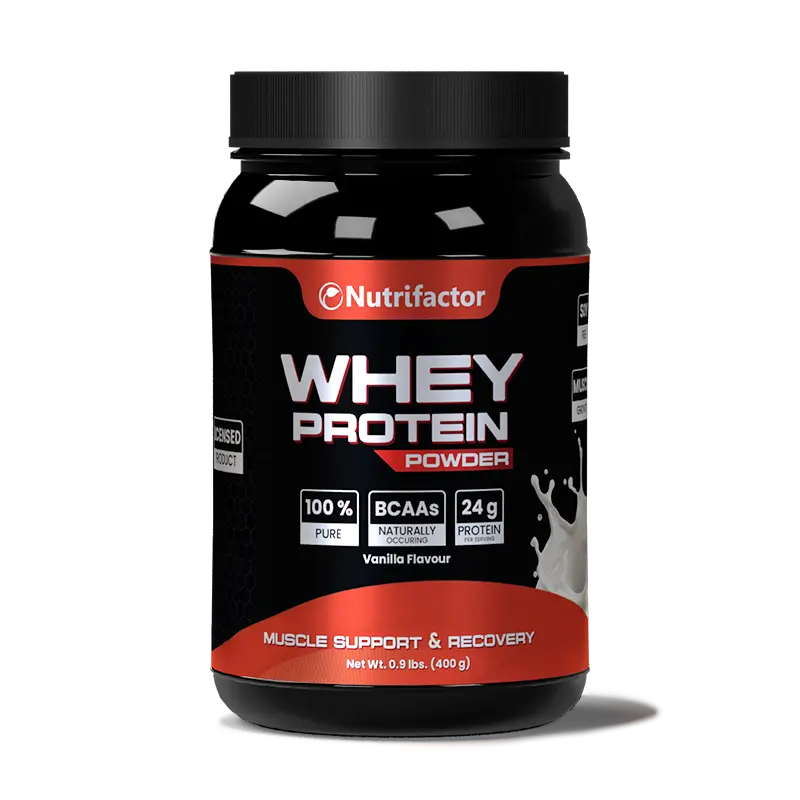
- Nutrifactor Whey Protein 400g, PKR 7,500. Twenty-four grams per 40 g scoop, under 1 g of carbs, fast absorbing. The default pick for gym-goers.
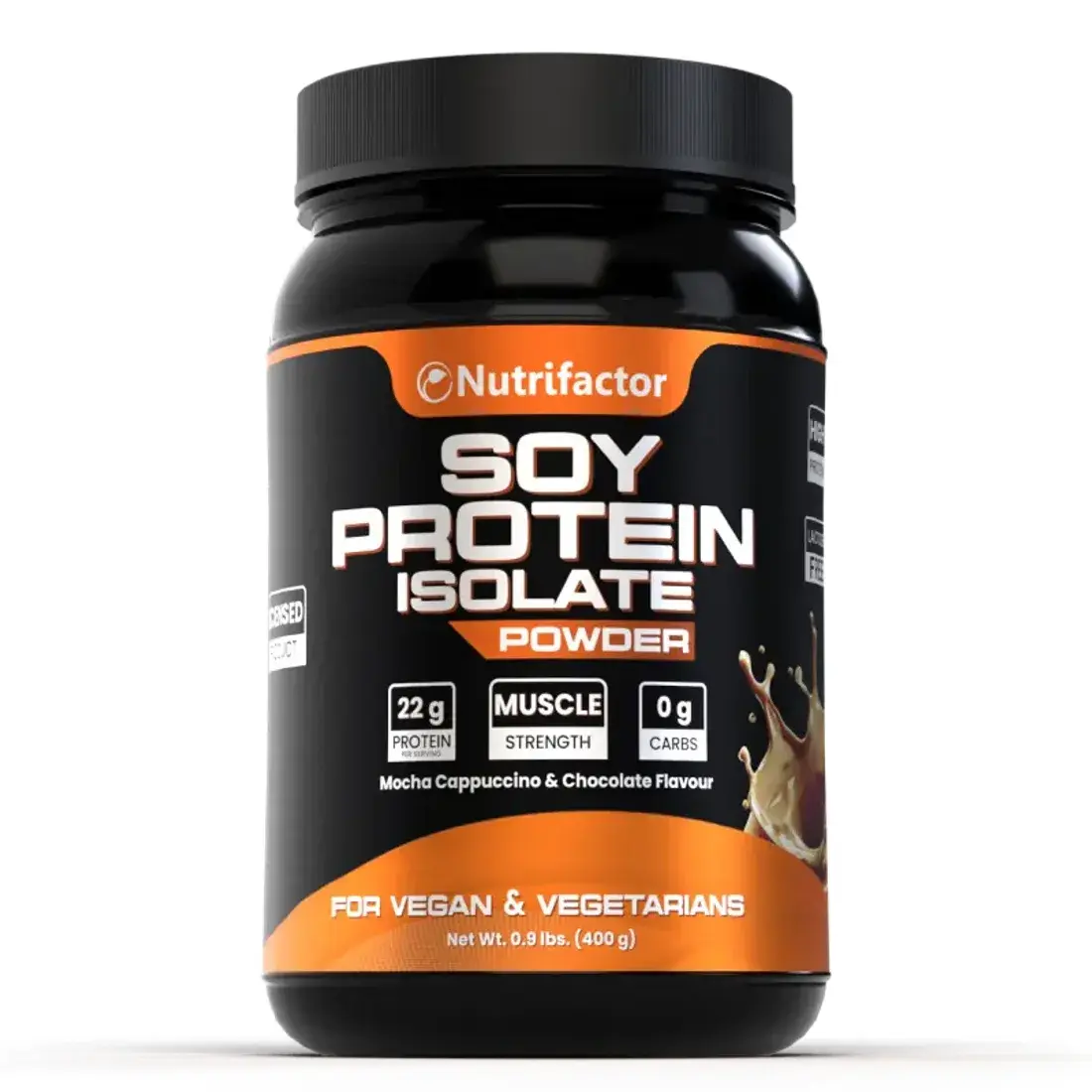
- Nutrifactor Soy Protein Isolate, PKR 7,600. Twenty-two grams per serving, completely dairy-free, suits vegetarians and anyone rotating away from whey.
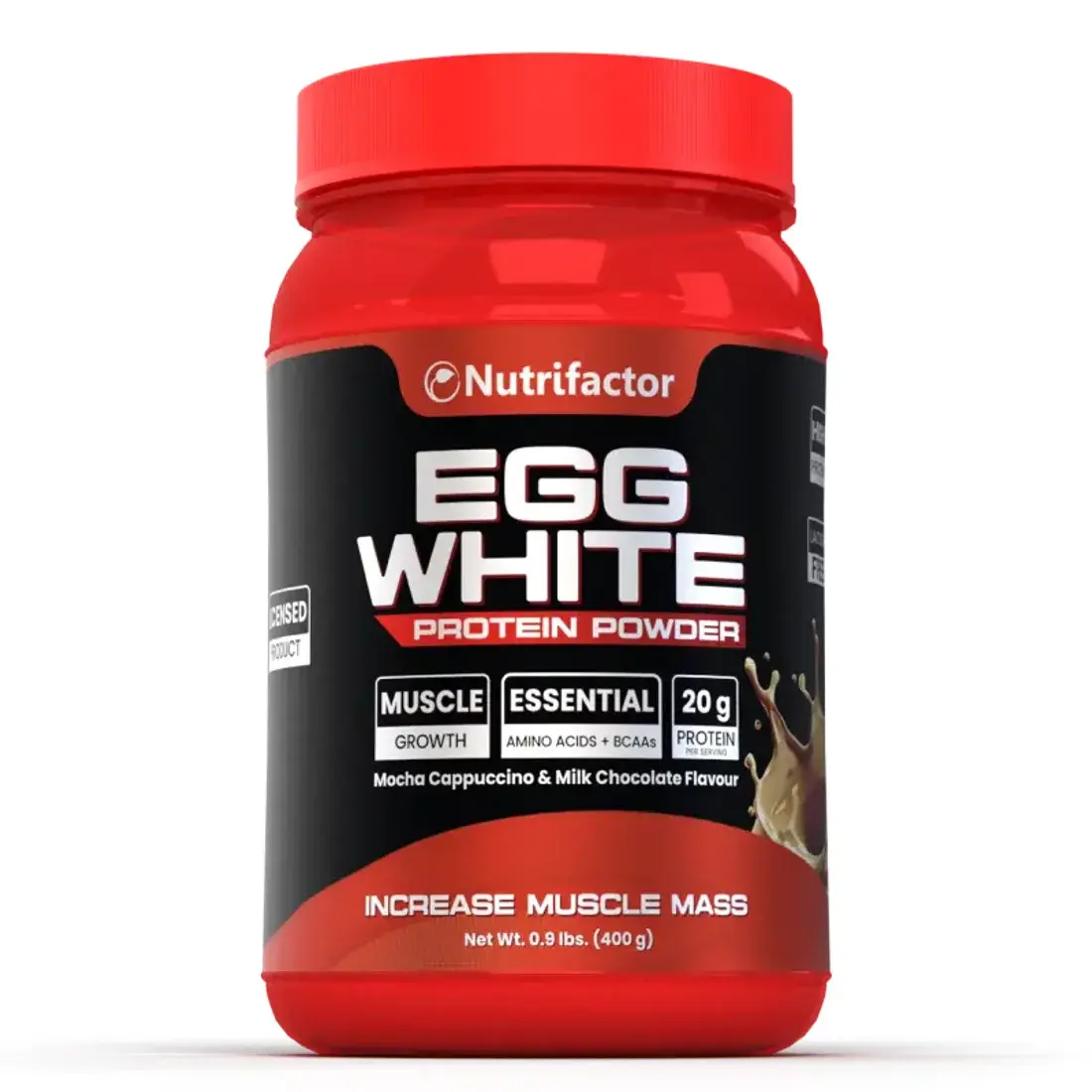
- Nutrifactor Egg White Protein Powder, PKR 14,200. Twenty grams per serving from pure egg whites, naturally lactose-free, for people whose stomachs argue with whey.
For the longer breakdown on dosing and timing, see our guide to protein supplements in Pakistan. If your goal is putting on weight rather than building muscle specifically, gaining weight healthily covers the calorie side. Everything else in our women's health range sits alongside it.
Four mistakes that keep people short
All the protein at dinner. Chai and a rusk at 8 am, a light lunch, then a big meat-heavy dinner at 10 pm. Your body uses protein better when it arrives across the day, so aim for 20 to 30 grams at each main meal.
Counting the daal, not the daal you ate. The dry weight on the packet is not what reached your bowl. Cook it thicker.
Trusting anything labelled high protein. Protein biscuits, protein rusks and most flavoured yoghurts in Pakistani supermarkets carry 3 to 5 grams a serving alongside a great deal of sugar. Read the panel on the back, not the claim on the front.
Cutting calories so hard that protein goes with them. On a crash diet muscle is the first thing to go, and the metabolism slows with it. If weight loss is the goal, losing weight naturally explains how to keep protein high while calories come down.
Where to start this week
Pick one meal and fix it. Breakfast is usually the easiest, because going from chai and a paratha to two eggs plus a glass of milk adds close to 20 grams before you have left the house. Do that for a week and the rest of the day suddenly has a much smaller gap to close.
Then fix the dinner daal. Cook it thick enough that it holds its shape on the spoon. Between those two changes most people move from around 45 grams a day to 75 or more, and the difference in how full you feel between meals shows up within a fortnight.
This article is for general information and does not replace advice from your doctor. If you have kidney disease, are on dialysis, or have been told to restrict protein for any medical reason, follow your doctor's instructions rather than the targets above.
Liked this one? Get the next in your inbox.
One fortnightly note from the editors, new pieces, restocks, and the routines we're actually using. Unsubscribe any time.