Chamomile Tea Benefits: Sleep, Calm and Who Should Avoid It
Chamomile tea (babuna) benefits for sleep and calm, what studies show, how to brew it, who should avoid it, and the imported boxes we stock in Pakistan.

Most Pakistani households already know chamomile as babuna: the little dried flowers an elder brews when someone cannot sleep or has an upset stomach. Chamomile tea is now one of the most searched teas in the country, and the tea bag version has made it a lot easier to keep at home.
This guide covers what chamomile tea is, what the research says about sleep and calm (less than the packaging suggests, but not nothing), how to brew it properly, who should skip it, and which imported boxes we stock.
The short answer, and where to start
Chamomile tea is a caffeine-free herbal infusion that is safe for most adults in normal amounts. The evidence that it improves sleep is weak and mixed; the evidence for mild anxiety is a little better, but comes from capsules, not tea. As a warm, caffeine-free cup that replaces late chai, it earns its place. These are the boxes to start with (prices):
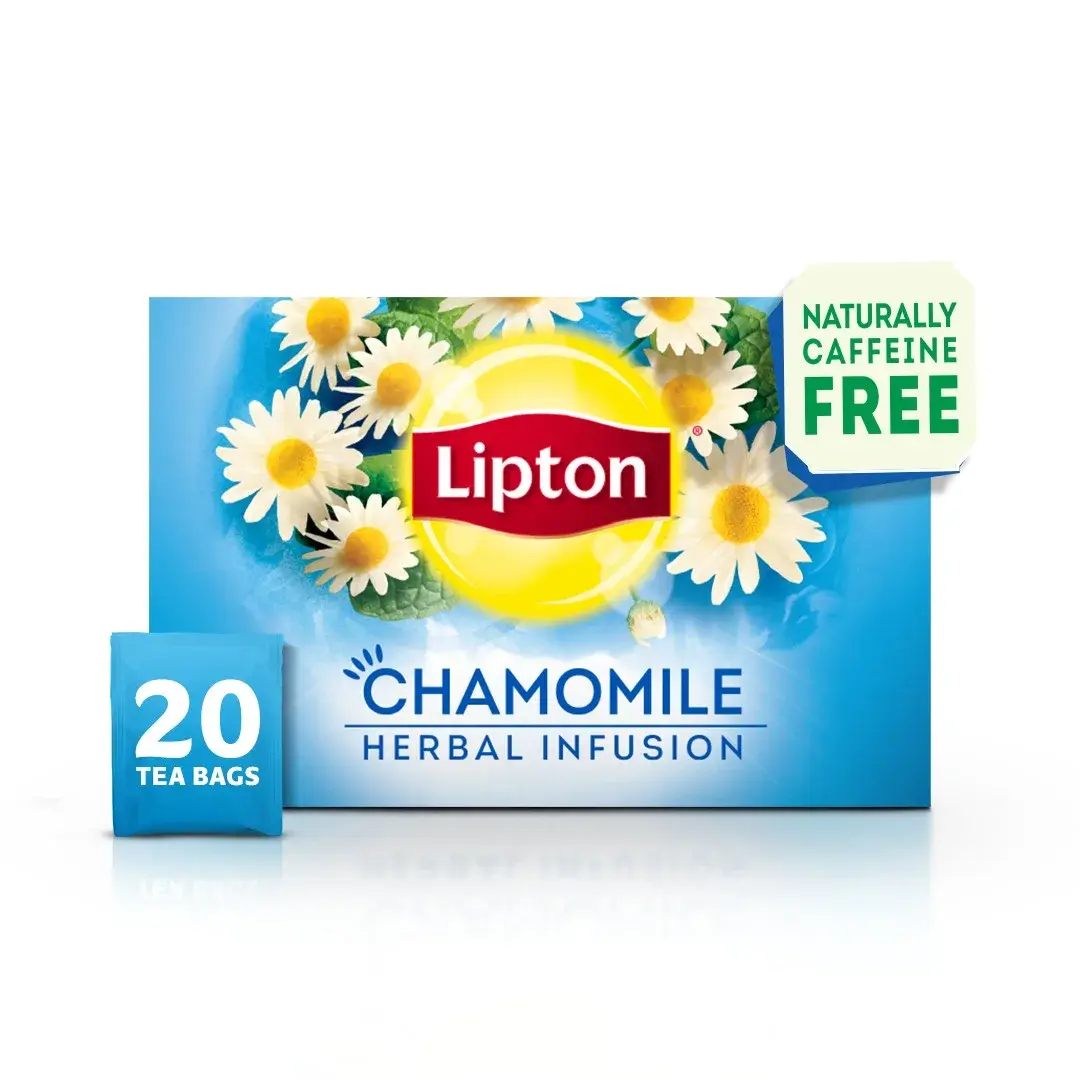
- Lipton Chamomile Herbal Infusion, 20 bags (Rs 895), plain chamomile flowers, mild and honey-like. The classic.
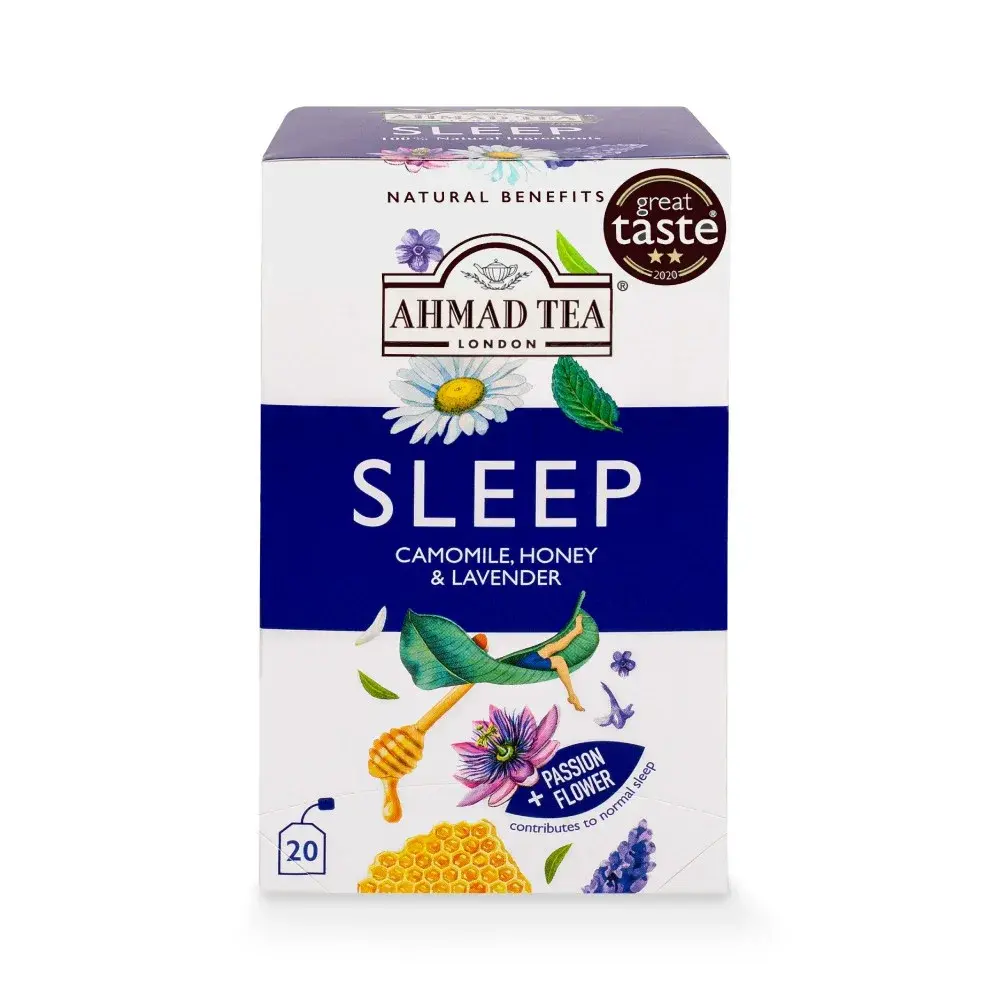
- Ahmad Tea Sleep Camomile, Honey & Lavender, 20 bags (Rs 928), a floral evening blend with each bag sealed in foil.
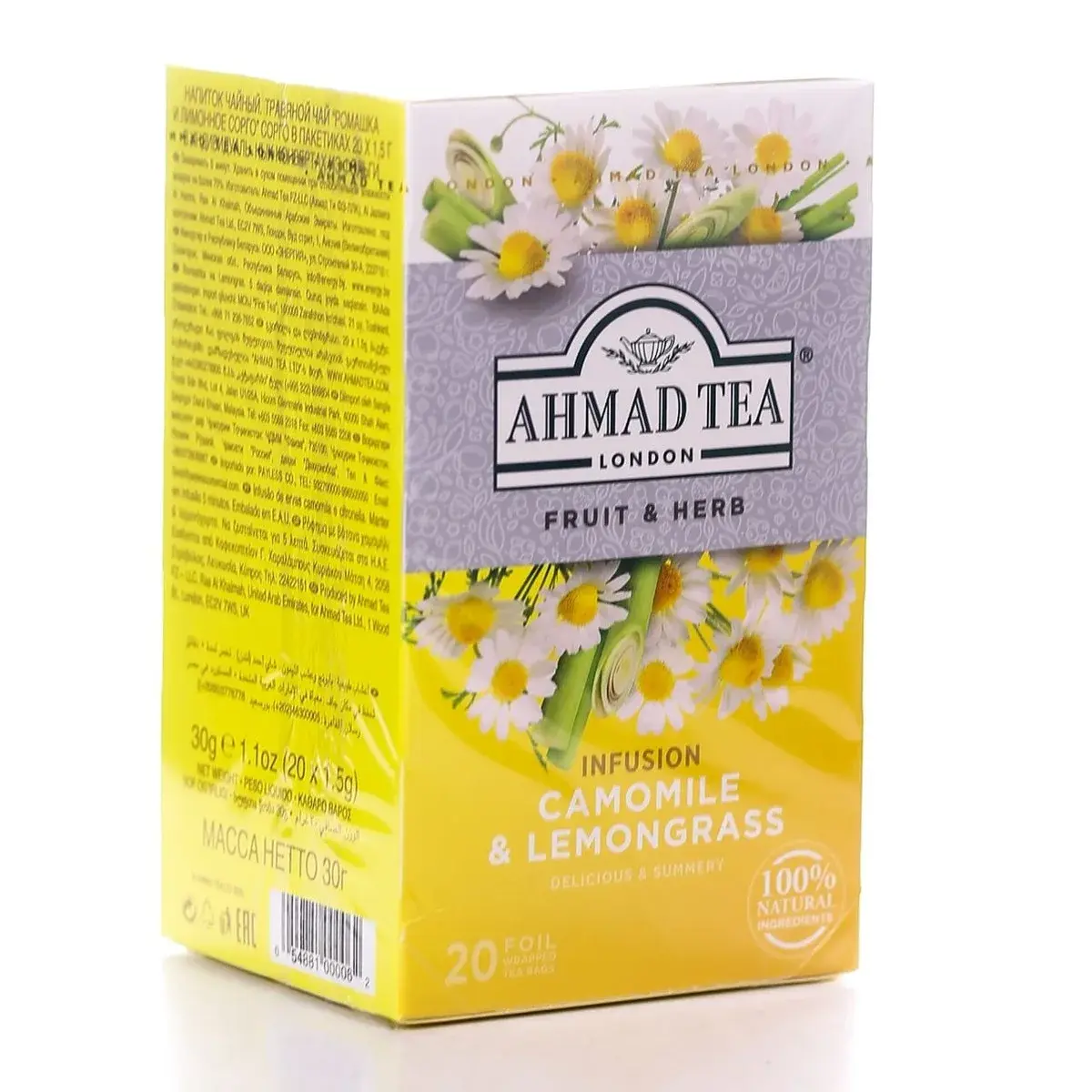
- Ahmad Tea Camomile & Lemongrass, 20 bags (Rs 845), chamomile with a lemony lift, good hot or iced.
All of these sit in our Herbal Tea range, part of the wider Tea department. Every order is cash on delivery.
What chamomile tea is
Chamomile tea is made from the dried flowers of the chamomile plant, a member of the daisy family. It contains no tea leaves, so it has no caffeine. The kind used in most teas is German chamomile, the type the US National Center for Complementary and Integrative Health (NCCIH) focuses on.
It is old medicine. NCCIH notes chamomile appears in ancient medical writings from China, Egypt, Greece and Rome. A review of chamomile research describes it as one of the world's most popular herbal teas, with about a million cups drunk every day.
The taste is mild, slightly sweet and a little like apple or honey. People who find green tea grassy usually like chamomile straight away.
Chamomile tea benefits: what the evidence says
Chamomile is promoted for colds, indigestion, anxiety, sleep, colic and more. NCCIH's verdict is that studies so far have not produced enough reliable evidence to rate how useful it is for any of these. Some studies also test chamomile mixed with other herbs, so it is hard to know what chamomile alone did.
Sleep
This is the main reason people buy it, and the evidence is thinner than you would expect. NCCIH says there is very little information on chamomile and insomnia, and that a 2019 review found one insomnia study, which showed no benefit.
That study is worth knowing. In a small trial of 34 adults with chronic insomnia, a chamomile extract taken twice a day for 28 days made no significant difference to sleep time, time to fall asleep or night waking compared with a placebo. There was a modest, non-significant improvement in daytime functioning.
Another study of 77 older people in nursing homes in Isfahan, Iran found better sleep quality scores after four weeks of chamomile capsules taken twice daily. The comparison group received nothing rather than a dummy capsule, which makes the result harder to trust.
Why might it help at all? The chamomile review suggests any calming effect may come from apigenin, a plant compound that binds to the same brain receptors as some sedative medicines. It also notes that tea contains only small amounts of free apigenin. So a cup of chamomile is gentler than the capsules used in these studies.
Calm and mild anxiety
The anxiety evidence is a little stronger, but again it comes from capsules. In an eight-week trial of 57 people with mild to moderate generalised anxiety disorder, chamomile extract reduced anxiety scores more than placebo, and the authors described the effect as modest.
A longer follow-up study gave 1,500 mg of chamomile extract a day. People who stayed on chamomile kept lower anxiety symptoms than those switched to placebo, but the difference in relapse rates was not statistically significant. These are encouraging, early results. They are not a reason to replace treatment your doctor has prescribed.
The habit itself
The most reliable benefit of a chamomile habit may be what it replaces. The NHS advice on insomnia is to avoid tea or coffee for at least 6 hours before bed and to relax for at least an hour before sleeping. A warm, caffeine-free cup after Isha, with the phone put away, fits both pieces of advice neatly.
If poor sleep has lasted for months, or is making daily life hard to cope with, the NHS says to see a doctor. Tea is not the answer to a sleep problem that serious. Our guides to magnesium for sleep and melatonin cover other options people ask about.
Who should avoid chamomile tea
NCCIH says chamomile is likely safe in the amounts found in tea. Side effects are uncommon, but they can include nausea, dizziness and allergic reactions, which in rare cases are severe. Take extra care in these situations:
- Ragweed or daisy-family allergies: NCCIH says reactions are more likely if you are allergic to related plants such as ragweed, chrysanthemums, marigolds or daisies. If you get hay fever from these, try a weak cup first or choose a non-chamomile herbal tea.
- Pregnancy and breastfeeding: NCCIH says little is known about chamomile's safety here. The NHS pregnancy advice lists chamomile among herbal teas to limit, and says to drink no more than 4 cups of herbal tea a day. Ask your doctor first.
- Blood thinners: interactions between chamomile and warfarin have been reported, NCCIH notes. If you take warfarin or any blood thinner, talk to your doctor before making chamomile a daily habit.
- Other medicines: NCCIH also mentions possible interactions with sedatives and some drugs processed by the liver, and preliminary signs that chamomile may weaken birth control pills. Check with your doctor or pharmacist if you take regular medicine.
- Estrogen-sensitive conditions: chamomile may have some estrogen-like effects, so NCCIH advises caution with conditions such as breast or uterine cancer.
For young children, ask your doctor first, and especially if there is any allergy to daisy-family plants.
The chamomile teas we stock
All four are imported and caffeine free. Prices are ours; cost per cup is the box price divided by the bags.
| Tea | What is in it | Bags | Price | Per cup | Best for |
|---|---|---|---|---|---|
| Lipton Chamomile | Chamomile flowers only | 20 | Rs 895 | about Rs 45 | Plain babuna, nothing added |
| Ahmad Tea Sleep | Camomile, lavender, honey flavour; the box also lists passion flower | 20 (foil) | Rs 928 | about Rs 46 | A floral bedtime cup |
| Ahmad Tea Camomile & Lemongrass | Camomile, lemongrass | 20 (foil) | Rs 845 | about Rs 42 | Any time of day, hot or iced |
| Yogi Tea Organic Bedtime | Fennel, chamomile, valerian root and other herbs | 17 | Rs 1,495 | about Rs 88 | An organic, earthier blend |
A note on Yogi Bedtime: it contains valerian. NCCIH says the evidence for valerian and sleep is inconsistent, and little is known about its safety in pregnancy or breastfeeding, so skip this one if you are pregnant. NCCIH also advises not taking valerian with alcohol or sedatives.
How to choose
- You want plain chamomile: Lipton. One ingredient, and the closest to the babuna your nani made.
- You want a dedicated bedtime cup: Ahmad Sleep, which adds lavender and a honey note. Each bag is sealed in foil, so the box stays fresh in humid weather.
- You want chamomile in the daytime or iced in summer: Ahmad Camomile & Lemongrass.
- You prefer organic and a stronger, herbal taste: Yogi Bedtime, unless you are pregnant or take sedatives.
- You are allergic to ragweed or daisies: skip chamomile and look at the non-chamomile infusions in the Herbal Tea range instead.
How to brew chamomile tea
Chamomile needs hotter water and a longer steep than green tea. Pour about 200 ml of freshly boiled water over one bag, cover the cup with a saucer, and steep for 4 to 5 minutes before taking the bag out. Covering the cup keeps the aroma in.
Drink it plain or with a spoon of honey. It does not need milk. For an iced version in June, brew two bags in a cup of hot water, let it cool and pour it over ice. The Camomile & Lemongrass blend is especially good this way.
If you are making it for sleep, drink it a little while before bed rather than as you lie down, and make it part of a routine: the same time each night, with the phone put away.
More guides in this series
- Green tea benefits and the best green tea in Pakistan
- Matcha in Pakistan: caffeine and how to make it
Sources
- NCCIH: Chamomile, Usefulness and Safety
- Srivastava et al., Chamomile: a herbal medicine of the past with bright future (Molecular Medicine Reports, 2010)
- Zick et al., chamomile extract for chronic primary insomnia: a pilot trial (2011)
- Abdullahzadeh et al., oral chamomile and sleep quality in elderly people in Isfahan (2017)
- Amsterdam et al., chamomile extract for generalised anxiety disorder (2009)
- Mao et al., long-term chamomile for generalised anxiety disorder (2016)
- NHS: Insomnia
- NHS: Foods to avoid in pregnancy
- NCCIH: Valerian
Frequently asked questions
Does chamomile tea really help you sleep?
For most people the honest answer is: possibly a little, and mostly as part of a calm bedtime routine. NCCIH says there is very little evidence on chamomile for insomnia, and the one trial in people with chronic insomnia found no clear improvement in sleep. It is a better habit than late chai, not a sleeping pill.
How many cups of chamomile tea a day is safe?
NCCIH says chamomile is likely safe in the amounts found in teas. During pregnancy, the NHS advises no more than 4 cups of herbal tea a day.
Is chamomile tea safe during pregnancy?
Little is known, according to NCCIH, so ask your doctor first. If they agree, keep within the NHS limit of 4 cups of herbal tea a day, and avoid blends that include valerian.
Does chamomile tea have caffeine?
No. It is made from flowers, not tea leaves, so it is naturally caffeine free. That is what makes it a good evening drink.
Can I drink chamomile tea if I take blood thinners?
Check with your doctor first. NCCIH notes that interactions between chamomile and warfarin have been reported, so a daily habit is something your doctor should know about.
Is babuna the same as chamomile tea?
Yes. Babuna is the Urdu name for chamomile. The tea bags we stock contain the same dried flowers, already portioned, so you do not need to strain loose petals.
Liked this one? Get the next in your inbox.
One fortnightly note from the editors, new pieces, restocks, and the routines we're actually using. Unsubscribe any time.