Matcha in Pakistan: Benefits, Caffeine and How to Make It
Matcha explained: how it differs from green tea bags, its caffeine and benefits, how to make it, and an honest look at the ITO EN matcha tea bags we stock.
Matcha has gone from a Japanese tea ceremony drink to a green latte on café menus in Pakistan's big cities. It is now searched more than green tea itself in Pakistan, and most people asking about it want to know three things: what it is, whether the health claims hold up, and how to drink it at home without spending a fortune.
This guide answers those, explains how matcha differs from an ordinary green tea bag, and is straight with you about what we stock: ITO EN matcha green tea bags, not ceremonial matcha powder.
The short answer, and what we stock
Matcha is powdered Japanese green tea. Because you drink the whole ground leaf, it delivers more of the tea's compounds, including caffeine, than a steeped bag. The health research is promising but early, and most of it is not on matcha itself.
We do not sell matcha powder at the moment. What we sell is the easy daily version, plus plain green teas to compare it with (prices):
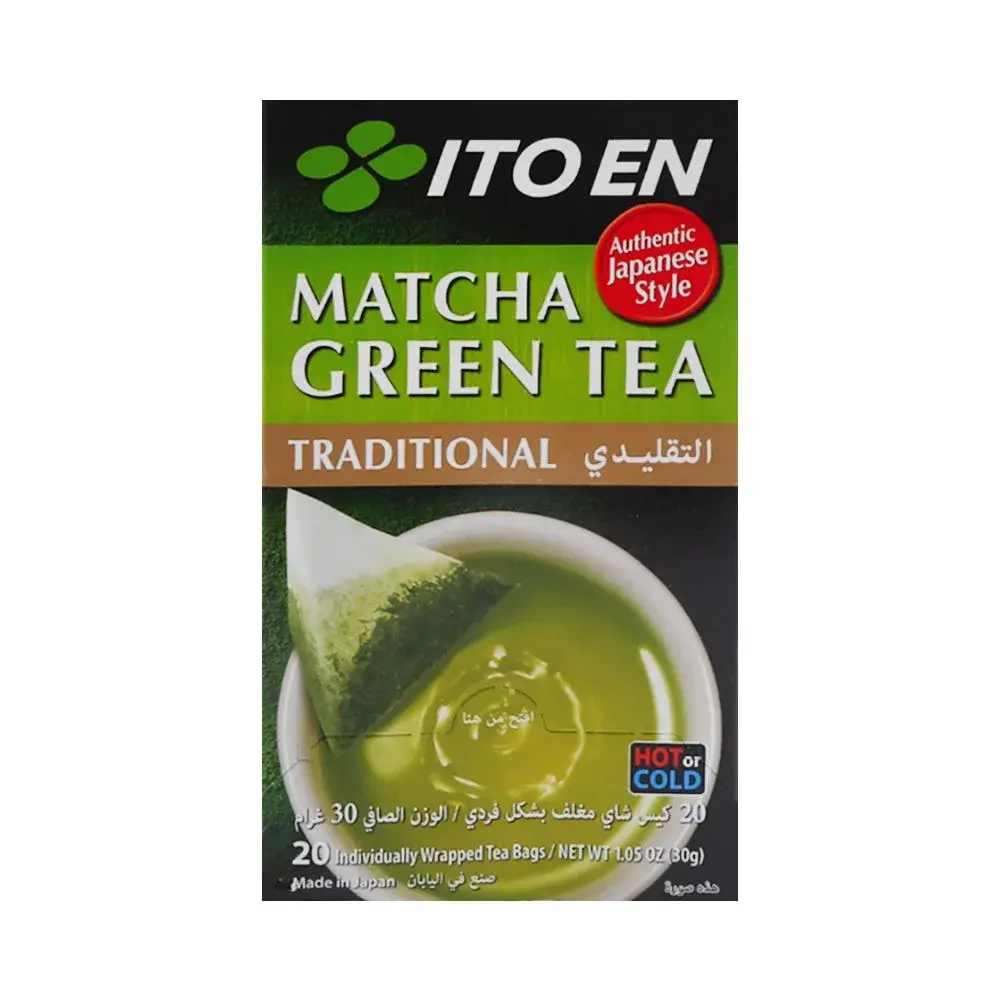
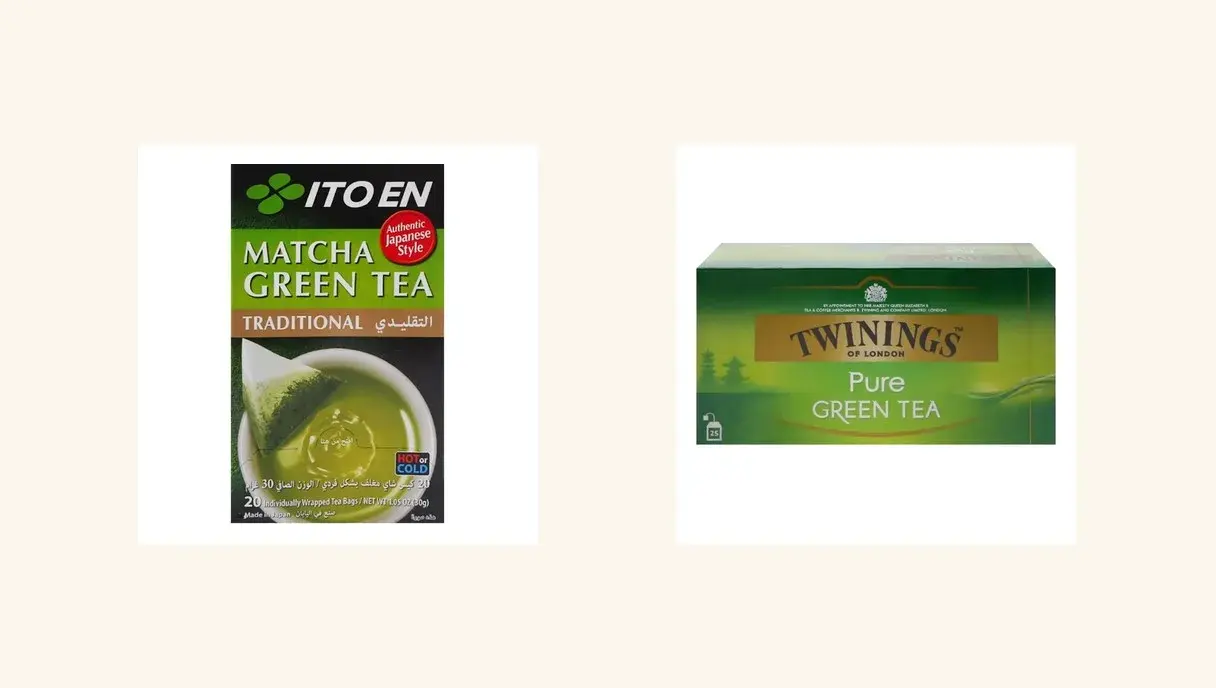
- ITO EN Matcha Green Tea Traditional, 20 bags (Rs 2,595), Japanese green tea blended with matcha, made in Japan, in individually wrapped pyramid bags.
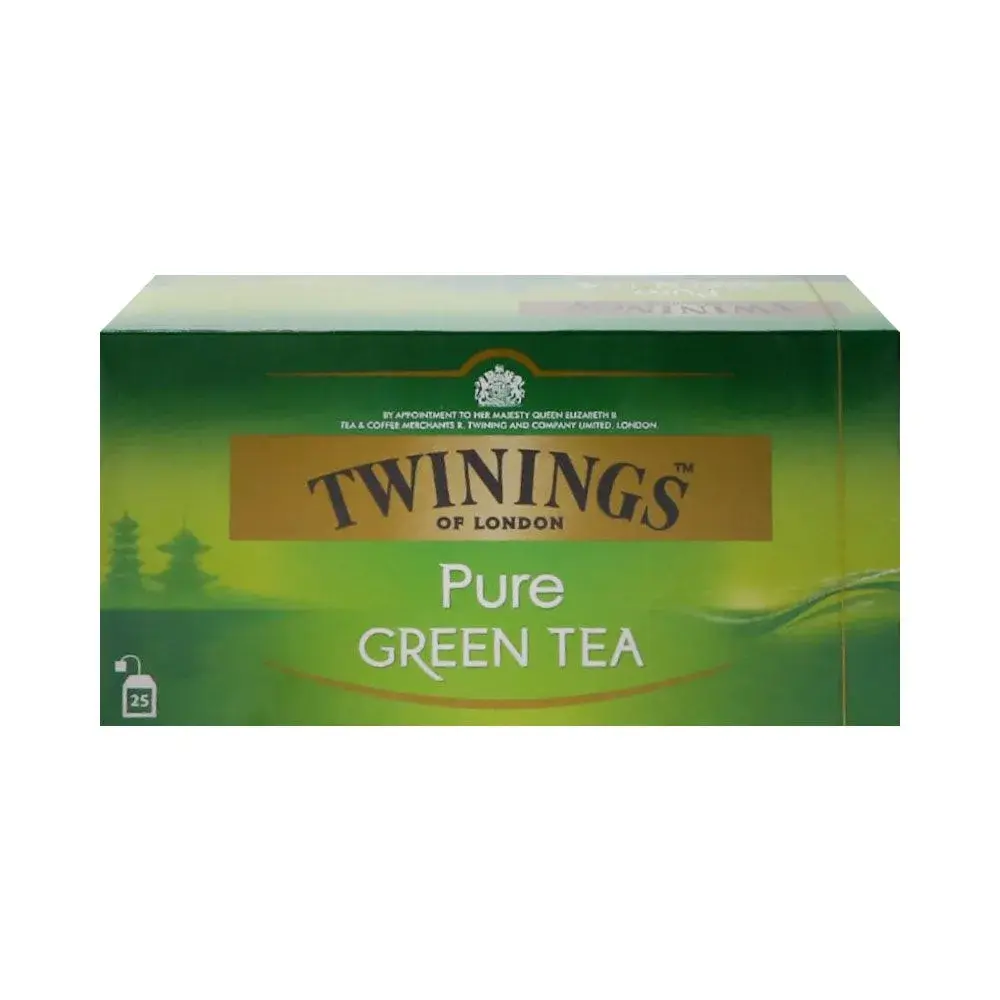
- Twinings Pure Green Tea, 25 bags (Rs 1,652), a plain green tea bag if you want to taste the difference side by side.
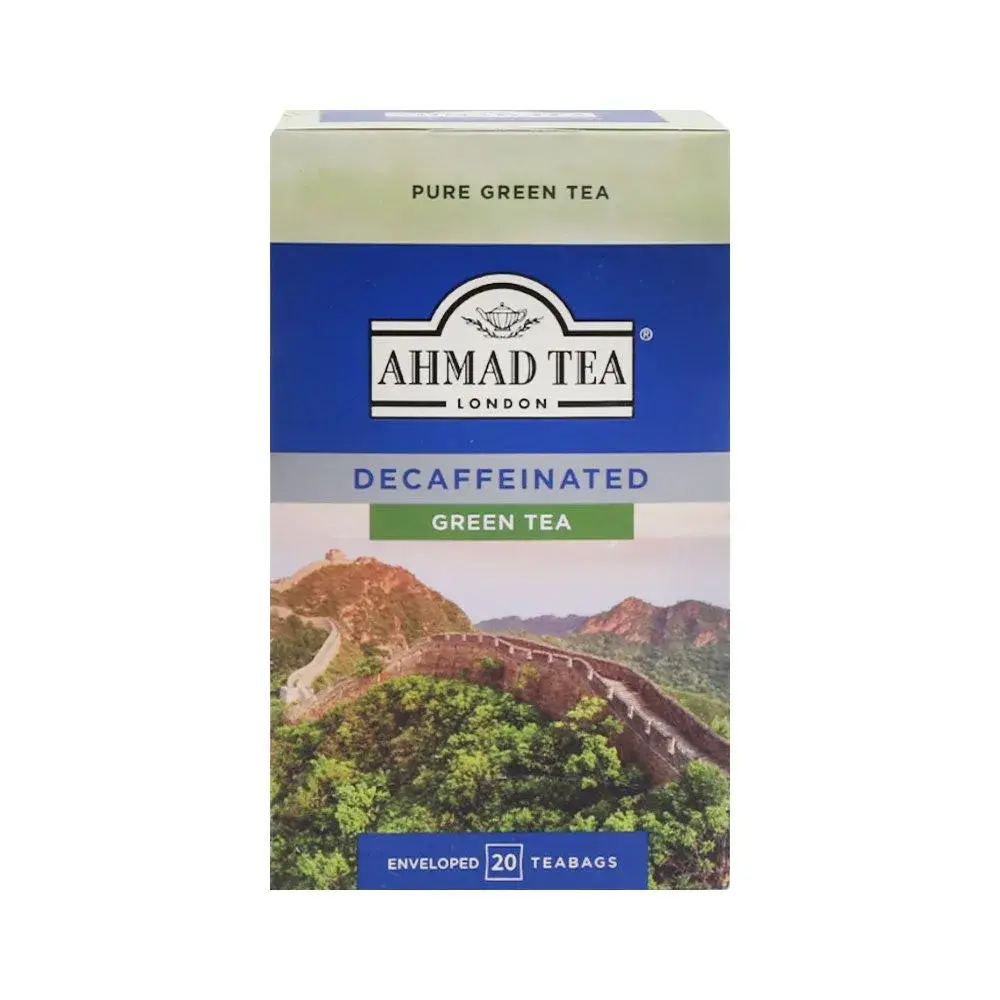
- Ahmad Tea Decaffeinated Green Tea, 20 bags (Rs 928), for an evening cup when matcha's caffeine is too much.
All three are on our Green & Chinese Tea page, part of the Tea department. Every order is cash on delivery.
What matcha is
A 2020 review of matcha research in the journal Molecules describes it as a powdered Japanese green tea made from Tencha leaves. For most of the growing period, the tea bushes are traditionally covered with bamboo mats to shade the leaves from direct sunlight.
That shading changes the leaf. The review explains that shaded plants build up more chlorophyll and more theanine, an amino acid. Chlorophyll gives matcha its bright green colour, and theanine gives it a smooth, savoury, less bitter taste. The leaves are then ground into a fine powder.
Matcha vs green tea bags: what is the difference?
All green tea comes from the same plant, Camellia sinensis. The differences are in how the leaf is grown and how you drink it.
| Matcha powder | Green tea bag | |
|---|---|---|
| Growing | Shaded before harvest | Grown without the special shading |
| Form | Fine powder | Cut leaves in a bag |
| How you drink it | Whisked into water, the whole leaf is swallowed | Steeped, then the leaves are thrown away |
| Taste | Smooth, savoury, rich | Lighter, grassier |
| Caffeine | Higher per serving | Lower per cup |
| Kit needed | Whisk, bowl, sifter | A cup and a kettle |
The biggest difference is the last step. With a tea bag, hot water pulls some compounds out of the leaf and the rest goes in the bin. With matcha, you drink the leaf. The review cites research showing that infusions made by steeping leaves contain fewer polyphenols than drinks made from the powdered form.
How much caffeine is in matcha?
More than in ordinary green tea. The Molecules review reports caffeine in matcha samples ranging from 18.9 to 44.4 mg per gram of powder, compared with 11.3 to 24.67 mg per gram for other green teas. ITO EN lists its Matcha Love organic ceremonial powder at about 31 mg of caffeine per gram.
ITO EN's own preparation method uses 2 g of matcha for one bowl. At 31 mg per gram, that is roughly 62 mg of caffeine, and somewhere between about 38 and 89 mg across the range in the review. For comparison, the US FDA lists about 37 mg in a 12 fl oz (355 ml) cup of brewed green tea.
For most adults, the FDA cites 400 mg a day as an amount not generally linked to negative effects. In pregnancy, the NHS sets the limit at 200 mg a day from all sources, chai and coffee included. Matcha counts towards both.
Matcha benefits: what the evidence says
Matcha is sold on its antioxidants, mainly catechins such as EGCG. The Molecules review calls matcha a concentrated source of these compounds and lists many possible benefits, from protecting cells to supporting brain function.
But read its conclusion closely. The authors say the direct effects of matcha have not been sufficiently explored, and that randomised clinical trials are needed to confirm the hoped-for benefits in people. Much of what is written about matcha borrows from green tea research, and much of that comes from lab and animal studies.
Focus and calm
This is the benefit most matcha drinkers talk about. The review notes that the combination of L-theanine and caffeine may improve concentration and alertness more than either one alone. Matcha's shading keeps more theanine in the leaf, which is the reasoning behind its reputation as a smoother lift than coffee. The evidence is still early.
Heart health and weight
For green tea in general, the US National Center for Complementary and Integrative Health (NCCIH) says definite conclusions cannot yet be reached for most uses. Green tea products lowered LDL cholesterol to a small extent in trials.
On weight, a Cochrane review found that green tea preparations produced weight loss too small to be clinically important. Matcha is not a weight-loss drink, whatever social media says.
Safety
NCCIH says no safety concerns have been reported for green tea drunk as a beverage by adults, apart from its caffeine. Liver injury, though uncommon, has been reported mainly with concentrated green tea extracts in tablets or capsules. NCCIH also notes that green tea at high doses can lower blood levels of nadolol, a heart and blood pressure medicine, so ask your doctor if you take regular medicine.
How to make matcha
With matcha powder
ITO EN's traditional method goes like this:
- Sift the matcha so there are no clumps.
- Warm a small bowl with boiling water, then pour the water away.
- Add 2 g of matcha, which is two bamboo scoops or half a teaspoon.
- Let the kettle cool to about 80°C (176°F) and pour about 60 ml (2 oz) into the bowl.
- Hold the whisk upright just above the bottom of the bowl and whisk in a zigzag for 30 seconds until a dense foam forms.
For a latte, make the same small bowl, then top it up with warm milk and a little honey if you like.
With ITO EN matcha tea bags
This is the everyday route. Pour 200 ml of water at about 80°C over one bag and brew for 1 to 2 minutes. In summer, put one bag in 500 ml of cold water and leave it in the fridge for an hour for a clean iced green tea, which beats a sugary bottled drink in Karachi heat. Boiling water straight off the stove will make it bitter, so let the kettle rest first.
ITO EN matcha tea bags vs ceremonial powder: an honest comparison
On its product page, ITO EN describes Matcha Green Tea Traditional as its own blend of matcha and sencha (Japanese green tea leaves), with no added colour or flavourings. Each bag is wrapped on its own. Our box weighs 30 g for 20 bags, so about 1.5 g of tea per bag.
Here is what that means in practice:
- Taste: smoother and more savoury than a standard green tea bag, thanks to the matcha. It is not the thick, frothy bowl you get from whisked powder.
- How much leaf you drink: with powder you swallow all of it. With the bag, you steep a sencha and matcha mix and throw the bag away.
- Caffeine: ITO EN does not state a figure for the bags. Expect less than a bowl of whisked powder, because most of the leaf stays in the bag.
- Effort: no whisk, no sifting, no clumps. It works in an office or a hostel room with just a kettle.
- Lattes: you can brew one or two bags strong in a little water and add warm milk, but for a proper café-style latte, powder is better.
If you are curious about matcha, the bags are a sensible first step: you get the taste on a normal morning, hot or cold, and you find out whether you like it before investing in a whisk and a tin of powder.
How to choose
- You want matcha flavour without the kit: ITO EN Matcha Green Tea.
- You want to compare it with plain green tea: add a box of Twinings Pure Green Tea and brew both the same way.
- You want iced green tea on a budget: Twinings Green Tea & Lemon (Rs 1,652) brewed strong and poured over ice, or Ahmad Tea Jasmine Green Tea (Rs 543) for a cheaper daily cup.
- You are pregnant or caffeine sensitive: keep matcha to a minimum and choose Ahmad decaffeinated green tea instead.
- You want ceremonial-grade powder: we do not stock it yet. Look for a sealed tin from a named Japanese producer, and avoid loose powder of unknown origin.
More guides in this series
- Green tea benefits and the best green tea in Pakistan
- Chamomile tea: benefits, brewing and who should avoid it
Sources
- Kochman et al., Health Benefits and Chemical Composition of Matcha Green Tea: A Review (Molecules, 2020)
- ITO EN: Preparing Matcha
- ITO EN: Matcha Green Tea Traditional Tea Bags
- ITO EN: Matcha Love Organic Ceremonial Matcha Powder
- US FDA: Spilling the Beans, how much caffeine is too much?
- NHS: Foods to avoid in pregnancy
- NCCIH: Green Tea, Usefulness and Safety
- Cochrane review: Green tea for weight loss and weight maintenance in overweight or obese adults
Frequently asked questions
Is matcha healthier than green tea?
Probably richer in some compounds, because you drink the whole leaf, and the Molecules review found more caffeine per gram in matcha. Whether that adds up to better health has not been proven in human trials. Both are good habits if they replace sugary drinks.
Does matcha have more caffeine than coffee?
Usually less per cup. A 2 g bowl of matcha has roughly 38 to 89 mg on the review's figures, while the FDA lists 113 to 247 mg for a 12 fl oz cup of regular brewed coffee. It does have more than a typical cup of green tea.
Is ITO EN matcha tea real matcha?
It contains real matcha, blended with Japanese sencha leaves in a tea bag, according to ITO EN. It is not pure matcha powder, so the cup is lighter than a whisked bowl.
Can I drink matcha every day?
Most adults can, as long as total caffeine from all drinks stays within the FDA's 400 mg a day. In pregnancy, keep within the NHS limit of 200 mg, and ask your doctor.
Does matcha help with weight loss?
There is no good evidence that it does. The Cochrane review of green tea preparations found any weight loss was too small to be clinically important.
Can I make a matcha latte with tea bags?
You can make a matcha-flavoured milky tea: brew one or two ITO EN bags strong in a little hot water, then add warm milk. It will be lighter and less creamy than a latte made from whisked powder.
Liked this one? Get the next in your inbox.
One fortnightly note from the editors, new pieces, restocks, and the routines we're actually using. Unsubscribe any time.