ORS in Pakistan: When & How to Use Oral Rehydration Salts (2026)
ORS treats dehydration from diarrhoea, vomiting and summer heat. When and how to use oral rehydration salts for adults and kids, and when to see a doctor.
According to the WHO, diarrhoeal disease is still one of the leading causes of death in young children worldwide, and dehydration is what makes it so dangerous. The good news is that a remedy that is cheap, simple and genuinely life-saving can prevent most of it. That remedy is oral rehydration salts, or ORS.
The main ORS uses are treating and preventing dehydration. That includes a stomach bug, vomiting, a fever, or the brutal Pakistani summer when garmi and loo winds drain the body within hours.
Every household in Pakistan should know how to use oral rehydration salts correctly. Just as important is knowing when ORS alone is not enough. This guide walks you through all of it, for both adults and children.
What ORS is and how it works
ORS, or oral rehydration salts, is a precisely balanced mix of glucose (sugar) and electrolytes. The main electrolytes are sodium and potassium, dissolved in clean water.
When you are dehydrated, you have lost not just water but also these essential salts. Plain water alone cannot replace them efficiently.
The clever part is the science. Your gut has a built-in pump called glucose-sodium co-transport. Sodium and glucose are absorbed together across the intestinal wall, and water follows them into the bloodstream.
By pairing the right amount of sugar with the right amount of salt, ORS hijacks this pump. It pulls fluid into the body far faster than water on its own, even when the gut is irritated by diarrhoea. This simple idea is one of the most important medical advances of the last century, and it works in your kitchen as well as in a hospital.
When to use ORS
ORS is useful any time the body is losing fluid and salts faster than usual. Common situations in Pakistan include:
- Diarrhoea. The classic and most important use. ORS in diarrhoea replaces the fluid and salts lost in loose stools and prevents dangerous dehydration.
- Vomiting. Sipped slowly in small amounts, ORS helps replace what is lost even when keeping food down is hard.
- Heat exhaustion and the summer loo. During heatwaves, heavy sweating strips the body of water and salts. ORS for dehydration is invaluable for outdoor workers, commuters and anyone caught in the garmi.
- Heavy sweating and physical work. Labourers, athletes and people exercising in the heat lose a lot through sweat and benefit from electrolytes, not just water.
- Fever. A high temperature increases fluid loss, so ORS helps keep both children and adults hydrated.
- After exercise. A mild way to top up electrolytes and rehydrate after a hard session in hot weather.
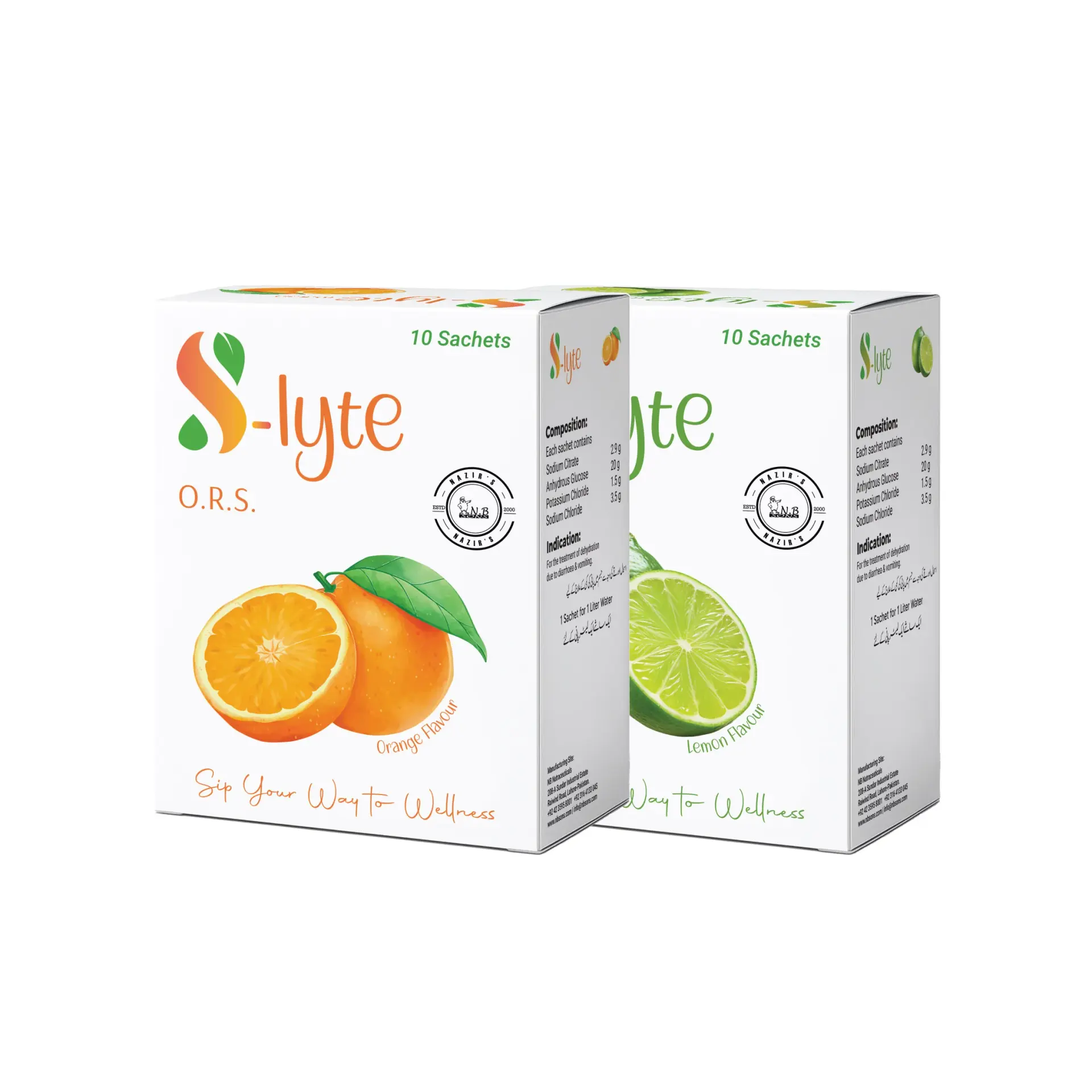
A convenient option is S-Lyte ORS Hydration Sachets (Rs 299). They come in lemon and orange flavours that make them far easier to sip, especially for children who refuse plain salty water.
How to prepare and dose ORS correctly
The single most important rule is to follow the packet instructions exactly. ORS only works at the right concentration.
- Use clean water. Dissolve the sachet in the exact volume of clean, safe drinking water stated on the packet, usually 200ml per sachet or one litre, depending on the product. Boiled and cooled or bottled water is safest.
- Do not over-concentrate. Never add extra powder or use less water to "make it stronger". A too-strong solution draws water out of the body and can worsen dehydration. Likewise, do not water it down too much.
- Do not add sugar, salt or juice. The balance is already correct. Adding more changes the chemistry.
- Mix fresh and use within 24 hours. Discard any solution left after a day and make a fresh batch. Keep it covered and cool.
- Sip slowly and steadily. Small, frequent sips are absorbed better than large gulps, and are less likely to trigger more vomiting.
ORS for children and adults
ORS is safe and recommended for all ages, but the approach differs a little.
For children
Children dehydrate faster than adults, so ORS is especially important. Offer small amounts often. For example, give a few teaspoons or sips every few minutes after each loose stool or vomit, rather than forcing a large drink.
Continue normal feeding and breastfeeding alongside. The pleasant lemon and orange flavours of a flavoured ORS make it much easier to get a reluctant child to drink. If you also want to keep your child topped up on everyday nutrients during recovery, see our guide to the best multivitamin for kids in Pakistan.
For adults
Adults should drink ORS after each episode of diarrhoea or vomiting. Keep sipping through the day to stay ahead of losses.
In heat, do not wait until you feel parched. Thirst lags behind real fluid loss, so keep drinking even if you feel fine.
Signs of dehydration to watch for
Recognising dehydration early lets you act before it becomes serious. Common signs include:
- Thirst and a dry mouth, lips or tongue.
- Dark yellow urine, or passing much less urine than usual.
- Tiredness, dizziness or light-headedness.
- Headache and difficulty concentrating.
- In babies and young children, fewer wet nappies, no tears when crying, a sunken soft spot on the head, and unusual sleepiness or irritability.
The NHS guide to dehydration has a clear checklist that is useful to keep in mind.
When ORS is NOT enough: see a doctor
ORS treats and prevents most mild to moderate dehydration, but it has limits. Get medical help or go to hospital if you see any of these:
- Severe dehydration, for example sunken eyes, very little or no urine, rapid breathing, a fast weak pulse, or extreme weakness.
- Persistent vomiting that makes it impossible to keep even small sips of ORS down.
- Blood in the stool or in vomit.
- Drowsiness, confusion or unresponsiveness.
- High fever, severe abdominal pain, or diarrhoea lasting more than a few days.
- Dehydration in a very young baby, an elderly person, a pregnant woman, or anyone with a chronic illness.
In these cases the person may need intravenous (IV) fluids and treatment that only a doctor or hospital can provide. The WHO fact sheet on diarrhoeal disease and rehydration stresses that ORS is the first-line treatment, but severe cases need urgent professional care. When in doubt, do not delay.
Preventing dehydration in the Pakistani summer
Prevention beats treatment, especially during the long, fierce Pakistani summer. A few habits go a long way:
- Drink water regularly through the day, not just when thirsty.
- Keep ORS sachets at home and in your bag during heatwaves, road trips and at work sites.
- Avoid the midday sun where possible and take breaks in the shade.
- Eat water-rich foods such as cucumber, watermelon and citrus.
- Watch the very young and very old closely, as they dehydrate fastest.
If summer heat is also leaving you flat and exhausted, our piece on always feeling tired and the causes of fatigue in Pakistan covers other reasons for low energy. For seasonal sniffles that often arrive with the changing weather, see our guide to spring allergies in Pakistan and natural relief. And if a sensitive stomach is part of your picture, our article on how to reduce bloating and improve gut health may help.
This article was written and medically reviewed to our medical review board standards and is for general guidance, not personal medical advice. Always speak to a doctor or pharmacist about your own situation.
Shop S-Lyte ORS Hydration Sachets →Frequently asked questions
Can I just drink water instead of ORS?
For mild thirst, water is fine. But when you have lost a lot of fluid through diarrhoea, vomiting or heavy sweating, you have also lost salts that water alone cannot replace efficiently. ORS provides the right balance of glucose and electrolytes so your gut absorbs fluid faster, making it far more effective for real dehydration.
Is ORS safe for children?
Yes, ORS is recommended for children and is the preferred treatment for dehydration from diarrhoea. Give small amounts frequently and continue normal feeding or breastfeeding. Flavoured options such as lemon and orange make it easier for children to accept.
How much ORS should I drink?
As a general rule, take ORS after each loose stool or vomit and keep sipping through the day to stay ahead of your losses. Always follow the dosing on the packet, and for severe or ongoing illness, ask a doctor or pharmacist for guidance specific to you.
Can I make ORS stronger by adding more powder?
No, never. A too-concentrated solution can pull water out of your body and make dehydration worse. Always dissolve the sachet in the exact amount of clean water stated on the packet, and do not add extra sugar or salt.
Is ORS useful for heat stroke and the summer loo?
ORS helps with heat exhaustion and heavy sweating by replacing lost fluid and salts, and it is sensible to use during the Pakistani summer. However, true heat stroke, with a very high body temperature, confusion or collapse, is a medical emergency that needs immediate cooling and hospital care, not just ORS.
How long can I keep a prepared ORS solution?
Use it within 24 hours. Keep it covered and cool, and throw away any solution left after a day. Make a fresh batch as needed using clean, safe water.
Can adults use ORS too, or is it only for kids?
ORS is for all ages. Adults benefit just as much during diarrhoea, vomiting, fever or heat-related fluid loss. It is a smart thing to keep in any household, office or travel bag, especially in summer.
Liked this one? Get the next in your inbox.
One fortnightly note from the editors, new pieces, restocks, and the routines we're actually using. Unsubscribe any time.