Body Lotion in Pakistan: How to Choose One That Actually Works on Dry Skin
Body lotion in Pakistan: what the ingredient list really tells you, which formula suits your skin, and the two minutes after a shower that matter most.
Sometime in late October your shins start to itch under your shalwar. By December there is a fine white scale on them that shows up every time you scratch, and the skin on the back of your hands feels a size too small. Most of us reach for whatever lotion is in the bathroom, use it for four days, then forget about it until next winter.
The frustrating thing is that body lotion mostly does work. What usually fails is the timing, the formula, or the expectation. Here is what the label is actually telling you, which type suits which kind of dryness, and the one habit that does more than any product swap.
What a body lotion is doing on your skin
A dermatology review of how moisturisers work groups the ingredients by mechanism: occlusives, humectants, emollients and protein rejuvenators. In plain terms, humectants such as glycerin and hyaluronic acid pull water toward the surface. Emollients soften and smooth the rough edges of the outer layer. Occlusives sit on top and slow the rate at which that water escapes again. The same review notes that most products on the shelf combine several of these classes rather than relying on one.
Most decent lotions do all three, which is why the ingredient list matters more than the picture on the front. The American Academy of Dermatology names a short list of ingredients worth looking for: jojoba oil, dimethicone, glycerin, hyaluronic acid, lactic acid, lanolin, mineral oil, petrolatum and shea butter. If two or three of those sit in the top half of the ingredient list, the product is doing real work.
Glycerin is the one to check first, because it is cheap, well studied and usually listed second, right after water, in anything worth buying.
The two minutes that matter more than the product
The AAD is specific about this: apply moisturiser while your skin is still damp after a shower or bath. The NHS says the same thing about emollients, adding that you should smooth them on in the direction your hair grows rather than rubbing against it, which can block follicles.
So the sequence is: shorten the shower to five or ten minutes, keep the water warm rather than hot, pat yourself dry instead of scrubbing with the towel, and put the lotion on while you are still slightly damp. The AAD lists every one of those as a dry skin measure in its own right.
If you take nothing else from this article, take that. Moving your lotion from "after I get dressed" to "while I am still standing on the bath mat" costs nothing and changes more than switching brands.
Lotion, cream or ointment
These are not marketing words. They describe how much oil is in the mix, and the NHS lays out the trade-off plainly.
- Lotions are thin, spread easily and contain the least oil. They suit large areas, hairy skin and anyone who hates a greasy finish. They also do the least per application.
- Creams absorb fairly quickly without much grease, which makes them the sensible daytime choice.
- Ointments are thick and greasy, hold in the most moisture, and work best overnight or on skin that is genuinely cracked.
The AAD goes further and says ointments and creams add more moisture and are more effective than lotions. That is worth knowing, but it is not an instruction to buy an ointment. A lotion you will actually apply every day beats an ointment that feels so heavy you skip it. If your dryness is mild to moderate, a lotion is fine. If your heels crack or your hands split, use a lotion in the morning and something heavier at night.
Fragrance, and when to care about it
Nearly every affordable body lotion is scented, and for most people that is not a problem. For some it is. A review in Dermatologic Clinics puts fragrance allergy at roughly 0.7% to 2.6% of the general population, rising to between 5% and 11% positive reactions among people who get patch tested for suspected contact dermatitis.
The practical rule: if your skin is already irritated, eczema-prone or reactive, go fragrance-free. The AAD adds a detail worth remembering, which is that "fragrance-free" and "unscented" are not the same thing, because unscented products can still contain masking chemicals.
Note also that a leave-on lotion stays on your skin all day, while a body wash is rinsed off in under a minute. If you are going to be picky about fragrance somewhere, be picky here rather than in the shower. Our guide to choosing a body wash covers that side of the routine.
The body lotions we stock, compared
Three options that cover most situations, with the details taken from the bottles themselves.
| Lotion | Size | Fragrance | Best for | Price |
|---|---|---|---|---|
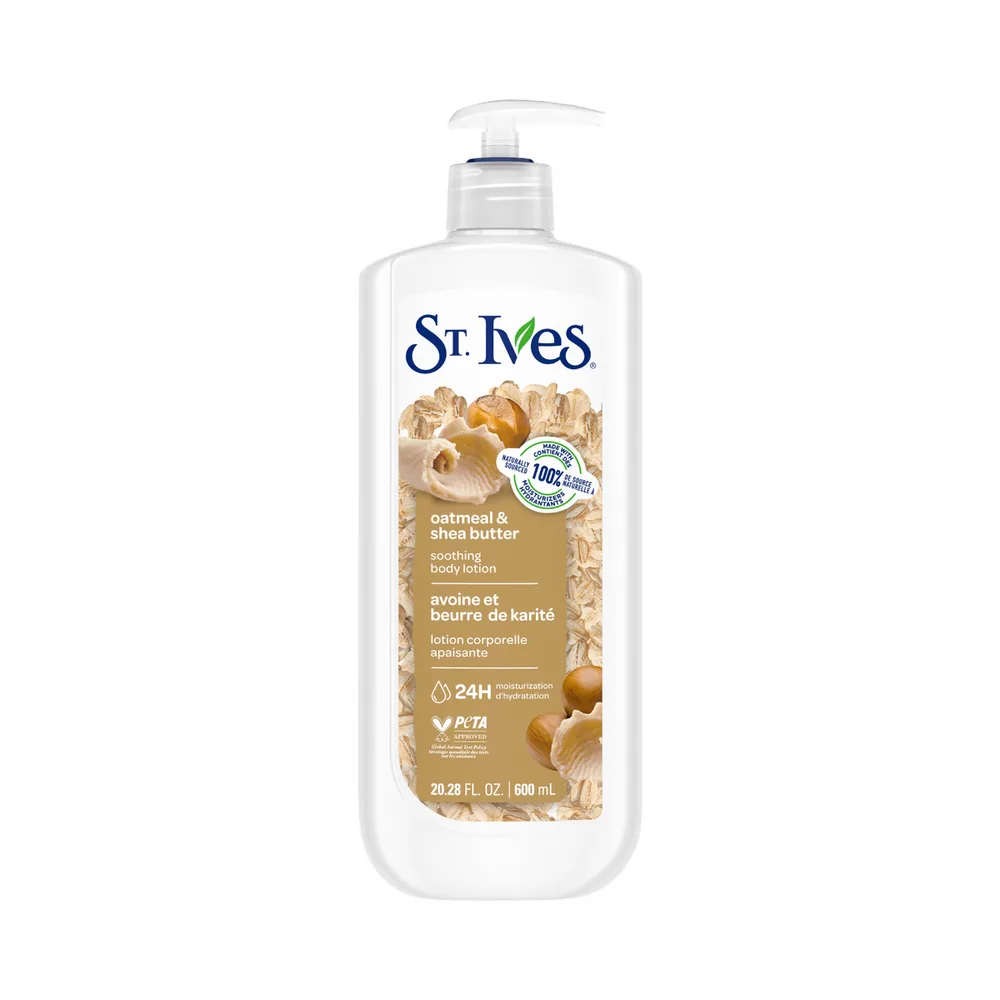
| St. Ives Oatmeal & Shea Butter Hand & Body Lotion | 600ml | Scented | Rough, tight, genuinely dry skin on a budget | Rs 1,670 |
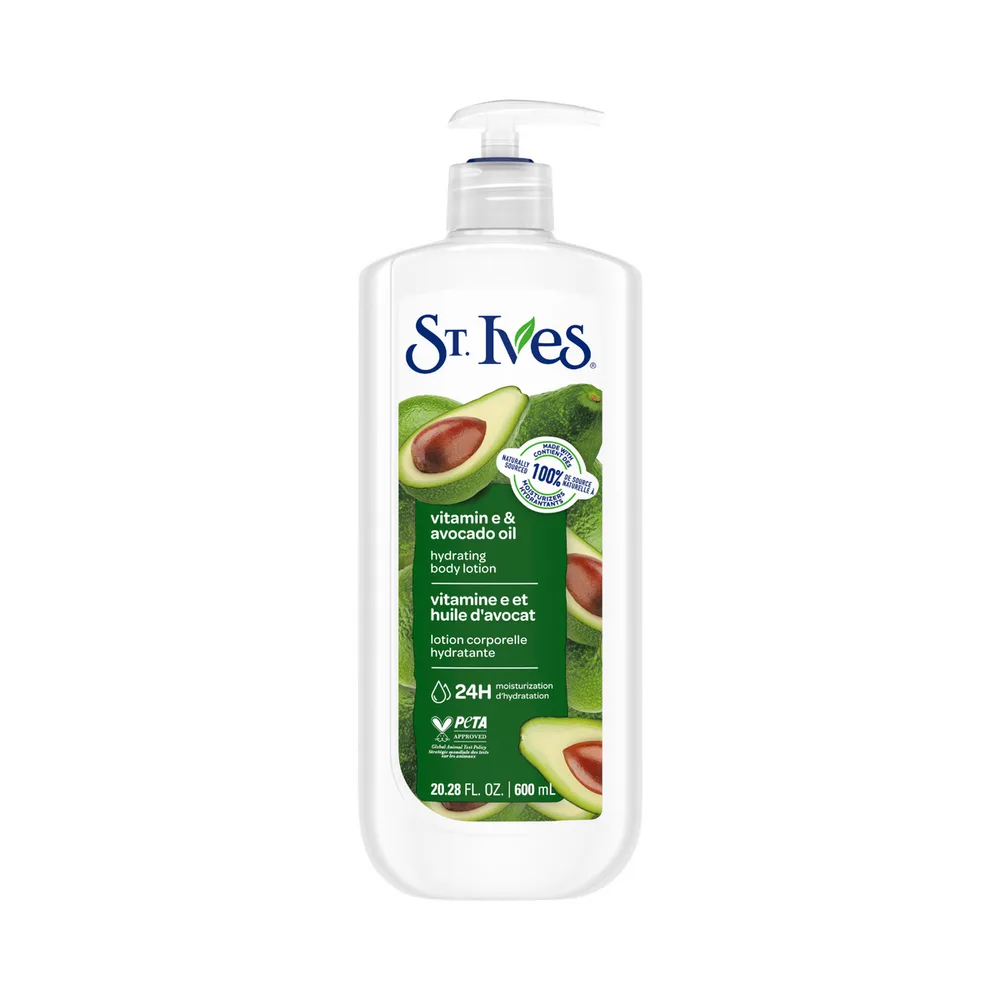
| St. Ives Vitamin E & Avocado Hand & Body Lotion | 600ml | Scented | Dry skin that also gets easily annoyed | Rs 1,760 |
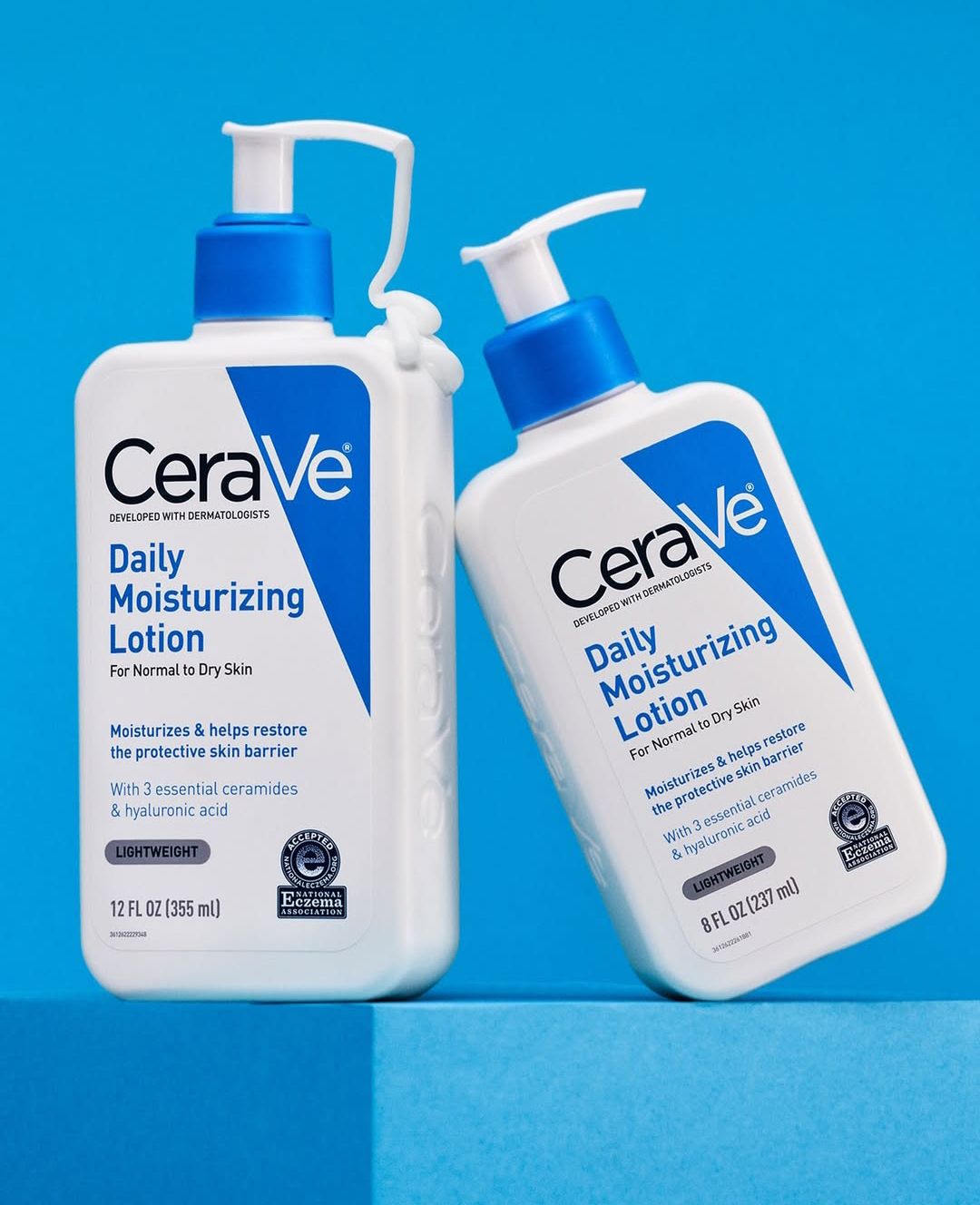
| CeraVe Daily Moisturizing Lotion | 236ml | Fragrance-free | Reactive skin, eczema-prone skin, face and body in one bottle | Rs 5,500 |
St. Ives Oatmeal & Shea Butter, 600ml
Glycerin is the second ingredient, followed by soybean oil, coconut oil, shea butter and oat meal extract further down. St. Ives says the formula gives 24 hour moisture without a greasy feel, and that it is dermatologist tested and paraben free. It is scented, and the ingredient list names the usual fragrance components including limonene and coumarin, so it is the wrong pick if fragrance is your problem. At 600ml it is the cheapest way to cover arms, legs and hands daily.
St. Ives Vitamin E & Avocado, 600ml
Same glycerin and soybean oil base, with avocado oil and tocopheryl acetate added. The brand positions this one for dry or sensitive skin and says it is dermatologist tested and paraben free. It still contains fragrance, so "sensitive" here means the texture and the base formula rather than an allergy-safe product. Patch test it on your inner forearm for a couple of days if scented products have burned you before.
CeraVe Daily Moisturizing Lotion, 236ml
This is the fragrance-free one. It is built around three ceramides, hyaluronic acid and glycerin, with dimethicone in the mix, which is on the AAD's list of ingredients to look for. CeraVe says its MVE technology releases the ceramides slowly so the barrier keeps getting support after you have finished applying, and that the formula is non-comedogenic and works on face and body. The bottle is a quarter of the size of the St. Ives ones and costs considerably more, so plenty of people keep CeraVe for the face and reactive patches and use a larger lotion everywhere else.
The rest of the St. Ives scents sit under the brand page, and everything in this category is under body care. For faces specifically, our guide to the best moisturisers for dry skin goes into ceramides and barrier repair in more depth.
About "whitening" body lotions
A large share of the body lotion market in Pakistan is sold on the promise of a lighter skin tone. A moisturiser cannot bleach you. What a good lotion genuinely does is smooth the surface so light reflects more evenly, and hydrated skin does look brighter than flaky skin, which is where a lot of the before-and-after photography comes from.
If what is actually bothering you is tanning or patchy darkening, the lever that works is sun protection plus time, not a richer lotion. We have written separately about removing a tan and about dark underarms, both of which deal with the causes rather than the marketing.
Questions people actually ask
How much lotion should I be using?
More than you think. The NHS notes that emollients cannot be overused and recommends applying at least three or four times a day for skin that needs treatment. For ordinary winter dryness, once after your shower and once before bed is a reasonable floor.
Can I use body lotion on my face?
Depends on the bottle. CeraVe sells its Daily Moisturizing Lotion for face and body and calls it non-comedogenic. St. Ives sells its range as hand and body lotion and says to use a facial product on your face, so take them at their word.
Why does my skin feel dry again an hour later?
Usually because the lotion went onto dry skin rather than damp skin, so there was less water to seal in. Sometimes it is the air around you. The AAD recommends a humidifier to raise the humidity level in your home, which matters in a closed room with a gas heater running. It also notes that wool or polyester worn against dry, sensitive skin can irritate it, so check what your winter layers are made of before blaming the lotion.
Is a 600ml bottle enough for a Pakistani winter?
Used twice a day on arms, legs and hands, one 600ml bottle typically lasts a single person a couple of months. If you are treating heels and elbows as well, buy two.
Does an expensive lotion work better?
Not reliably. What you pay for at the top end is usually texture, fragrance and fragrance-free formulation for sensitive skin. Glycerin, the ingredient doing most of the lifting, costs almost nothing and appears second on the list in both the cheapest and the most expensive lotions we sell.
What to do this week
Pick one lotion and keep it where you dry off, not in a cupboard. Shorten your showers and drop the temperature a notch. Put the lotion on within a couple of minutes of stepping out, while your skin is still damp, and again before bed if your skin is really struggling. Give it two weeks before you judge it.
If you are not sure what your skin needs overall, our Routine Finder asks a few questions and builds a routine you can save.
This article is general information, not medical advice. If your skin is cracked, bleeding, intensely itchy or not improving with regular moisturising, see a dermatologist, since persistent dryness can be a sign of eczema, psoriasis or a thyroid problem rather than the weather.
Sources
Liked this one? Get the next in your inbox.
One fortnightly note from the editors, new pieces, restocks, and the routines we're actually using. Unsubscribe any time.