Sunscreen for Dry Skin in Pakistan: What to Use and How to Layer It
Sunscreen for dry skin in Pakistan: what to look for, three picks that hydrate, and a morning routine that stops tightness, flakes and pilling.
It is 11am on a December weekday in Lahore. You put sunblock on at 8, and now your cheeks feel tight, there is a white flaky ring around your nose, and the sunscreen has rolled into little grey bits wherever you touched your face. Most women take this as proof that sunscreen "doesn't suit dry skin" and quietly stop using it until summer.
The real problem is usually the wrong texture sitting on skin that was never prepped for it. This guide covers what dry skin needs from a sunscreen, three picks we stock that actually work on it, and a morning routine that stops the tightness and pilling for good.
Why dry skin and sunscreen so often clash
Dry skin has lost moisture and hydration, which is why it feels rough, tight or flaky. Cleveland Clinic lists the usual culprits as cold weather, low humidity, hot showers and harsh cleansers, plus the natural drop in oil production as we get older (Cleveland Clinic, dry skin). A Pakistani winter checks most of those boxes at once.
Now look at what most popular sunscreens are designed for. A lot of them are built for oily, humid-weather skin: matte finish, oil control, "dry touch". Those textures are great in a Karachi July. On skin that already has no spare oil, they sit on top, cling to flakes and make the tight feeling worse.
So the fix has two parts. Pick a sunscreen whose texture leans hydrating, and put enough moisture underneath it that the sunscreen has a smooth surface to sit on.
What to look for in a sunscreen for dry skin
Protection first
Texture matters, but protection is the point. The NHS advises a sun protection factor (SPF) of at least 30 for UVB and at least 4-star UVA protection (NHS, sunscreen and sun safety). Korean sunscreens show their UVA protection as a PA rating instead, such as the PA++++ on the picks below. Either way, you want a label that talks about UVA as well as SPF.
A cream or lotion texture
For dry skin, "moisturising", "hydrating" or a creamy lotion texture is the better bet than "matte", "sec" or "oil control". You can still use a light fluid if you love it; you just need a richer moisturiser underneath (more on that below).
Hydrating ingredients in the formula
Cleveland Clinic points dry skin towards products with glycerin, hyaluronic acid, petroleum jelly, lanolin or mineral oils. You will not find all of these in a sunscreen, but seeing glycerin, hyaluronic acid or a hydrating extract high on the ingredient list is a good sign.
No fragrance if your skin also stings
Very dry skin is often reactive too. If your face burns or itches with new products, a non-perfumed sunscreen tested on sensitive skin removes one possible trigger.
Sunscreen for dry skin: three picks compared
Prices below come live from our product pages, so they are always current.
| Product | Role in the routine | Texture (per the product page) | Best for | Price |
|---|---|---|---|---|
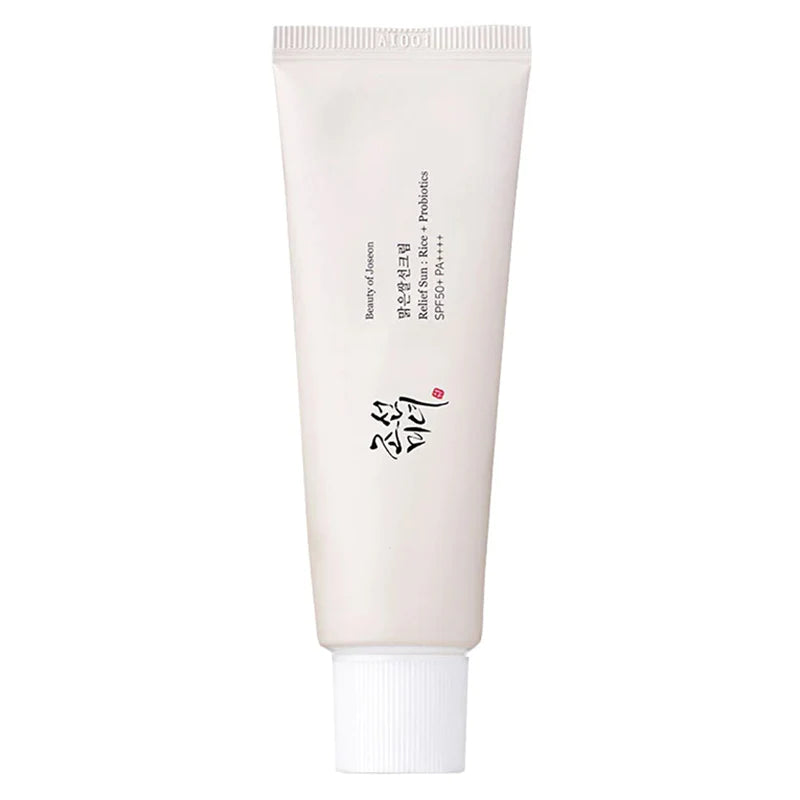
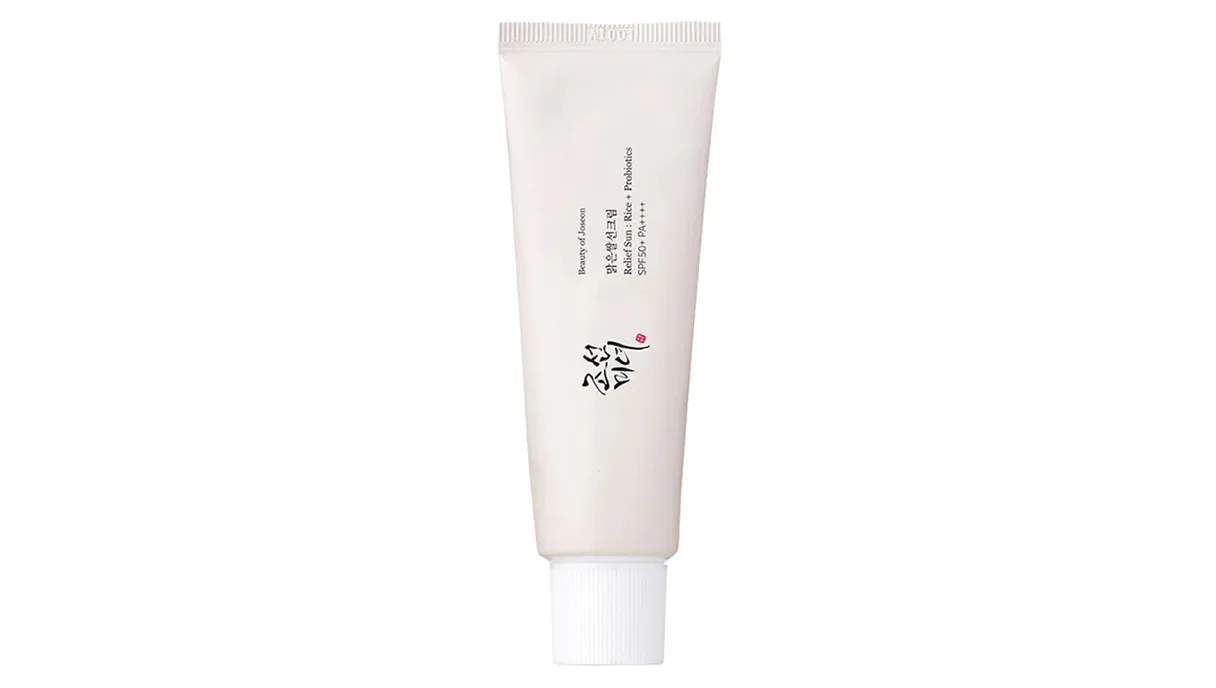
| Beauty of Joseon Relief Sun: Rice + Probiotics SPF50+ PA++++, 50ml | Sunscreen | Light moisturising cream, no white cast | Dry and dehydrated skin that wants one easy step | Rs 4,210 |
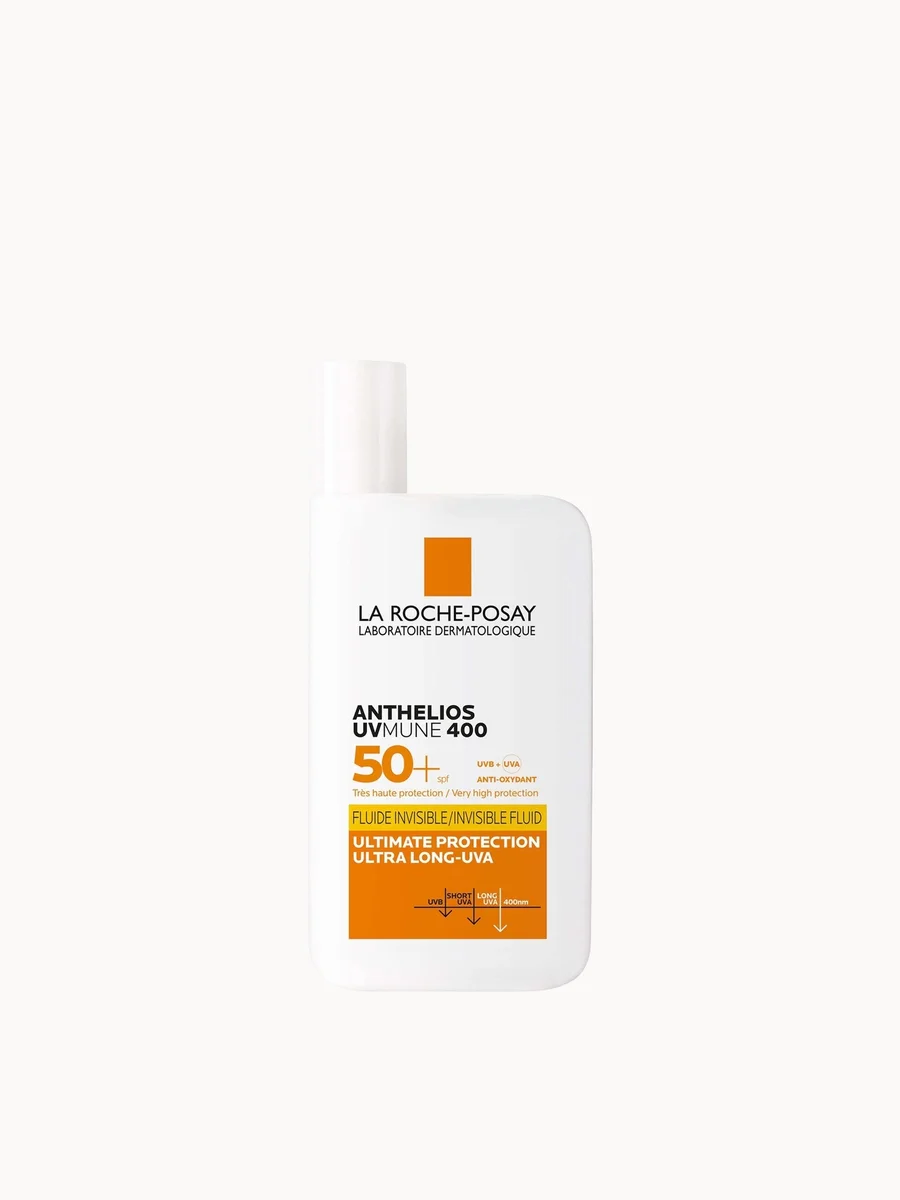
| La Roche-Posay Anthelios UVMune 400 Invisible Fluid SPF50+, 50ml | Sunscreen | Ultra-light fluid, non-perfumed | Dry skin that is also sensitive or reactive | Rs 7,740 |
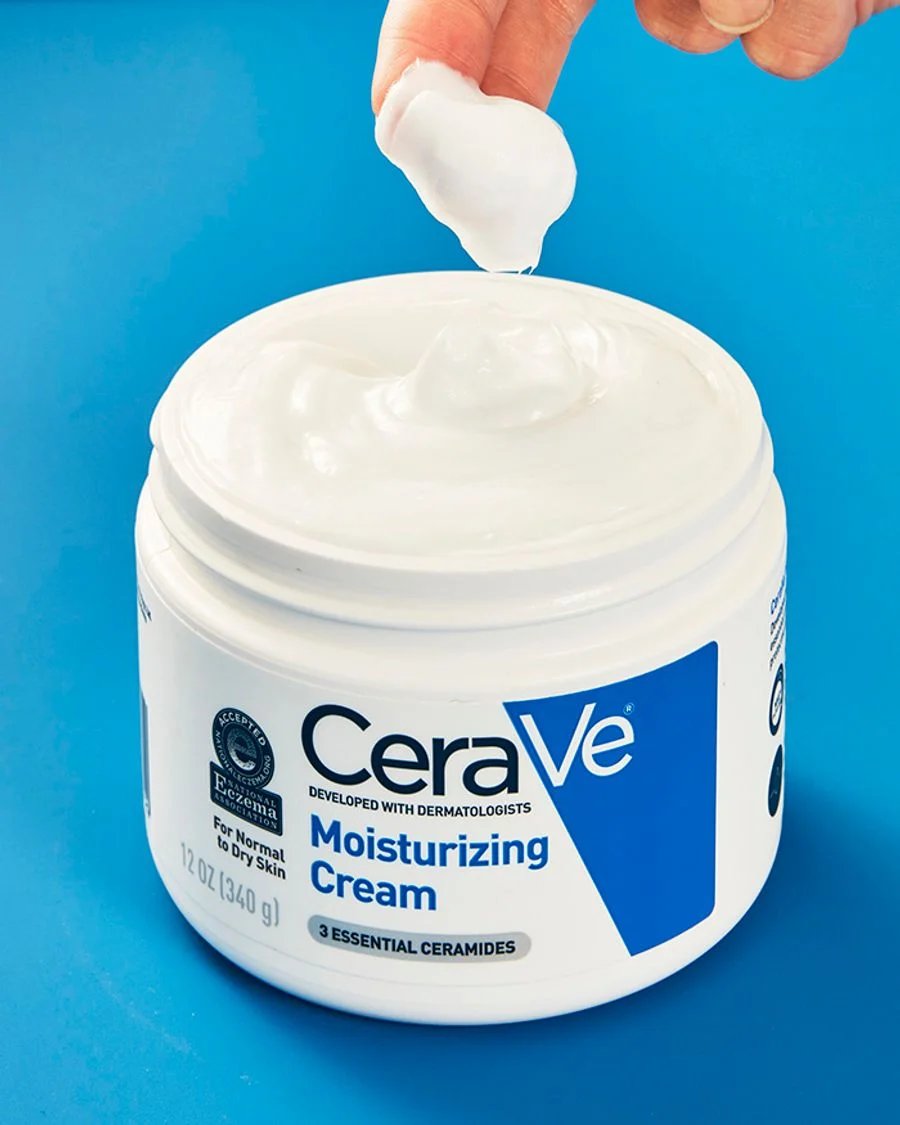
| CeraVe Moisturizing Cream, 340g | Moisturiser under sunscreen | Rich, non-greasy cream | Very dry, flaky or tight skin | Rs 6,500 |
Beauty of Joseon Relief Sun: Rice + Probiotics
This is the one to try first if your skin is dry. On its product page, the Beauty of Joseon Relief Sun: Rice + Probiotics (Rs 4,210) is described as wearing like a light moisturising cream rather than a sunscreen, and it is recommended for all skin types including dry, dehydrated and sensitive skin.
The base is 30% rice extract with grain fermented extracts, plus niacinamide. It uses organic (chemical) filters for SPF50+ PA++++, so it sinks in clear with no white cast on brown skin. It is a good single step on mildly dry days. On properly flaky winter skin, put a moisturiser under it.
La Roche-Posay Anthelios UVMune 400 Invisible Fluid
If your dry skin also stings, reddens or reacts to almost everything, this is the calmer choice. The La Roche-Posay Anthelios UVMune 400 Invisible Fluid (Rs 7,740) is the non-perfumed version, tested on sensitive, reactive and intolerant skin, and it contains glycerin and the brand's thermal spring water.
Its selling point is Mexoryl 400, a filter the brand says it developed to cover ultra-long UVA (the 380 to 400nm band). The brand also says 97.3% of 113 users in its own 14-day study had no white marks after applying it. Be honest with yourself about texture, though: it is an ultra-light fluid, so dry skin needs a moisturiser underneath.
CeraVe Moisturizing Cream, the layer underneath
A sunscreen on its own rarely fixes dry skin. What sits under it matters more. The CeraVe Moisturizing Cream (Rs 6,500) is made for normal to dry skin, with three ceramides, hyaluronic acid and petrolatum, and it is fragrance-free and non-comedogenic.
Petrolatum and hyaluronic acid are two of the ingredients Cleveland Clinic suggests for dry skin, which is why this cream works so well as the base. The 340g jar also covers your hands and body, which get just as dry in winter. For a full comparison of creams, see our guide to the best moisturizer for dry skin.
How to layer sunscreen on dry skin without flaking or pilling
Most pilling and patchiness comes from order and timing, not from the sunscreen itself. Here is the routine that works.
- Cleanse gently, with warm water, never hot. Hot water is one of the dry skin triggers Cleveland Clinic names. A creamy, non-foaming cleanser helps too; our face wash for dry skin guide has options.
- Moisturise while skin is still slightly damp. Cleveland Clinic advises applying moisturiser after washing while the skin is damp, and again morning and night.
- Let the moisturiser settle. Give it a few minutes until your face no longer feels slippery. Rushing this step is the most common reason sunscreen rolls into bits.
- Apply sunscreen as the very last step. Cleveland Clinic's advice on skin care order is to go from lightest to heaviest texture, with sunscreen as the final morning step. Our skincare routine order guide walks through the full sequence.
- Use enough. La Roche-Posay recommends two finger lengths for the face and neck. A thin smear gives you less protection than the number on the tube.
- Pat, then leave it. Press the last layer in with your fingertips rather than rubbing back and forth over flaky patches.
Does dry skin need sunscreen in winter?
Yes. The cooler months feel gentle, but the NHS advice to reapply every 2 hours applies whenever you are outdoors, and it adds that you should not rely on sunscreen alone: shade and covering up count too.
For many Pakistani women the bigger worry is pigmentation rather than sunburn. Cleveland Clinic notes that ultraviolet and infrared radiation from the sun are key in making melasma worse, and it recommends sunscreen with SPF 30 to 50, applied every two hours, plus a wide-brimmed hat (Cleveland Clinic, melasma). Skipping sunscreen from November to February undoes a lot of summer effort.
If melasma is your main concern, note that Cleveland Clinic specifically mentions sunscreen with iron oxides, so check the ingredient list of tinted formulas for them. Our tinted sunscreen guide explains the options, and the pigmentation and melasma cream guide covers treatment.
Mistakes that make dry skin worse under sunscreen
- Using an oily-skin sunscreen. Matte, "sec" and oil-control formulas are made to absorb shine. If your skin is dry, choose from our list here, not from the oily skin sunscreen guide.
- Relying on SPF in foundation. Cleveland Clinic says makeup with SPF gives you, at best, about half the protection you think, because nobody applies foundation as thickly as the test does.
- Stacking layers when you reapply. On dry skin, several thick layers start to crack. Blot gently with a tissue first, then reapply a normal amount.
- Using last year's half-empty tube. The NHS says to check the open-jar symbol on the pack, which shows how many months a sunscreen lasts once opened.
- Treating flakes with a scrub before sunscreen. Scrubbing right before you apply sunscreen leaves skin raw. Keep exfoliation for the evening, and not every night.
The bottom line
Dry skin does not need to give up sunscreen; it needs the right texture and a proper base. Moisturise on damp skin, let it settle, then finish with a generous layer of a hydrating sunscreen such as Beauty of Joseon Relief Sun, or La Roche-Posay UVMune 400 if your skin is sensitive. Reapply when you are out, and keep going through winter.
Browse the full sunscreen collection or our best sunblock in Pakistan guide if you want to compare more options.
Frequently asked questions
Which sunblock is best for dry skin in Pakistan?
For most dry skin, a creamy formula like Beauty of Joseon Relief Sun: Rice + Probiotics is the easiest start, since the brand recommends it for dry and dehydrated skin. If your skin is also sensitive, La Roche-Posay Anthelios UVMune 400 over a rich moisturiser is the gentler route. Sunblock and sunscreen mean the same thing in everyday Pakistani use.
Can I skip moisturiser if my sunscreen is hydrating?
On mildly dry days, yes, a hydrating sunscreen can be enough. If your skin feels tight within an hour or you see flakes, you need a moisturiser underneath. Cleveland Clinic's order is moisturiser first, sunscreen last.
Is brown skin safe without sunscreen?
The NHS notes that naturally brown or black skin has some protection against UV rays and a lower chance of skin cancer. That protection does not stop sun-driven pigmentation such as melasma, which is exactly what most of us are trying to prevent.
Do I need to reapply sunscreen over makeup?
If you are outdoors, yes. The NHS advises reapplying every 2 hours and straight after you have been in water.
Liked this one? Get the next in your inbox.
One fortnightly note from the editors, new pieces, restocks, and the routines we're actually using. Unsubscribe any time.