Face Scrub in Pakistan: When It Helps and When It Hurts
A face scrub helps some skin and quietly wrecks other skin. How often to scrub, when salicylic acid is the better call, and what to avoid.
Most of us learned to scrub from an older sister or a beauty parlour aunty, and the lesson was usually the same: if your skin feels rough or looks dull, rub harder. A gritty tube lives in nearly every bathroom cabinet in Pakistan, and it usually gets used far more often than the label says. That habit is why plenty of women here have skin that stings under sunscreen and flushes in the heat without ever working out why.
A face scrub can genuinely help. It can also undo a month of careful skincare in four days. The difference comes down to what your skin is dealing with, how often you reach for the tube, and whether a scrub is even the right tool for your particular problem.
What a face scrub actually does
A scrub is physical exfoliation. Small particles, usually milled shell, sugar, or bamboo, are dragged across the skin to lift away dead cells sitting on the surface. Done occasionally and lightly, that leaves skin smoother to the touch and helps makeup sit better.
What a scrub does not do is reach inside a pore. Grit works on the surface it can touch. This matters because the things most Pakistani women buy scrubs for, blackheads and congestion, are happening below the surface, inside the pore lining. Scrubbing the top of a blocked pore harder does not unblock it.
That is the job of a chemical exfoliant. Salicylic acid is oil soluble, so it works its way into the pore itself. MedlinePlus describes it as a keratolytic that treats acne "by reducing swelling and redness and unplugging blocked skin pores to allow pimples to shrink." Cleveland Clinic makes the same distinction in its guide to facial acids, noting that salicylic acid gets "really deep into the pores" while glycolic acid, an AHA, works more on surface tone and texture and "can be very strong and irritating."
The mistake almost everyone makes: frequency
Read the back of your tube. St. Ives, which is what most Pakistani shelves stock, puts three to four times a week on its face scrubs. Not daily. Not twice daily after a dusty commute on Ferozepur Road.
For skin that is calm and only slightly rough, three to four times a week is reasonable. For most people, once or twice a week is plenty, and you lose very little by doing less. Skin sheds dead cells on its own. Exfoliation speeds that up, and speeding it up past a certain point just strips the barrier that keeps water in and irritants out.
Both the NHS and Mayo Clinic put a ceiling on washing itself, never mind scrubbing. The NHS advises you "do not wash affected areas of skin more than twice a day," because "frequent washing can irritate the skin and make symptoms worse." It also says to use lukewarm water, since "very hot or cold water can make acne worse."
If you have active acne, this part matters
Here is the uncomfortable bit, and it is worth being straight about it even though we sell scrubs. Cleveland Clinic's acne self-care guidance tells people to "avoid using skin care products with alcohol, astringents, toners and exfoliants, which can irritate your skin." Gentle washing is the instruction, not vigorous cleaning.
If you have inflamed spots, pustules, or cystic acne right now, a scrub is the wrong tool. Dragging grit over an active breakout spreads irritation and can leave marks that outlast the pimple. The NHS is equally blunt about the related habit: do not try to clean out blackheads or squeeze spots, because "this can make them worse and cause permanent scarring."
For that skin, a leave-on acid does the work without the friction. If acne is your main concern, our guide to salicylic acid for acne in Pakistan goes into the routine in more detail, and how to remove blackheads and whiteheads covers what works on congestion specifically.
Scrub or acid: which one is yours
| Your situation | Better choice | Why |
|---|---|---|
| Skin feels rough, looks dull, no active spots | Gentle scrub, once or twice a week | Surface build-up responds to surface exfoliation |
| Blackheads and clogged pores | Leave-on salicylic acid | It is oil soluble and works inside the pore, where grit cannot reach |
| Active, inflamed acne | Skip the scrub entirely | Cleveland Clinic advises avoiding exfoliants on acne-prone skin |
| Uneven tone, dark marks, early fine lines | An AHA such as glycolic acid, at night | Works on surface tone and texture; start once or twice weekly |
| Sensitive skin that reddens easily | The gentlest scrub you can find, or nothing | Barrier repair beats exfoliation when skin is already reactive |
| Currently using retinol or a prescription acne cream | Ask your dermatologist first | Stacking exfoliation on top of a retinoid is how people end up peeling |
If you are not sure which column you are in, the free Routine Finder quiz walks through a couple of questions and builds a routine around your actual skin instead of a guess.
Three options worth considering
We stock a handful of exfoliants. These three cover most people who land on this page, and they are deliberately different from each other.
| Product | Best for | Price |
|---|---|---|
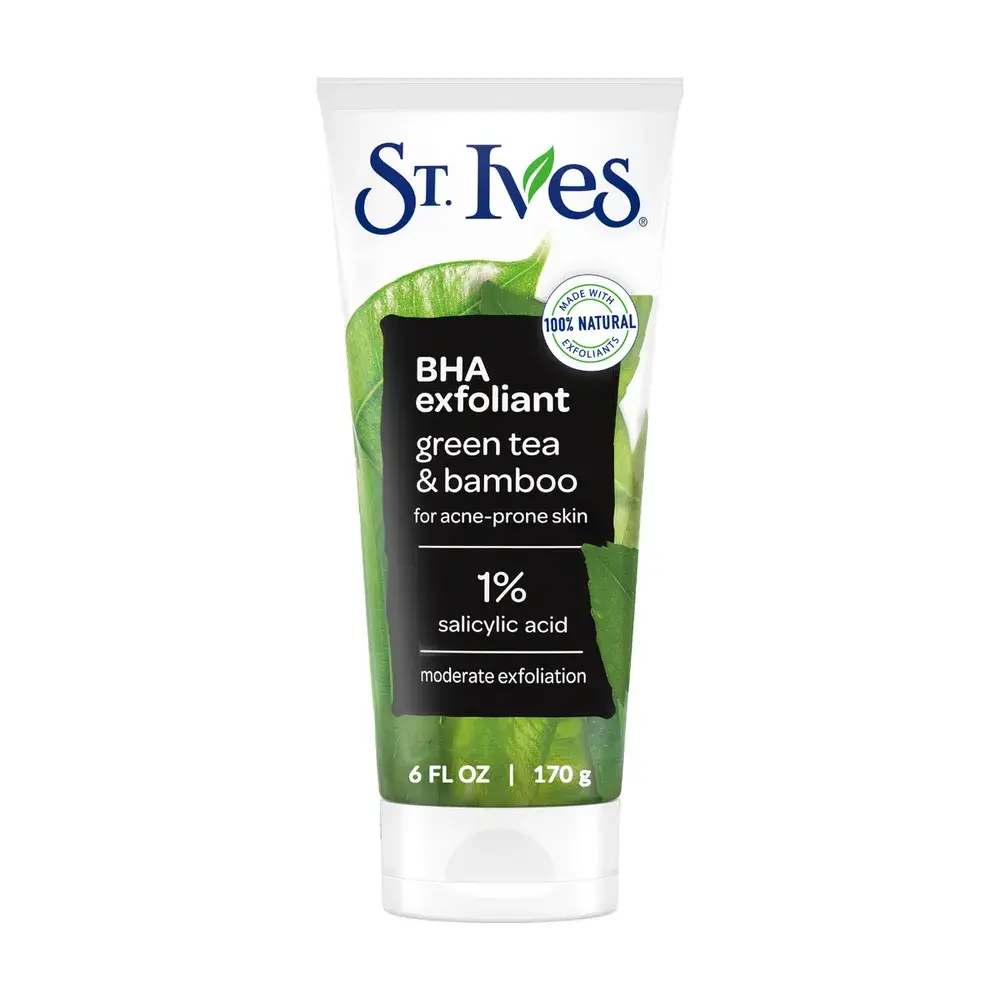
| St. Ives Blackhead Clearing BHA Green Tea & Bamboo Face Scrub 170g | Oily, blackhead-prone skin that tolerates grit | Rs 910 |
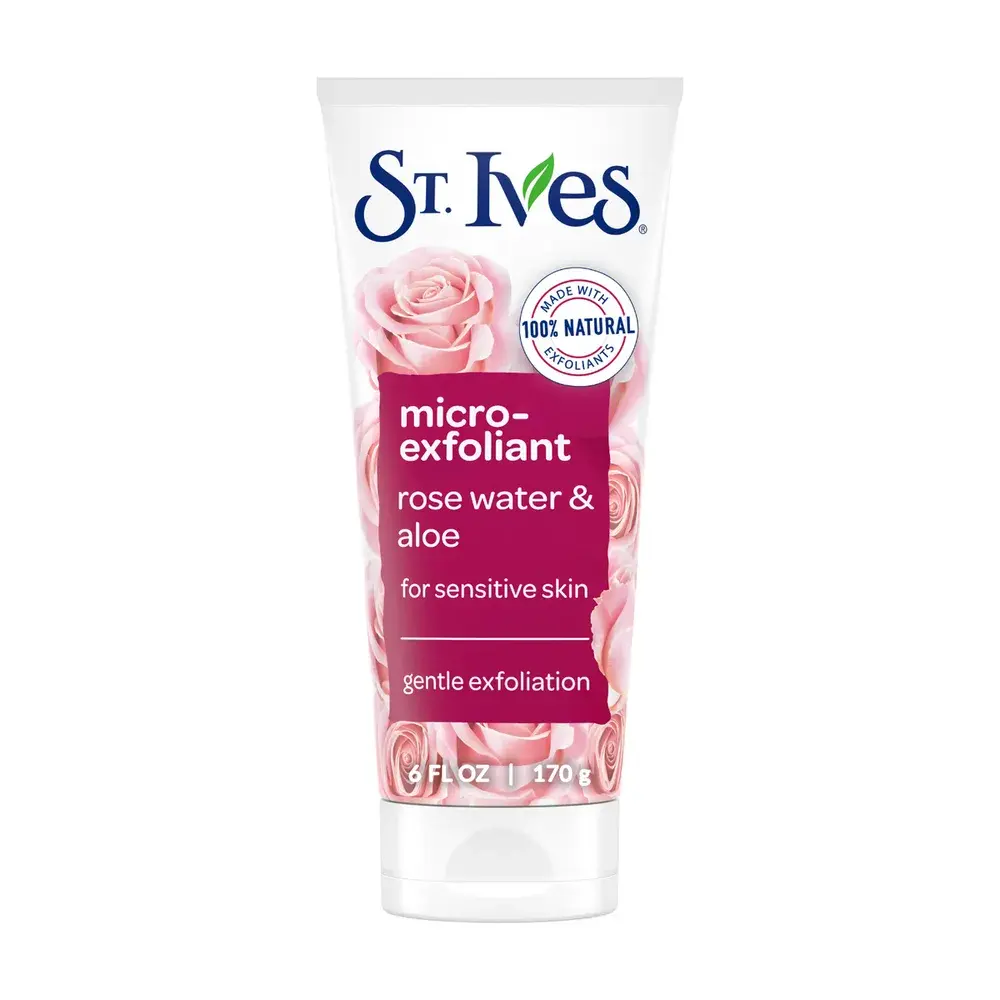
| St. Ives Gentle Smoothing Rose & Aloe Face Scrub 170g | Sensitive or easily reddened skin | Rs 910 |
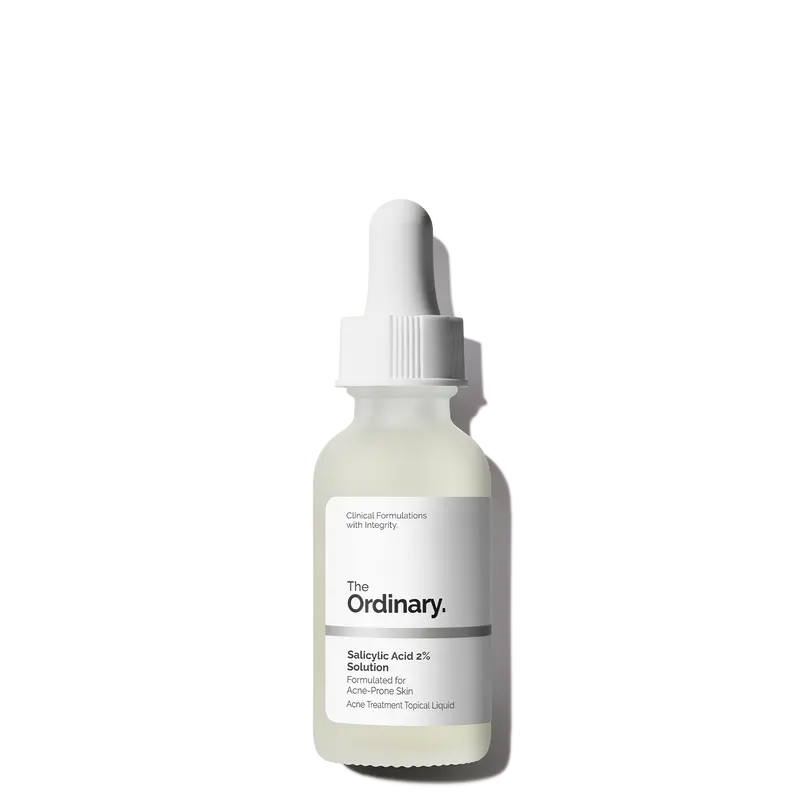
| The Ordinary Salicylic Acid 2% Solution 30ml | Congestion and blemishes, no scrubbing involved | Rs 2,800 |
St. Ives BHA Green Tea & Bamboo, Rs 910
This one carries 1% salicylic acid alongside its physical exfoliants, so it does a little of both jobs. The brand describes it as dermatologist tested, non-comedogenic, paraben free and vegan, and it is PETA approved. Worth knowing before you buy: the exfoliating particles are milled walnut shell and bamboo, so this is still very much a scrub. The label says three to four times a week. If your skin is at all reactive, start at once a week and see how the next few days go.
St. Ives Rose & Aloe, Rs 910
St. Ives calls this its gentlest face scrub, and it is the one we point sensitive skin toward. Same 170g tube, same three to four times a week on the label, dermatologist tested and non-comedogenic. If you have tried a scrub before and your face went blotchy for two days afterwards, this is the one to try at a lower frequency rather than giving up on exfoliation altogether. The rest of the range sits on the St. Ives brand page.
The Ordinary Salicylic Acid 2% Solution, Rs 2,800
A water-based, oil-free, alcohol-free BHA at 2%, which Cleveland Clinic notes "can be used twice a day for most" people without excessive irritation. There is no grit at all. You apply a few drops to clean skin in the evening before moisturiser.
Start slowly. MedlinePlus advises applying a topical salicylic acid product "to one or two small areas you want to treat for 3 days when you begin to use this medication for the first time," and cutting back the frequency if skin turns dry or irritated. Do not layer it with other strong acids, a retinoid, or a direct vitamin C in the same routine, and wear sunscreen the next morning. More on that in our skincare routine order guide.
How to use a scrub without damaging your skin
- Wet your face first. Both St. Ives scrubs are meant for damp skin, not dry. Grit on dry skin has nothing to glide on.
- Use a small amount. A dime-sized blob is the instruction on the tube. More product does not mean more result.
- Let your fingers do almost nothing. Small circles, light pressure, under thirty seconds. If you can feel yourself pressing, ease off. Cleveland Clinic's instruction for acne-prone skin is to wash "with warm (not hot) water and a gentle cleanser."
- Stay away from the eye area. The skin there is thinner and does not need it.
- Rinse with lukewarm water and pat dry. Rubbing with a towel afterwards undoes the care you just took.
- Moisturise while skin is still slightly damp, then wear sunscreen in the morning. Cleveland Clinic recommends daily SPF 30 or higher when you are exfoliating, because you are exposing newer cells that burn more easily. Our sunscreen guide for Pakistan has options that work in the heat.
Signs you have overdone it
Over-exfoliated skin does not usually announce itself as damage. It looks like skin that has suddenly become sensitive for no reason. Watch for your moisturiser or sunscreen stinging when it never used to, a tight feeling after washing that does not settle, new redness across the cheeks and around the nose, small flaky patches that you are then tempted to scrub off, and breakouts that show up after you increased your exfoliation rather than before.
The fix is not a better scrub. Stop exfoliating completely for two weeks, wash with a mild cleanser twice a day, use a plain moisturiser, and wear sunscreen. Skin barriers repair themselves given the chance. Once your face stops reacting, come back at a lower frequency than before. If redness, pain, or peeling persists beyond that, see a dermatologist rather than adding another product.
What we would actually tell a friend
If your skin is calm and you like the feel of a scrub, use a gentle one once or twice a week, lightly, and moisturise afterwards. If your problem is blackheads or blemishes, put the tube down and use a leave-on salicylic acid instead, introduced slowly. If you have inflamed acne right now, the medical advice is consistent: leave the grit alone and treat the acne.
The scrub is not the hero of a routine. Cleanser, moisturiser, and sunscreen do the heavy lifting, and exfoliation is an occasional extra on top. You can browse what we carry in cleansers and treatments, but the honest answer for a lot of people reading this is that using less, less often, will do more for their skin than a new tube will.
This article is general information, not a diagnosis. If you have persistent or painful acne, or your skin reacts badly to a product, speak to a dermatologist.
Liked this one? Get the next in your inbox.
One fortnightly note from the editors, new pieces, restocks, and the routines we're actually using. Unsubscribe any time.