Best Fibre Supplement in Pakistan: Why Fybosim Is Our Pick (2026)
Choosing the best fibre supplement in Pakistan: what soluble and insoluble fibre do, who benefits, what to check before buying, and why we pick Fybosim.
According to the World Health Organization, most adults worldwide fall short of the recommended daily fibre intake, and diets built around white rice, refined roti and fried food make this shortfall common in Pakistan too. If you are searching for the best fibre supplement in Pakistan, you are probably already noticing it: irregular digestion, bloating, or a diet that just does not have enough plants in it. This guide explains what fibre does, who genuinely benefits from a fibre supplement pakistan shoppers can rely on, and why we recommend Fybosim.
What dietary fibre actually does
Fibre is the part of plant food your body cannot fully digest. It passes through your gut mostly intact. That sounds unglamorous, but it does a lot of quiet work behind the scenes.
There are two broad types. Soluble fibre dissolves in water and forms a gel. It slows digestion, softens stool, and helps steady blood sugar after meals. Insoluble fibre does not dissolve. It adds bulk to stool and speeds up how quickly food moves through the bowel.
Most whole foods contain a mix of both. A fibre supplement for constipation usually leans on soluble fibre, such as psyllium husk, because the gel it forms makes stool easier to pass without straining.
Why fibre matters for gut health, cholesterol and blood sugar
Fibre feeds the beneficial bacteria living in your colon. This supports a healthier gut microbiome, which is linked to better digestion and steadier energy through the day.
Soluble fibre also binds to cholesterol-rich bile acids in the gut. Your liver then has to pull more cholesterol from the blood to replace them. Over several weeks, this can gently support LDL, the "bad" cholesterol, staying in a healthier range. That is one reason fibre often comes up alongside a high cholesterol diet plan.
Fibre also slows how fast carbohydrates are absorbed, which blunts blood sugar spikes after meals. This matters in Pakistan, where diabetes and prediabetes are common.
- Regularity: softer, bulkier stool that passes more easily
- Gut health: fuel for beneficial gut bacteria
- Cholesterol: soluble fibre can modestly support healthy LDL levels
- Blood sugar: slower glucose absorption after meals
- Fullness: fibre-rich meals keep you satisfied for longer
Who actually benefits from a fibre supplement
Not everyone needs to add a supplement. But a few groups tend to see the clearest benefit.
People who are constipation-prone, especially with a desk job or low water intake, often notice the fastest change. If you have already tried simple home remedies, our guide on constipation relief and home remedies in Pakistan covers the basics before you reach for a supplement.
People eating a low-vegetable, high-refined-carb diet also tend to fall short on fibre most days. So do people managing high cholesterol who want a food-first addition alongside diet and medication. Anyone dealing with IBS-adjacent bloating and irregular bowel habits may also find a gentle, gradually-introduced fibre supplement helpful. Our piece on reducing bloating and improving gut health in Pakistan covers that overlap in more detail.
If you already eat pulses, vegetables and fruit at most meals, you may not need a supplement at all. Food should always come first.
What to look for when buying a fibre supplement
Not every product sold as a fibre supplement is worth buying. A few things separate a good one from a poor one.
Psyllium husk versus other sources
Psyllium husk, known locally as isabgol, is one of the most researched soluble fibres available. It forms a gel in water, softens stool gently, and has a long safety record. Other sources include inulin, methylcellulose and wheat dextrin, but psyllium husk pakistan searches consistently point back to isabgol, because it is familiar, affordable and well tolerated by most people.
Dosage that matches your needs
Look for a product with a clear, modest starting dose rather than an aggressive one. Most adults do well starting with a small daily serving and building up slowly, rather than jumping straight to a large dose.
Hydration requirement
Fibre supplements need water to work properly. Psyllium husk absorbs many times its weight in liquid. Taking it without enough water can worsen bloating or, rarely, cause a blockage. Always take it with a full glass of water, and keep drinking water through the day.
Start low, go slow
Sudden high-fibre intake, whether from food or supplements, can cause gas and cramping. Start with a small dose, take it consistently, and increase gradually over one to two weeks as your gut adjusts.
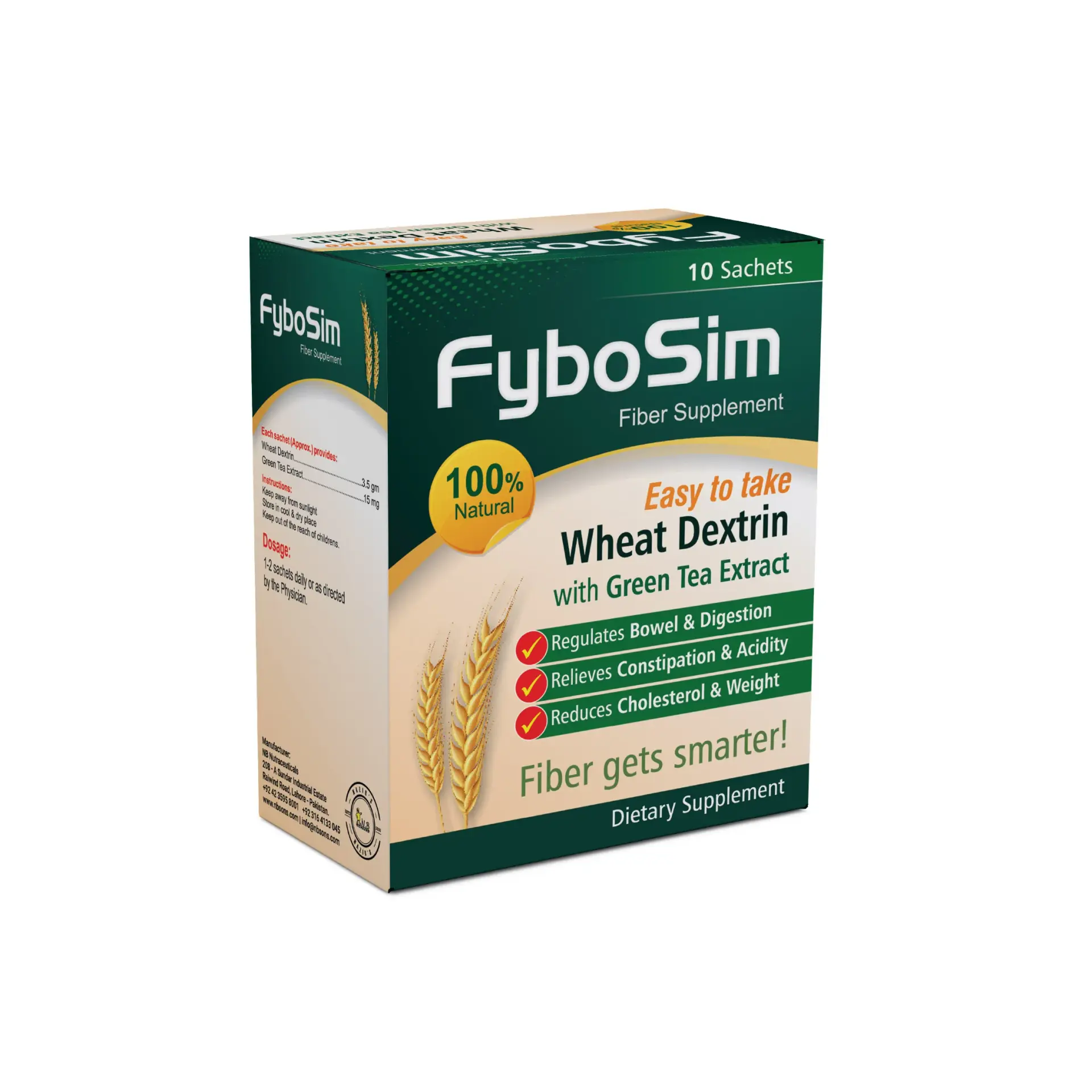
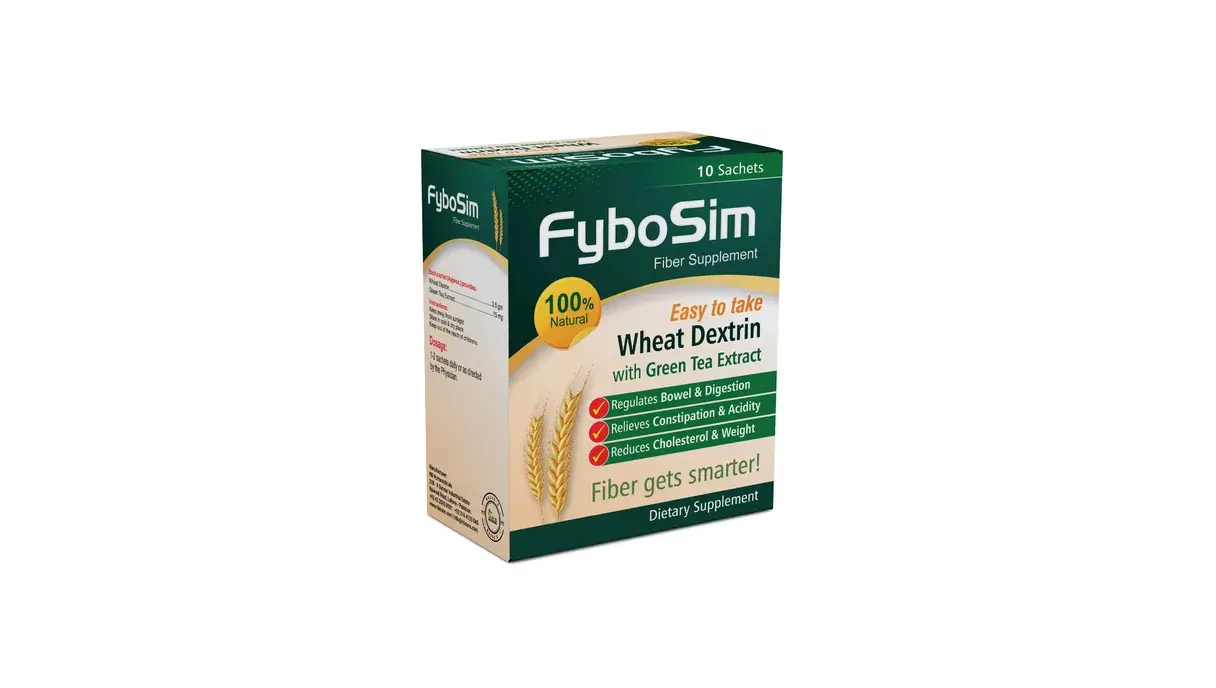
Our pick: Fybosim Natural Fibre Supplement
After weighing these factors, Fybosim Natural Fibre Supplement is our recommendation for most adults in Pakistan looking for a straightforward, affordable fibre supplement.
It is priced at PKR 390, which makes it accessible as a regular part of your routine rather than an occasional purchase. It sits within our Digestive & Gut range.
Why this one
Fybosim is built around a natural fibre base with psyllium husk, the same soluble fibre backed by decades of research. The soluble fibre swells in water to form a gel. This softens stool, supports more comfortable bowel movements, and slows digestion in a way that helps steady post-meal blood sugar.
To use it, mix the recommended serving into a full glass of water and drink it promptly, ideally once or twice a day. Follow the pack instructions for the exact dose, and do not exceed the stated amount. Keep drinking water through the day, not just at the time of dosing.
Who should be cautious
Fibre supplements are not right for everyone. Avoid Fybosim if you have a history of bowel obstruction, difficulty swallowing, or narrowing anywhere in your digestive tract, unless a doctor has specifically approved it.
If you take other oral medications, separate them from your fibre dose. Fibre can bind to some drugs and reduce how much your body absorbs. A practical rule is to take other medicines one to two hours apart from any fibre supplement.
If you experience sudden severe abdominal pain, vomiting, or are unable to pass stool or gas, stop and seek medical care promptly. These are not typical fibre side effects.
High-fibre Pakistani foods you can eat instead, or alongside
A supplement should complement your diet, not replace it. Many everyday Pakistani foods are naturally rich in fibre. Building more of these into daily meals supports a genuinely high fibre diet in Pakistan without needing anything extra.
| Food | Approx. fibre per 100g | Easy way to add it |
|---|---|---|
| Chana (chickpeas) | Around 7 to 8g | Chana chaat, curries, boiled as a snack |
| Daal (lentils) | Around 7 to 8g | Daily daal with roti or rice |
| Oats | Around 9 to 10g | Breakfast porridge or overnight oats |
| Guava | Around 5g | Eaten whole as a fruit snack |
| Isabgol (psyllium husk) | Around 70g per 100g husk | A small teaspoon in water or milk at night |
If you can comfortably fit two or three of these into your daily meals, you may need little or no supplement at all. A supplement like Fybosim works best as a top-up on lighter days, not a replacement for vegetables, pulses and fruit.
Fibre and your other health goals
Fibre rarely works alone. If cholesterol is your main concern, pairing a fibre-rich diet with other supportive changes matters more than fibre by itself. Our guide on high cholesterol diet and supplements in Pakistan walks through a fuller approach.
Similarly, if bloating rather than constipation is your main complaint, fibre needs to be introduced carefully, since too much too soon can worsen gas before it helps.
When to see a doctor
See a doctor if constipation lasts more than a few weeks despite diet changes and a fibre supplement. Also see a doctor if you notice blood in your stool, unexplained weight loss, or persistent abdominal pain. These need proper evaluation rather than a supplement fix. Fibre supplements support routine digestive health. They do not treat underlying medical conditions.
This article was written and medically reviewed to our medical review board standards and is for general guidance, not personal medical advice. Always speak to a doctor or pharmacist about your own situation.
Shop Fybosim Natural Fibre Supplement →Frequently asked questions
What is the best fibre supplement in Pakistan for constipation?
Psyllium husk based supplements, like Fybosim Natural Fibre Supplement, are generally considered a strong first choice. The soluble fibre softens stool and is well tolerated by most adults.
How much fibre do I need daily?
Health bodies generally suggest around 25 to 30 grams a day for adults. Most people in Pakistan fall short of this from diet alone, which is where a supplement can help close the gap.
Can I take a fibre supplement every day?
Yes, for most healthy adults, daily use is safe when taken with enough water and at the recommended dose. Check with a doctor if you have a chronic digestive condition.
Does isabgol work the same as other fibre supplements?
Isabgol is simply the local name for psyllium husk, one of the best studied soluble fibres. It works in a similar way to most psyllium based products sold internationally.
Will a fibre supplement help me lose weight?
Fibre can support fullness and steadier blood sugar, which may help with appetite control. It is not a weight loss treatment on its own and works best alongside a balanced diet.
Can fibre supplements interact with my medication?
They can reduce absorption of some oral medicines if taken at the same time. A simple precaution is to take other medications one to two hours apart from your fibre dose.
Is it better to get fibre from food or from a supplement?
Food first is always the better long-term strategy, since whole foods bring vitamins, minerals and variety that supplements do not. A supplement is a practical top-up, not a replacement, for days when your diet falls short.
Further reading: the NHS guide to getting more fibre into your diet and the Mayo Clinic overview of dietary fibre both explain the soluble and insoluble distinction in more detail.
Liked this one? Get the next in your inbox.
One fortnightly note from the editors, new pieces, restocks, and the routines we're actually using. Unsubscribe any time.