Rheumatoid Arthritis: Early Symptoms & How It Differs From Osteoarthritis (Pakistan 2026)
Rheumatoid arthritis: the early symptoms, how RA differs from osteoarthritis, and why seeing a rheumatologist early changes the outcome. A Pakistan guide.

According to the NHS, rheumatoid arthritis affects joints on both sides of the body at once, which is one clue that helps doctors tell it apart from other joint problems. Joint pain has many different causes in Pakistan, from simple overuse to osteoarthritis to autoimmune disease. Getting the right diagnosis matters, because the treatment for each is very different. This guide explains the early rheumatoid arthritis symptoms to watch for, how rheumatoid arthritis vs osteoarthritis actually differ, and why seeing a rheumatologist early changes the outcome.
What is rheumatoid arthritis, exactly?
Rheumatoid arthritis, often shortened to RA, is an autoimmune condition. That means the immune system, which is meant to fight infection, mistakenly attacks healthy tissue instead.
In RA, the immune system targets the synovium. This is the thin lining inside your joints. The attack causes inflammation, swelling, and over time, damage to cartilage and bone if it is left untreated.
This is completely different from osteoarthritis. Osteoarthritis is mechanical wear and tear. Cartilage breaks down slowly with age, use, or old injury. There is no immune attack involved.
Both conditions cause joint pain. But they are different diseases, with different causes, different age patterns, and different treatments. Confusing the two can delay proper care, which is why this distinction is the focus of this article. The NHS page on rheumatoid arthritis is a reliable place to read more about how the condition is defined and diagnosed.
Early rheumatoid arthritis symptoms to know
RA often starts quietly. Early rheumatoid arthritis symptoms are easy to dismiss as tiredness or a bad night's sleep. Knowing the pattern helps you act sooner.
- Joint pain, swelling, and warmth, often in the small joints of the hands, wrists, or feet first.
- Morning stiffness that lasts over 30 to 60 minutes. This is a hallmark sign of RA, and it is longer and more severe than the brief stiffness of osteoarthritis.
- Symmetrical joint involvement. RA tends to affect both hands or both wrists at once, rather than just one knee or one hip.
- Ongoing fatigue that is out of proportion to your activity levels.
- A low grade fever in some people, along with a general feeling of being unwell.
- Reduced grip strength or difficulty with fine tasks like buttoning a shirt.
Not everyone gets every symptom. Some people notice only mild stiffness at first. This is exactly why a proper medical check is so important once joint symptoms persist for more than a few weeks.
Rheumatoid arthritis vs osteoarthritis: a clear comparison
People in Pakistan often search for joint pain answers and land on general arthritis information that does not separate these two conditions. Here is a simple side by side comparison.
| Feature | Rheumatoid arthritis | Osteoarthritis |
|---|---|---|
| Underlying cause | Autoimmune, the immune system attacks the joint lining | Mechanical wear and tear of cartilage over time |
| Typical onset age | Often 30 to 60, though it can occur at any age | Usually after 45, more common with advancing age |
| Joint pattern | Symmetrical, both hands or both wrists together | Often one sided, one knee or one hip |
| Morning stiffness | Over 30 to 60 minutes, sometimes longer | Usually under 30 minutes, eases quickly with movement |
| Other features | Fatigue, low grade fever, general unwellness possible | Pain worsens with activity, improves with rest |
If your joint pain is symmetrical, comes with long morning stiffness, and includes fatigue, ask your doctor specifically about rheumatoid arthritis testing rather than assuming it is ordinary wear and tear. Our detailed guide on knee pain and osteoarthritis treatment in Pakistan covers the wear and tear side of joint pain in depth, if that pattern fits you better.
What causes rheumatoid arthritis?
Rheumatoid arthritis causes are not fully understood, but doctors have identified several risk factors that raise the chance of developing it.
- Family history. Having a close relative with RA or another autoimmune condition raises risk.
- Smoking. This is one of the strongest known environmental risk factors for RA.
- Being female. Women are affected far more often than men.
- Age. RA most commonly begins between 30 and 60, though it can occur at any age, including in children.
- Certain genetic markers and, possibly, some infections that trigger the immune system in susceptible people.
Having a risk factor does not mean you will develop RA. It simply means extra awareness of early symptoms is worthwhile.
Why early diagnosis matters so much
This is the single most important message in this article. Rheumatoid arthritis is not a wait and see condition.
Left untreated, the ongoing inflammation can permanently damage cartilage, bone, and the structures around the joint. Once that damage happens, it generally cannot be reversed.
The good news is that early, proper treatment genuinely changes outcomes. This starts with seeing a rheumatologist, a doctor who specialises in autoimmune and joint conditions.
A rheumatologist will typically arrange blood tests, including rheumatoid factor, known as RF, and anti-CCP antibodies, along with imaging such as X-rays or ultrasound to check for early joint changes. These tests help confirm the diagnosis and rule out other causes of joint pain.
If RA is confirmed, disease-modifying antirheumatic drugs, often called DMARDs, are the mainstay of RA treatment in Pakistan and worldwide. These prescription medicines work by calming the immune system's attack on the joints, not just masking pain. Starting them early, while the disease is still mild, gives the best chance of protecting your joints long term. Mayo Clinic's overview of rheumatoid arthritis diagnosis and treatment explains this testing and treatment pathway in more detail.
This article does not replace a rheumatologist's diagnosis. No supplement, food, or home remedy is a substitute for proper testing and prescription treatment when RA is confirmed. If you suspect RA, please book an appointment with a rheumatologist rather than self-treating.
General joint-comfort support alongside your prescribed RA treatment
The section below is separate from medical treatment. It is about general nutritional support some people use alongside, never instead of, their prescribed RA care.
Glucosamine and chondroitin are popular joint-comfort ingredients in Pakistan. It is important to be honest about the evidence here. Research support for glucosamine and chondroitin is stronger for osteoarthritis-type wear and tear joint comfort than it is for autoimmune rheumatoid arthritis itself. These ingredients do not treat the immune attack that drives RA.
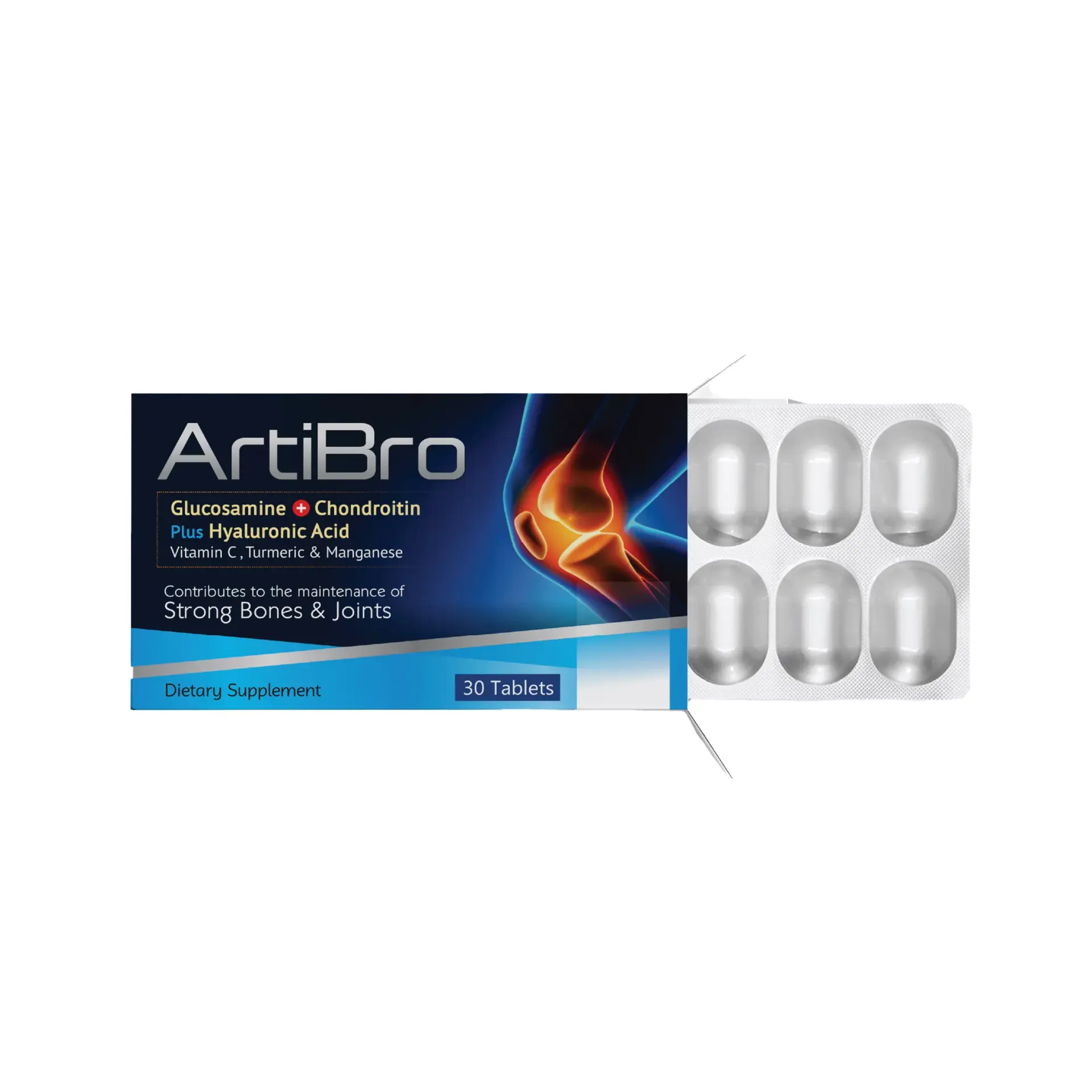
For people already under a rheumatologist's care and on appropriate DMARD treatment, some choose a general joint-comfort supplement such as ArtiBro Glucosamine & Chondroitin Tablets as an addition to their daily routine. This should be understood as general joint-comfort support, not an RA treatment, and it should never replace prescribed disease-modifying medication.
Alongside any supplement, gentle low-impact movement such as swimming or walking, adequate rest during flares, and a balanced diet with oily fish and vegetables are commonly recommended by rheumatology teams as supportive habits. Our article on joint pain relief without side effects covers more general, gentle options that some people find comfortable to combine with medical treatment. If your pain is centred in the lower back rather than the small joints, our guide to back pain causes and relief in Pakistan may be more relevant.
Shop ArtiBro Glucosamine & Chondroitin Tablets →Always tell your rheumatologist about any supplement you are taking, including glucosamine and chondroitin, so it can be checked against your other medicines.
When to see a doctor
See a doctor promptly if you notice joint swelling that does not settle, morning stiffness lasting over 30 minutes most days, or symmetrical pain in both hands or wrists. Fatigue and low grade fever alongside joint symptoms are also worth mentioning.
Early assessment, ideally by a rheumatologist, gives you the best chance of starting effective treatment before joint damage sets in.
This article was written and medically reviewed to our medical review board standards and is for general guidance, not personal medical advice. Always speak to a doctor or pharmacist about your own situation.
Frequently asked questions
Is rheumatoid arthritis curable?
There is currently no cure for rheumatoid arthritis. However, with early diagnosis and proper prescription treatment from a rheumatologist, many people achieve low disease activity or remission, meaning symptoms are well controlled and joint damage is minimised.
Can diet affect rheumatoid arthritis?
Diet alone cannot treat RA, but a balanced diet may support general wellbeing alongside prescribed treatment. Some people find that oily fish, fruits, and vegetables sit well with them, though diet should never replace DMARD medication for confirmed RA.
Is rheumatoid arthritis the same as osteoarthritis?
No. Rheumatoid arthritis is an autoimmune disease where the immune system attacks the joint lining. Osteoarthritis is mechanical wear and tear of cartilage. They have different causes, different age patterns, and different treatments, though both can cause joint pain.
Can young people get rheumatoid arthritis?
Yes. While RA most often begins between 30 and 60, it can occur at any age, including in children, where it is called juvenile idiopathic arthritis. Age alone should not rule RA in or out.
What tests confirm rheumatoid arthritis?
A rheumatologist typically orders blood tests such as rheumatoid factor, known as RF, and anti-CCP antibodies, along with imaging like X-rays or ultrasound. These are combined with a physical examination and symptom history to reach a diagnosis.
Can supplements replace RA medication?
No. Supplements such as glucosamine and chondroitin may offer general joint-comfort support, but they are not a substitute for prescription disease-modifying treatment in confirmed RA. Always follow your rheumatologist's treatment plan.
Liked this one? Get the next in your inbox.
One fortnightly note from the editors, new pieces, restocks, and the routines we're actually using. Unsubscribe any time.