Bone Health in Pakistan: Calcium vs Magnesium, Which One Do You Actually Need?
Bone health in Pakistan: whether calcium or magnesium matters more, the best food sources, safe dosage, and how to help prevent osteoporosis naturally.
Did you know? Studies suggest that most adults in Pakistan are short on vitamin D, the nutrient your bones need to use calcium at all. That single gap quietly weakens millions of skeletons. It is one reason bone health in Pakistan needs far more attention than it gets.
Weak bones rarely warn you. They stay silent for years, then break from a minor fall, a bend, or even a cough. A fractured hip in an elderly parent can change a whole family’s life. It brings months of bed rest, lost income for the carer, and a serious risk to life within the first year.
The standard advice is simple. “Drink more milk. Take calcium.” But here is what most people, and many busy doctors, overlook. Calcium alone does not build strong bones. Magnesium, vitamin D, vitamin K2, and several trace minerals matter just as much. Get the balance wrong and you can waste money, or even raise your health risks.
This guide covers what you need to know about bone health supplements in Pakistan. We look at the calcium and magnesium link, what Pakistani diets really provide, who needs supplements, and how to choose the right products without falling for hype.
Table of Contents
- Why Bone Health Is a Growing Crisis in Pakistan
- How Bones Actually Work (The Living Tissue You Ignore)
- Calcium: What It Does and What It Cannot Do Alone
- Magnesium: The Missing Piece in Pakistani Bone Health
- Calcium vs Magnesium: Head-to-Head Comparison
- The Full Bone Health Team: Vitamin D, K2, and Trace Minerals
- Pakistani Diet Reality Check: What You Are Actually Getting
- Who Needs Bone Health Supplements in Pakistan
- How to Choose the Right Bone Supplement
- Lifestyle Factors That Matter More Than Supplements
- Frequently Asked Questions
Why Bone Health Is a Growing Crisis in Pakistan
Bone disease in Pakistan is not a future problem. It is happening now. Yet most families only face it when a bone crisis finally strikes. The numbers are sobering:
- Vitamin D deficiency is very common across all ages. Pakistan is a sunny country, yet many people see little sun. Full-body covering, indoor lifestyles, and city air pollution all play a part. This blocks the skin’s ability to make vitamin D. Without vitamin D, your body cannot absorb calcium from food, no matter how much doodh you drink.
- Daily calcium intake is low in most homes, often around 400 to 500 mg. That is well below the recommended 1,000 to 1,200 mg. We do eat dairy, but the amounts are falling. Many urban families now swap chai for fizzy drinks, which pull calcium from bones.
- Magnesium deficiency is nearly universal, but it is rarely tested or discussed. Soil in many farming areas has lost magnesium over decades of intensive farming. So the grains, vegetables, and fruit grown there carry less of it than 30 years ago. Refining strips out even more, as white flour shows.
- Physical inactivity is rising sharply, especially among urban women. Weight-bearing exercise like walking, climbing stairs, and lifting tells bones to grow stronger. As more time is spent sitting indoors, that bone-building signal disappears.
The result is clear. Pakistani orthopaedic wards are full of fracture patients who never knew their bones were weakening, until something snapped.
How Bones Actually Work (The Living Tissue You Ignore)
Most people picture bones as fixed structures, like the steel frame of a building. They are not. Bones are living tissue under constant renovation. Understanding this changes how you approach bone health.
Your skeleton fully replaces itself every 7 to 10 years. This is called bone remodelling. Two types of cells drive it:
- Osteoclasts break down old, damaged bone. Think of them as the demolition crew.
- Osteoblasts build new bone. They are the construction crew.
In healthy adults, demolition and construction stay balanced. After about age 35, the demolition crew starts to outpace the builders. At menopause, falling oestrogen speeds this up sharply. That is why postmenopausal women in Pakistan face the highest osteoporosis risk.
The minerals you eat are the raw materials. Calcium, magnesium, phosphorus, zinc, and boron all feed the osteoblasts. Without enough of them, the builders cannot work. But here is the key point. Flooding your body with calcium does not make the builders work faster. You need the full team of nutrients, hormones, and movement working together.
Calcium: What It Does and What It Cannot Do Alone
Calcium is the most abundant mineral in your body. About 99% of it sits in your bones and teeth. The other 1% circulates in blood and cells. There it manages muscle contraction, nerve signals, blood clotting, and heart rhythm.
What Calcium Actually Does for Bones
Calcium joins with phosphate to form hydroxyapatite crystals. These hard crystals give bones their strength and rigidity. Without enough calcium, bones become less dense and break more easily. This is the real truth behind the “drink milk” advice.
Why Calcium Alone Falls Short
Here is where the simple story breaks down:
- Absorption needs vitamin D. Without enough vitamin D, your gut absorbs only 10 to 15% of dietary calcium. With enough, absorption jumps to 30 to 40%. Since vitamin D deficiency is so common here, taking calcium without fixing it is like filling a leaky bucket.
- Calcium needs magnesium to reach bones. Magnesium switches on the enzymes that turn vitamin D into its active form, calcitriol. That active form then lets calcium be absorbed. Magnesium also drives calcitonin, a hormone that sends calcium into bones rather than into arteries and kidneys. Without magnesium, calcium can end up in the wrong places.
- Too much calcium without partners causes harm. Large calcium doses above 1,000 mg a day, taken without enough magnesium, D3, and K2, have been linked to higher heart risk in some studies. The calcium settles in artery walls instead of bones. This is called vascular calcification.
- The type of calcium matters. Calcium carbonate is the cheapest and most common form here. It needs stomach acid to absorb. People over 50 make less stomach acid. Calcium citrate absorbs well whatever your acid levels, but costs more. Calcium lactate gluconate offers the best absorption of all.
Best Calcium Sources in Pakistani Diet
| Food | Calcium (mg per serving) | Notes |
|---|---|---|
| Doodh (whole milk, 1 glass) | 280-300 | Best absorbed with vitamin D |
| Dahi (yogurt, 1 cup) | 250-300 | Fermentation improves absorption |
| Paneer (100g) | 200-250 | Good protein + calcium combination |
| Sarson ka saag (1 cup) | 190-250 | Excellent non-dairy source |
| Bhindi / Lady finger (1 cup) | 80-100 | Modest but adds up |
| Roti (whole wheat, 2 pieces) | 40-60 | Small contribution from wheat |
| Chana (chickpeas, 1 cup) | 80-100 | Also provides magnesium |
| Til / Sesame seeds (1 tbsp) | 90-100 | Excellent density per gram |
Reality check: To hit 1,000 mg from food alone, you need roughly 3 glasses of milk, 1 cup of dahi, and a serving of leafy greens daily. Most Pakistani adults fall well short. This is especially true for women, who often eat smaller portions.
Magnesium: The Missing Piece in Pakistani Bone Health
If calcium is the brick, magnesium is the mortar. Without it, the structure crumbles. Yet everyone talks about calcium, while magnesium is almost never mentioned in Pakistani health talk.
Why Magnesium Matters for Bones
- About 60% of body magnesium is stored in bones. Magnesium feeds directly into bone mineral density and crystal structure. Low magnesium makes bones more brittle, even when calcium looks normal.
- Magnesium activates vitamin D. Without magnesium, vitamin D stays in its inactive storage form. You can take 5,000 IU of vitamin D a day, but if magnesium is low, your body cannot switch it on. This is why many Pakistanis take vitamin D supplements yet still test as deficient. They are short on magnesium.
- Magnesium controls parathyroid hormone (PTH). PTH manages calcium balance. Low magnesium throws PTH off, which pulls calcium out of bones and into the blood. That is the opposite of what you want.
- Magnesium calms inflammation. Long-term, low-grade inflammation speeds up bone breakdown. Magnesium’s anti-inflammatory effect helps keep breakdown and building in balance.
Magnesium Deficiency Signs Pakistanis Ignore
Magnesium drives more than 300 reactions in the body. So deficiency shows up everywhere, yet people rarely join the dots:
- Muscle cramps and spasms, especially leg cramps at night
- Fatigue and weakness despite enough sleep
- Poor sleep and trouble falling asleep
- Anxiety, irritability, and mood swings
- Irregular heartbeat or palpitations
- Numbness or tingling in hands and feet
- Frequent headaches or migraines
Sound familiar? Millions of Pakistanis feel these daily. Most blame “stress” or “weakness” rather than a mineral gap.
Best Magnesium Sources in Pakistani Diet
| Food | Magnesium (mg per serving) | Notes |
|---|---|---|
| Badam / Almonds (1/4 cup) | 95-105 | Best snack for magnesium |
| Palak / Spinach (1 cup cooked) | 150-160 | Outstanding source |
| Kaju / Cashews (1/4 cup) | 80-90 | Also provides copper, zinc |
| Moong dal (1 cup cooked) | 80-90 | Staple Pakistani pulse |
| Brown rice (1 cup cooked) | 80-85 | White rice has 80% less magnesium |
| Dark chocolate (30g) | 50-65 | 70%+ cacao preferred |
| Kela / Banana (1 medium) | 30-35 | Modest source, easily available |
| Atta roti (whole wheat, 2 pieces) | 40-50 | Maida roti has almost none |
The processing problem: When whole wheat becomes maida (refined white flour), it loses about 80% of its magnesium. The same happens when brown rice becomes white rice. Pakistan’s growing taste for refined grains feeds magnesium deficiency across the country.
Calcium vs Magnesium: Head-to-Head Comparison
This is the question everyone asks. The answer is not “one or the other.” Still, knowing the differences helps you choose wisely:
| Factor | Calcium | Magnesium |
|---|---|---|
| Bone role | Primary structural mineral (hydroxyapatite crystals) | Bone crystal structure + enzyme activation + vitamin D conversion |
| Daily requirement | 1,000-1,200 mg (adults) | 310-420 mg (adults) |
| Pakistani diet provides | ~400-500 mg (deficit) | ~200-250 mg (deficit) |
| Deficiency prevalence in Pakistan | High (50-60%) | Very high (70-80%) |
| Deficiency symptoms | Often silent until fracture occurs | Muscle cramps, poor sleep, fatigue, anxiety |
| Supplementation risk if imbalanced | Excess without Mg/D3/K2 leads to arterial calcification | Excess leads to loose stools (self-limiting, not dangerous) |
| Best supplement form | Calcium citrate or calcium lactate gluconate | Magnesium glycinate or magnesium citrate |
| Absorption helpers | Vitamin D3, magnesium, stomach acid | Vitamin B6, vitamin D3 |
| Foods rich in it | Dairy, leafy greens, sesame seeds | Nuts, seeds, dark leafy greens, whole grains |
| Timing | Split doses, with meals | Evening (aids sleep), with or without food |
The verdict: You need both. The best calcium-to-magnesium ratio for bones is around 2:1, for example 1,000 mg calcium to 500 mg magnesium. Most Pakistanis get roughly enough calcium from dairy, but are badly short on magnesium. That means the calcium they eat cannot be used properly anyway.
If you can only fix one gap first, fix magnesium. It unlocks the vitamin D pathway, which unlocks calcium absorption from food. That often makes high-dose calcium supplementation unnecessary.
The Full Bone Health Team: Vitamin D, K2, and Trace Minerals
Bones need teamwork. Here is the full roster:
Vitamin D3, The Calcium Gatekeeper
Without vitamin D3, you absorb only 10 to 15% of dietary calcium. With it, 30 to 40%. Since vitamin D deficiency is so common here, this one nutrient often makes the biggest difference. A daily dose of 2,000 to 5,000 IU is usually needed to reach and hold healthy blood levels (50 to 80 nmol/L). People who are severely deficient may need higher doses at first, under medical guidance.
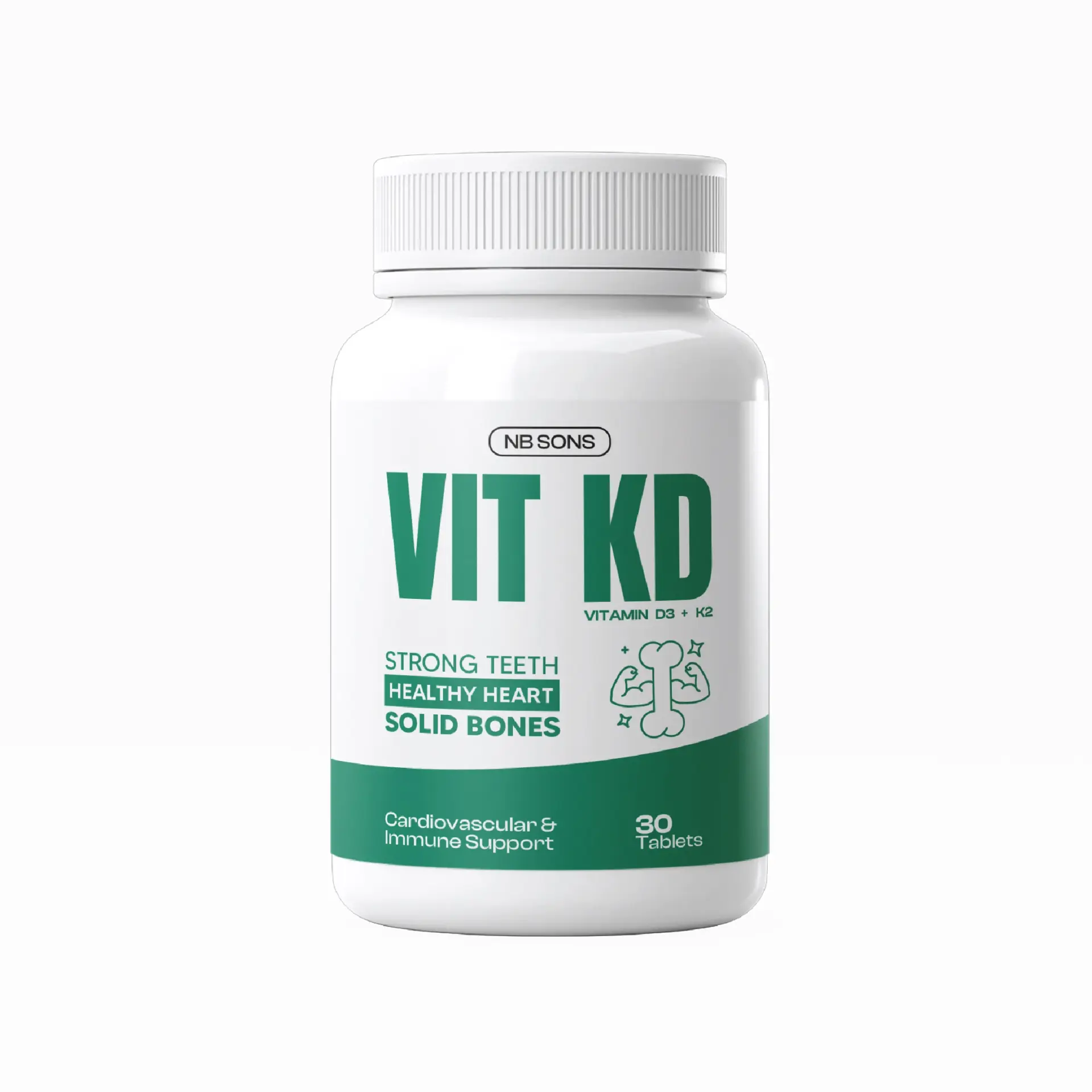
Vit KD from Yellow Pink gives 10,000 IU of Vitamin D3 with Vitamin K2. It is ideal for correcting a clear deficiency quickly, before moving to a maintenance dose.
Vitamin K2, The Calcium Traffic Director
Vitamin K2, in the MK-7 form, switches on two key proteins:
- Osteocalcin: Directs calcium into bones and teeth
- Matrix GLA Protein (MGP): Keeps calcium out of arteries, kidneys, and joints
Without K2, calcium supplements are like parcels with no address. The calcium goes somewhere, but not always where you need it. K2 makes sure calcium reaches bones and stays out of soft tissue.
Zinc, The Osteoblast Activator
Zinc boosts osteoblast activity (bone building) and slows osteoclast activity (bone breakdown). Pakistan has moderate zinc deficiency, especially where diets are rich in phytates. Phytates in whole grains and legumes block zinc absorption.
Boron, The Trace Mineral Amplifier
Boron supports how the body handles calcium, magnesium, and vitamin D. It also cuts how much calcium and magnesium you lose in urine, so you keep more of what you eat. You find it in fruit, nuts, and legumes.
Pakistani Diet Reality Check: What You Are Actually Getting
Let us look at a typical Pakistani adult’s day through the bone health lens:
Typical Urban Pakistani Diet (Bone Health Audit)
| Meal | Common Items | Calcium | Magnesium | Vitamin D |
|---|---|---|---|---|
| Nashta (Breakfast) | Paratha + chai with milk + anda | ~120 mg | ~30 mg | Minimal |
| Dopahar (Lunch) | Rice + daal + sabzi + roti | ~80 mg | ~60 mg | None |
| Chai (Afternoon) | Chai with milk + biscuits | ~60 mg | ~10 mg | None |
| Raat ka khana (Dinner) | Chicken/gosht + roti + salad | ~50 mg | ~40 mg | Minimal |
| Snacks | Fruit, nuts (occasional) | ~30 mg | ~40 mg | None |
| Daily Total | ~340 mg | ~180 mg | ~100 IU | |
| Recommended | 1,000-1,200 mg | 310-420 mg | 2,000-5,000 IU | |
| Deficit | 660-860 mg | 130-240 mg | 1,900-4,900 IU |
The gap is huge. Even “healthy” Pakistani diets with dairy and vegetables fall far short of bone-supporting levels. And that is before other drains on these minerals. Stress, certain medicines (antacids, PPIs), heavy chai (the tannins in tea cut mineral absorption), and fizzy drinks all make it worse.
Who Needs Bone Health Supplements in Pakistan
High Priority (Start Now)
- Women over 40: Bone loss speeds up 5 to 7 years before menopause. By the time symptoms show, real density is already gone. Prevention beats treatment.
- Postmenopausal women: Falling oestrogen sharply speeds up bone loss. Supplements are nearly essential unless the diet is unusually rich in bone nutrients.
- Men over 55: Male bone loss is slower but real. Falling testosterone after 50 removes some protection for bone density.
- Anyone with vitamin D deficiency: If your 25(OH)D level is below 30 ng/mL, and it very likely is, you need supplements to unlock calcium absorption.
- People on PPIs or antacids: Long-term use of omeprazole, lansoprazole, and similar drugs lowers stomach acid. That cuts calcium absorption by 30 to 40%.
Moderate Priority (Consider Supplementation)
- Adults 30 to 40 with poor diets: Peak bone mass arrives around age 30. The higher your peak, the more reserve you keep. If your diet lacks dairy and greens, supplements help hold density.
- Physically inactive people: Without weight-bearing exercise, bones lose density faster. Supplements help a little, but they do not replace exercise.
- Heavy chai drinkers (4+ cups daily): Tannins in tea bind calcium and iron and cut absorption. If you will not cut chai, you need more calcium to make up for it.
- People with a family history of osteoporosis: Genes account for much of bone density. If a parent had fractures or lost height with age, your risk is higher.
How to Choose the Right Bone Supplement
Walk into a pharmacy in Islamabad, Lahore, or Karachi and you will see shelves of calcium. Most are calcium carbonate, the cheapest form, with the worst absorption in older adults. Here is how to choose well:
What to Look For
- Calcium form: Calcium lactate gluconate or calcium citrate absorb better than calcium carbonate. This matters most for people over 50 with lower stomach acid. Avoid calcium carbonate if you take PPIs.
- Magnesium included: A bone supplement without magnesium is incomplete. Look for magnesium glycinate, which is well absorbed and gentle on the stomach, or magnesium citrate.
- Vitamin D3 and K2: The best formulas include D3 and K2 (MK-7 form). Together they steer calcium into bones, not arteries.
- Split dosing: Your body absorbs at most about 500 mg of calcium at once. A single 1,000 mg tablet is poorly designed. Look for formulas meant to be taken 2 to 3 times a day.
- Avoid huge doses: More is not better. Total calcium from food and supplements should stay under 1,500 mg a day. Above that, heart risks rise with no extra bone benefit.
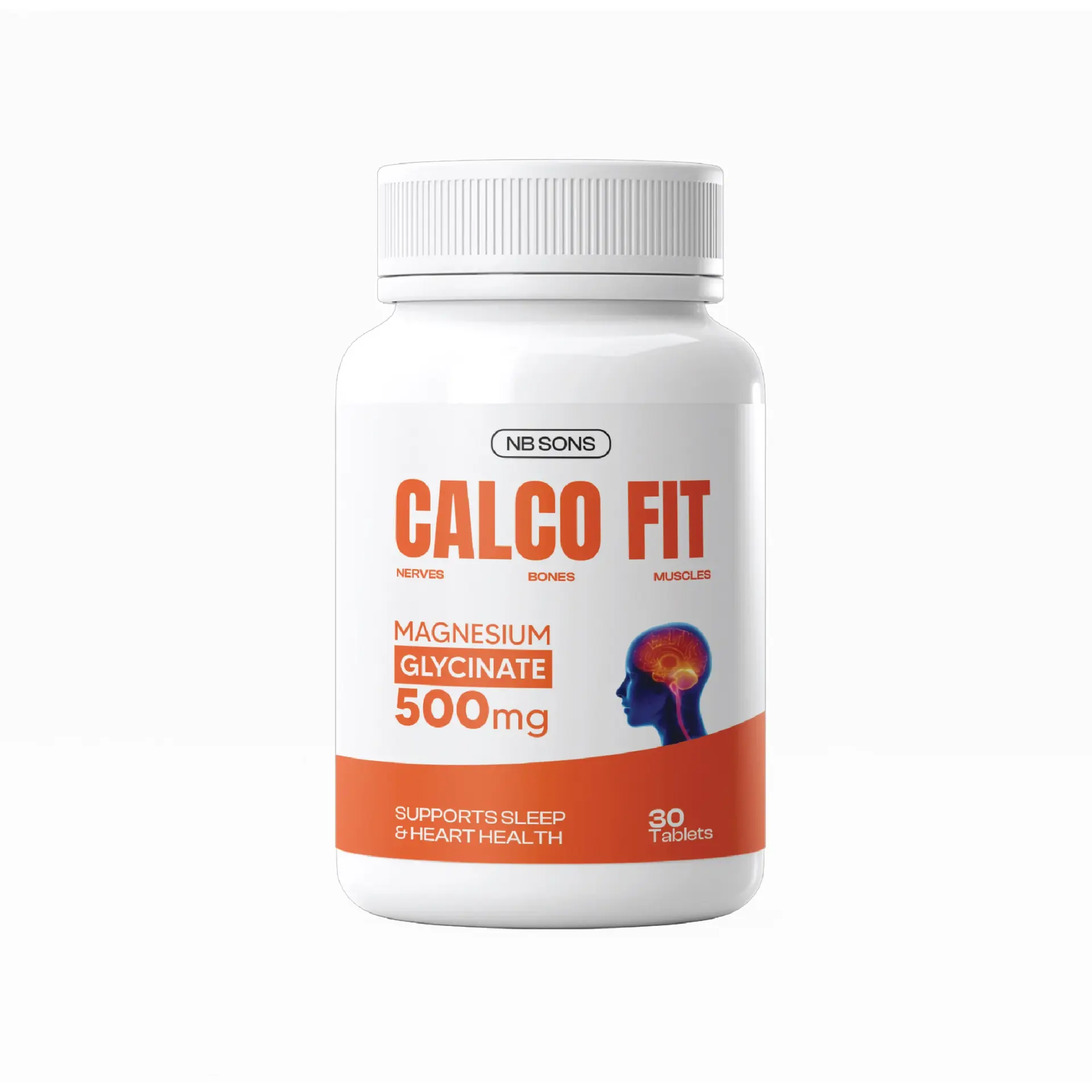
Recommended option: Calco Fit from Yellow Pink provides magnesium glycinate, the most bioavailable form of magnesium for bone and muscle health. To complete the stack with vitamin D3 and K2, pair it with Vit KD, which delivers 10,000 IU D3 plus K2-MK7 in one daily dose.
Lifestyle Factors That Matter More Than Supplements
Supplements fill nutritional gaps. But they cannot replace the basic habits that decide bone health:
1. Weight-Bearing Exercise (Most Important)
Bones grow stronger in response to stress. This is Wolff’s Law. The best exercises for bone density are:
- Walking (30 minutes daily), easy for everyone and good for hip bone density
- Stair climbing, better than flat walking for bone stimulus
- Resistance training (2 to 3 times a week), the single best bone-builder. Even light dumbbell work helps a lot
- Standing and balance exercises, which prevent falls and so prevent fractures
Swimming and cycling are great for the heart. But they give little bone benefit, because they are not weight-bearing.
2. Sun Exposure
Just 15 to 20 minutes of direct sun on arms and face, without sunscreen, between 10 AM and 2 PM, makes a large dose of vitamin D. In Pakistan this is possible for most of the year. The challenge is cultural. Many women are fully covered outdoors, office workers stay inside at peak hours, and city air pollution in places like Lahore blocks UV rays.
Practical tip: Even baring your arms on a private rooftop or courtyard for 15 minutes counts. If sun is genuinely impractical, supplements like Vit KD become essential.
3. Protein Intake
Bone is roughly half protein by volume. The collagen matrix gives bones their flexibility and resilience. Many Pakistani diets are heavy on carbohydrates, like roti, rice, and chai, but light on protein, especially for women. That weakens the bone matrix. Aim for 1 to 1.2 g of protein per kg of body weight daily, from daal, eggs, chicken, fish, paneer, and yogurt.
4. Reduce Bone Robbers
- Too much tea: More than 3 to 4 cups a day cuts calcium absorption. If you must drink chai, keep it away from calcium-rich meals by an hour.
- Fizzy drinks: Cola contains phosphoric acid, which raises calcium loss. Regular use is a known fracture risk.
- Too much salt: High sodium raises calcium loss in urine. Pakistani food tends to be salty. Cutting salt helps both bones and blood pressure.
- Smoking: It is directly toxic to osteoblasts and cuts calcium absorption. One more reason to quit.
Conclusion
Bone health in Pakistan deserves more attention than it gets. By the time a fracture happens, years of silent bone loss have already passed. The fix is not complicated. But it means understanding that bone health supplements in Pakistan must go beyond calcium alone.
The evidence is clear. You need calcium and magnesium together, supported by vitamin D3 and K2, alongside weight-bearing exercise and smart food choices. Fixing the widespread magnesium gap in Pakistani diets is arguably the highest-impact single step. It unlocks vitamin D, improves calcium use, and helps bone structure on its own.
Start with the basics. Get your vitamin D checked. Eat more magnesium-rich foods like almonds, spinach, and whole grains. Keep up daily dairy. Walk for 30 minutes. And consider targeted supplements if you are over 40 or have risk factors.
Ready to support your bone health? Explore Calco Fit for magnesium glycinate support and Vit KD for vitamin D3 + K2, available nationwide from Yellow Pink Pakistan. Your bones are building or breaking every day. Choose building.
This article was written and medically reviewed to our medical review board standards and is for general guidance, not personal medical advice. Always speak to a doctor or pharmacist about your own situation.
Shop Calco Fit Magnesium Glycinate →Frequently asked questions
Is calcium or magnesium more important for bone health?
Both are essential. But if you must pick one, fix magnesium first. Magnesium activates vitamin D, which controls calcium absorption. Without enough magnesium, calcium supplements are inefficient and possibly risky. The best approach is to take both together in a 2:1 calcium-to-magnesium ratio, with vitamin D3 and K2. Most Pakistanis are badly short on magnesium while getting moderate calcium from dairy. So magnesium is the bigger gap.
Can I get enough calcium and magnesium from Pakistani food alone?
In theory yes, in practice rarely. You would need 3 or more glasses of milk, a cup of yogurt, a large serving of leafy greens, and a handful of almonds every single day. Most Pakistani adults, especially women with smaller appetites, fall 40 to 60% short of calcium and magnesium targets from food alone. Tea tannins and phytates in whole grains widen the gap by cutting absorption.
When should I start taking bone supplements in Pakistan?
Prevention works far better than treatment. Ideally, women should start bone-supporting supplements by age 35 to 40, before the faster bone loss of perimenopause. Men should consider it by age 50. But anyone of any age with confirmed vitamin D deficiency, which is most Pakistanis, should act now. A DEXA scan after age 50 gives a baseline bone density reading to guide your choices.
What is the best time to take calcium and magnesium supplements?
Take calcium in divided doses with meals, no more than 500 mg at once for best absorption. Take magnesium in the evening, as it aids relaxation and sleep. Do not take calcium and magnesium together in high doses, since they compete for absorption. Space them at least 2 hours apart. Take vitamin D3 with a meal that has some fat, for best absorption.
Are bone supplements safe for long-term use?
Yes, when taken at recommended doses with the right partners. The safety worries apply to high-dose calcium, above 1,500 mg a day, taken without magnesium, D3, and K2, which can raise heart risk. A balanced bone supplement with calcium, magnesium, vitamin D3, and K2 in sensible ratios is safe for long-term use. In fact it is recommended for ongoing bone protection in at-risk people.
Liked this one? Get the next in your inbox.
One fortnightly note from the editors, new pieces, restocks, and the routines we're actually using. Unsubscribe any time.