Collagen Supplements Pakistan: Complete Buyer’s Guide 2026
Everything you need to know about collagen supplements in Pakistan, types, benefits, dosage, top brands, and how to choose. Backed by clinical evidence.
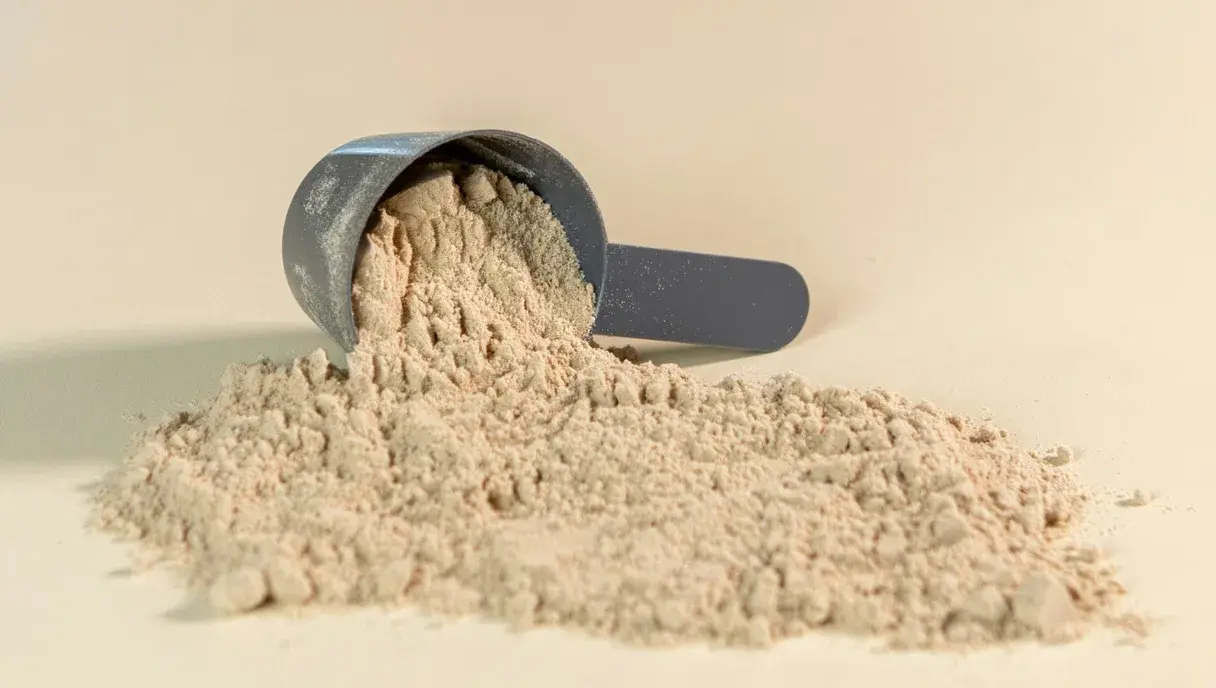
Did you know collagen makes up roughly 30 percent of all the protein in your body? It is the scaffolding holding your skin, joints, and bones together. Yet production starts to fall in your mid-20s, which is why collagen supplements are suddenly everywhere in Pakistan.
Walk into any pharmacy in Karachi or browse a health store here, and you will spot them on the shelves. Five years ago, collagen was a word you heard from dermatologists. Today it is on billboards, in WhatsApp health groups, and in shopping carts across the country.
The market has grown fast, and with it the confusion. What does collagen actually do? Which type should you buy? Do local options match the pricey imported brands?
This guide cuts through the noise. We will explain what collagen is, what the science really says, how to choose the right product in Pakistan, and which brands are worth your money in 2026.
Shop the picks in this guide (5)
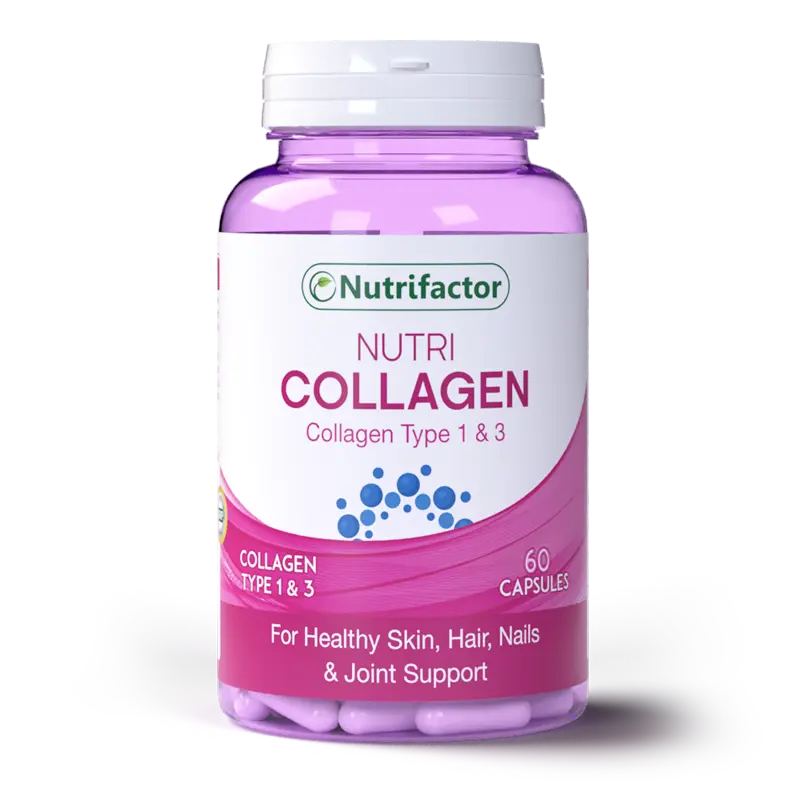
- Nutrifactor Nutri Collagen (Type 1 & 3), Rs 1,420, the halal 60-capsule pack most first-time users start with, vitamin C and biotin built in
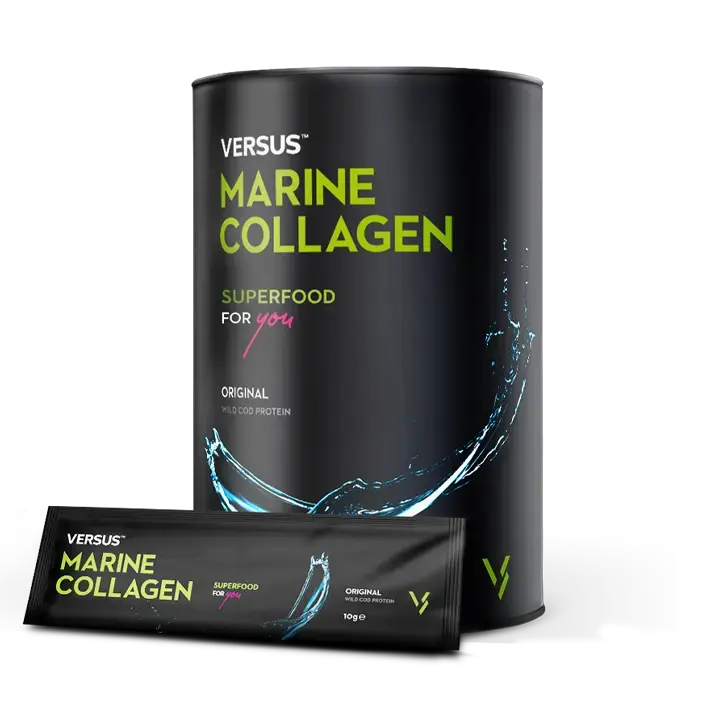
- VERSUS Marine Collagen (24 sachets), Rs 6,750, the full 10g clinical dose per sachet for skin and joint goals
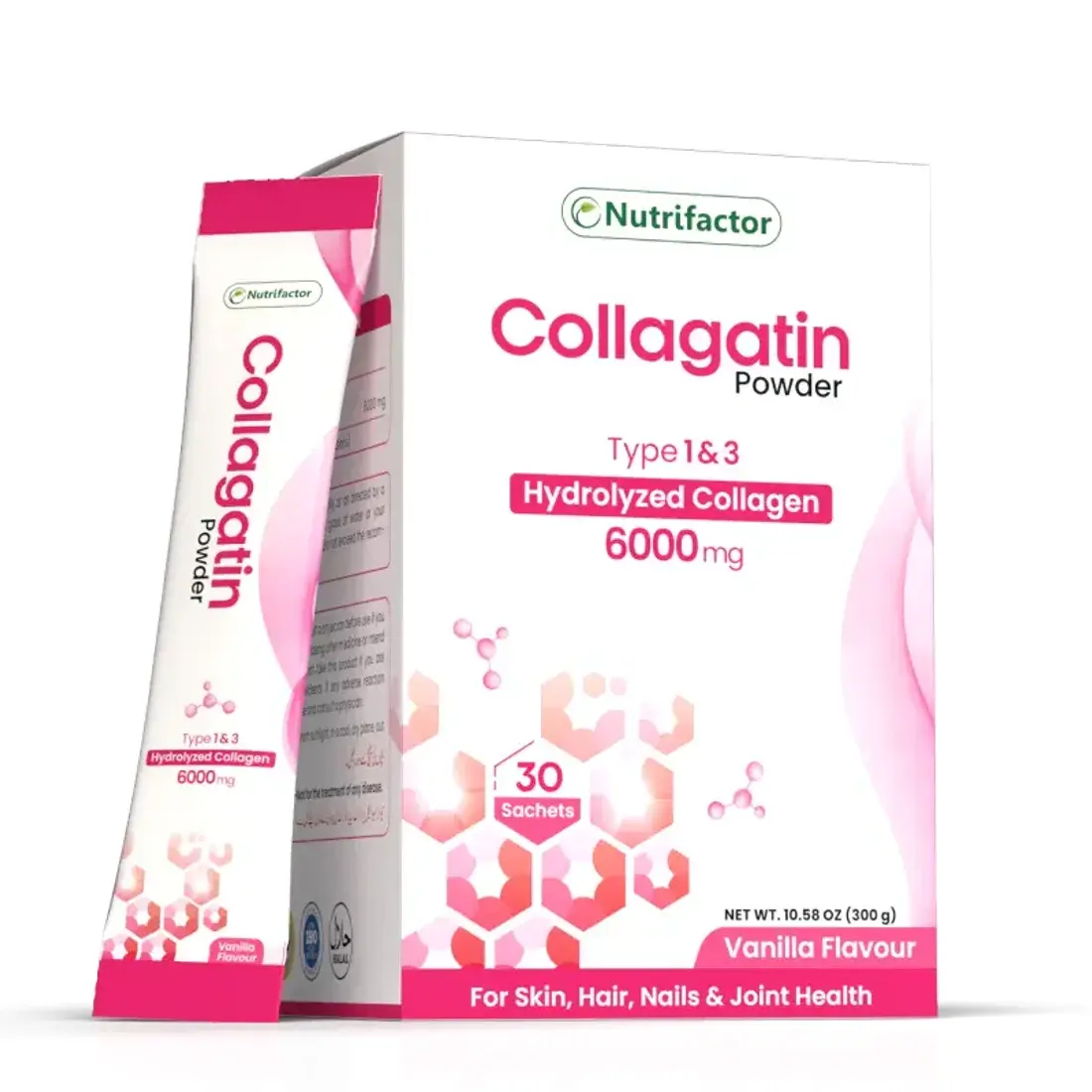
- Nutrifactor Collagatin Powder (Marine Collagen 6g), Rs 4,800, the mid-dose marine powder for hair, nails and joints
- Gluthic Glutathione 500mg Tablets, Rs 3,500, pair with collagen if brightening and even tone are the goal
- Cee Chewable Vitamin C 500mg, Rs 690, the low-cost vitamin C cofactor to take alongside any plain collagen
What Is Collagen and Why Does It Matter?
Collagen is the most abundant protein in the human body. It makes up roughly 30 percent of your total protein. Think of it as the structural scaffolding that holds everything together. It is the main component of skin, tendons, ligaments, cartilage, and bones.
Your body makes it naturally, but production starts to fall in your mid-20s. By your 30s and 40s, the effects show. Skin loses firmness. Joints feel less supple. Hair and nails grow more slowly.
There are at least 28 types of collagen, but three matter most for supplements.
- Type I, found in skin, tendons, organs, and bone. Most relevant for skin health, anti-ageing, and wound healing.
- Type II, found mainly in cartilage. Most relevant for joint health and conditions like osteoarthritis.
- Type III, found alongside Type I in skin, blood vessels, and organs. Supports skin elasticity and gut health.
Most collagen supplements here contain hydrolysed collagen (also called collagen peptides). This is collagen broken into smaller fragments that the body absorbs more easily. Research on their absorption has improved a lot in the last decade. There is now solid clinical evidence that these peptides reach the bloodstream and travel to target tissues.
Does Collagen Supplementation Actually Work?
This is where it gets interesting, because the answer is more nuanced than either the marketing or the sceptics suggest.
For Skin: Strong Evidence
The evidence for skin benefits is the strongest. Multiple randomised controlled trials have found that oral collagen, typically 2.5g to 10g daily for 8 to 24 weeks, improves skin hydration and elasticity and reduces the look of wrinkles. A 2021 systematic review and meta-analysis in the International Journal of Dermatology analysed 19 studies. It found significant gains in skin elasticity, hydration, and collagen density for people taking collagen peptides versus placebo.
The mechanism is well understood. Hydrolysed collagen peptides are absorbed and reach the dermis, where they prompt fibroblasts to make new collagen, elastin, and hyaluronic acid. In effect, they signal the skin that collagen breakdown has occurred, triggering a repair response.
For Joints: Good Evidence, Especially for Osteoarthritis
Joint health is the second well-documented benefit. Type II collagen and collagen peptides have been studied widely in people with osteoarthritis and general joint pain. Several studies show less pain and better function after 3 to 6 months of use. Trials in athletes with activity-related joint pain have found that collagen hydrolysate reduces pain during activity, though the studies are small and the effect sizes vary.
This matters in Pakistan, where joint issues, especially knee pain, are very common in middle-aged and older adults. Long periods of squatting, irregular footwear, and calcium or Vitamin D gaps that affect bone density often make it worse.
For Hair and Nails: Moderate Evidence
The evidence for hair and nails is real but more moderate. Studies show collagen can reduce nail brittleness and improve growth rate. For hair, the evidence is less direct. Collagen provides amino acids that support keratin, but true hair loss (androgenetic alopecia) is better treated with targeted options. Collagen helps hair most by improving scalp health and shaft strength, which reduces breakage.
For Gut Health: Emerging, Promising
An emerging area links collagen to the gut lining. That lining is largely made of collagen, and a "leaky gut", meaning increased intestinal permeability, is linked to several inflammatory conditions. Glycine, a major amino acid in collagen, has been shown to reduce intestinal inflammation. More trials are needed, but the early evidence is promising. It fits the traditional use of bone broth, a natural collagen source, for digestion.
Collagen Supplements in Pakistan: What's Available in 2026
The Pakistani market has developed considerably. Here is an honest breakdown of the main categories and leading options.
1. Nutrifactor Nutri Collagen, The Accessible Starting Point
Nutrifactor is the most recognised supplement brand in Pakistan, stocked in pharmacies nationwide, and Nutri Collagen (Type 1 & 3) is its collagen product. Each two-capsule serving pairs 500 mg of hydrolysed collagen types 1 and 3 with 10 mg of Vitamin C and 833 mcg of biotin, and a 60-capsule pack costs Rs 1,420. The types are exactly the ones this guide recommends for skin, hair and nails, and the built-in Vitamin C covers the cofactor requirement explained below.
Pros: trusted local brand, halal, Type I and III peptides with Vitamin C and biotin in one product, easy capsule format, affordable entry point.
Cons: the dose is modest at 500mg of collagen per serving, below the 2.5g to 10g used in most clinical trials. It works as a maintenance and hair-nail support dose. If you want more than the capsules without going all the way to 10g, Nutrifactor's own Collagatin Powder gives 6g of hydrolysed marine Type I and III peptides per scoop (Rs 4,800). For study-level amounts for skin or joints, the marine powder below gets you there.
2. VERSUS Marine Collagen, The Clinical-Dose Powder
For readers who want the doses the studies actually used, VERSUS Marine Collagen delivers 10g of hydrolysed marine collagen peptides per single-serve sachet, made from wild cod. That is the dose range where the strongest skin and joint results were measured. The sachets are unflavoured, dissolve in water, juice or tea, and a box holds 24 (Rs 6,750).
Pros: full 10g clinical dose per sachet, marine Type I peptides that absorb easily, unflavoured with no fishy taste.
Cons: pricier than capsules, and there is no built-in Vitamin C, so pair it with Cee or Asco-C.
3. Gluthic (Glutathione + Skin Support)
Gluthic, made by NB Sons and stocked at Yellow Pink, is a glutathione supplement rather than a direct collagen product. It is worth including here because the two work so closely together for skin brightening and anti-ageing in Pakistan. Glutathione is an antioxidant that may help reduce melanin production and oxidative stress in skin cells, and it complements collagen peptides. Each tablet gives 500 mg of L-glutathione with 50 mg of vitamin C. Many Pakistani women use both, collagen for structural skin improvement and glutathione for brightening and tone.
If your main goal is brighter, more even-toned skin, a collagen supplement combined with Gluthic can give noticeably better results than either alone.
4. Imported Collagen Powders (Vital Proteins, Orgain, etc.)
Imported collagen powders from brands like Vital Proteins, Now Foods, and Orgain do reach Pakistan through importers and reseller listings. These often carry higher per-serving doses (10 to 20g) and may specify collagen types (Type I and III for skin, Type II for joints). Bear in mind that the 10g marine dose most of them advertise is the same dose VERSUS Marine Collagen gives you locally, with cash on delivery.
Pros: higher dosing, type-specific options, often unflavoured.
Cons: much more expensive (three to four times the price), inconsistent import availability, and no local support or accountability.
The Critical Role of Vitamin C in Collagen Synthesis
Many collagen guides skip over how important Vitamin C is to the whole process. Vitamin C is an essential helper for the enzymes that stabilise collagen molecules. Without enough of it, your body literally cannot assemble collagen properly, even if you are taking a supplement. This is not a minor technicality. It is a basic biochemical requirement.
So the most effective collagen routines include Vitamin C taken alongside the peptides. You can do this by choosing a collagen supplement that already contains Vitamin C, like Nutri Collagen. Or you can pair a plain collagen product with a separate Vitamin C source like Cee (chewable 500mg Vitamin C) or Asco-C (a sachet that dissolves in water, 1100mg Vitamin C with calcium).
Vitamin C deficiency is not uncommon in Pakistan, especially in people who eat little fresh fruit and vegetables. If you take collagen and see no results, too little Vitamin C is often the reason.
How to Choose the Right Collagen Supplement in Pakistan
With several options available, here is a practical way to decide.
Step 1: Identify Your Primary Goal
- Skin health, anti-ageing, brightening: Type I and III collagen peptides plus Vitamin C
- Joint pain, osteoarthritis: Type II collagen (look for "undenatured" or "UC-II" on the label), or hydrolysed collagen at higher doses (10g and above)
- General wellness, hair, nails: standard hydrolysed collagen peptides (any Type I or III product)
- Post-workout recovery, muscle support: higher-dose collagen peptides (15 to 20g) with Vitamin C, ideally around training time
Step 2: Check the Source
Collagen comes from several animal sources, each with a different profile.
- Marine (fish) collagen: Type I dominant, smaller peptide size for better absorption, halal if from halal-certified fish. Most common in the Pakistani market.
- Bovine (cattle) collagen: Types I and III, widely available, halal if from halal-slaughtered cattle. Check certification.
- Chicken collagen: Type II dominant, best for joint support. Less common in Pakistan.
Halal certification matters in Pakistan. Always verify it on the label, especially for imported products. Reputable Pakistani brands like Nutrifactor clearly state their sourcing and halal status.
If marine collagen sounds like your match, we stock VERSUS Marine Collagen (24 sachets) at Rs 6,750 with cash on delivery. It suits anyone who wants the full 10g clinical dose of easily absorbed Type I marine peptides in one unflavoured sachet. Collagatin Powder at Rs 4,800 is the 6g middle option from Nutrifactor.
Step 3: Evaluate the Dose
Clinical studies have used doses from 2.5g to 15g a day, depending on the target benefit.
- Skin benefits: 2.5g to 10g daily has shown effect in studies
- Joint benefits: 10g daily of hydrolysed collagen has worked in most studies
- Gut health: 5g to 10g daily is used in most protocols
Read the label carefully. Some products look affordable but pack very little collagen per serving (under 1g). That is unlikely to produce clinical-level results.
Step 4: Set Realistic Expectations
Collagen supplements are not overnight fixes. Most well-designed studies run for 8 to 24 weeks before measuring results. Give yourself at least 8 weeks of consistent daily use before judging. You should notice better skin hydration around week 4 to 6. Structural gains in elasticity and firmness typically show at week 8 to 12. Joint benefits often take 3 to 6 months.
Collagen vs. Glutathione: Which Is Better for Skin in Pakistan?
This is the question we get most. The honest answer is that they do different things, so comparing them head to head misses the point.
| Feature | Collagen Peptides | Glutathione (Gluthic) |
|---|---|---|
| Primary skin benefit | Firmness, elasticity, anti-wrinkle | Brightening, even tone, reduced hyperpigmentation |
| Mechanism | Stimulates fibroblast collagen production | Antioxidant, may help reduce melanin production and oxidative stress |
| Best for | Anti-ageing, structural skin improvement | Dark spots, uneven tone, skin brightening |
| Time to see results | 8 to 12 weeks | 4 to 8 weeks for brightness |
| Works best with | Vitamin C | Vitamin C (Gluthic includes 50 mg per tablet) |
| Can combine? | Yes, highly recommended | Yes, highly recommended |
If your budget allows only one, here is the rule. For anti-ageing and skin structure, choose collagen. For brightening and even tone, choose glutathione. For complete skin health, especially if you are 30 or older and dealing with both pigmentation and ageing, the combination of collagen peptides plus Gluthic is the most effective approach.
Collagen-Rich Foods: Supporting Your Supplement
Supplements work best as additions to a supportive diet, not replacements for it. Pakistani cuisine actually has some excellent collagen-supporting ingredients.
- Paya (trotters or feet soup): traditional Pakistani bone broth is one of the richest natural collagen sources around. The collagen-to-cost ratio is excellent.
- Nihari: slow-cooked bone marrow and tendon are naturally high in collagen peptides and gelatin.
- Eggs: egg whites are rich in proline and glycine, key amino acids for making collagen.
- Citrus fruits: Vitamin C from oranges, kinno, and lemons supports collagen synthesis.
- Leafy greens: spinach, methi, and other greens provide vitamin C and antioxidants that support collagen production.
People who regularly eat paya and nihari are essentially getting natural collagen support through traditional cooking. That likely explains some of the old wisdom about these foods for skin and joints.
Who Should Consider Collagen Supplements in Pakistan?
Based on current evidence, collagen is most useful for the following groups.
- Women 30+ concerned about skin ageing, since collagen decline speeds up in this decade and skin is often the first visible sign
- People with joint pain or early osteoarthritis, especially in the knees and hips, very common in Pakistan's older population
- Post-menopausal women, since the drop in oestrogen sharply speeds collagen loss, and supplements may help support the skin during this stage
- People with weak, brittle nails or heavy hair breakage, since collagen amino acids support keratin
- Athletes and active people, since collagen supports tendon, ligament, and joint recovery
- People with gut issues, since emerging evidence supports collagen for gut lining integrity
Ready to start? Nutrifactor Nutri Collagen (Type 1 & 3) costs Rs 1,420 for 60 capsules and suits first-time users who want a halal capsule with Vitamin C and biotin already built in. Order it from Yellow Pink with cash on delivery across Pakistan.
Conclusion: Making an Informed Choice
Collagen supplements in Pakistan have moved past the hype phase. There is genuine clinical evidence for their use in skin health, joint support, and overall structural wellbeing. The key is to choose a product from a reputable source, confirm halal certification, take an adequate dose consistently, and support the process with Vitamin C.
For skin-focused users, start with Nutrifactor Nutri Collagen, step up to Collagatin Powder for 6g a day, or go for the full 10g daily dose with VERSUS Marine Collagen. Pairing any of them with Gluthic (glutathione) and Cee (Vitamin C) gives the most complete approach. For joint health, prioritise an adequate dose (10g daily) and give the supplement at least 12 weeks to show its full effect.
The Pakistani market has come a long way. You do not need expensive imports to get quality collagen, but you do need to read labels, verify sourcing, and stay patient with the results.
Have questions about collagen or other health supplements? Browse our full range at Yellow Pink Pakistan, or contact us directly for personalised recommendations.
This article was written and medically reviewed to our medical review board standards and is for general guidance, not personal medical advice. Always speak to a doctor or pharmacist about your own situation.
Shop Nutrifactor Nutri Collagen →Ready to order? Start with Nutrifactor Nutri Collagen at Rs 1,420, or browse the Nutrifactor range and our full women's health collection for the marine powders and Gluthic. Every order ships with cash on delivery across Pakistan, and delivery is free over Rs 5,000 in Punjab.
Frequently asked questions
Is collagen supplement safe to take daily in Pakistan?
Yes. Hydrolysed collagen peptides have a strong safety record, with no significant adverse effects reported in clinical trials at doses up to 10g daily. Most Pakistani collagen supplements sit well within safe ranges. The main thing is to make sure the product is halal-certified and from a reputable source. Consult your doctor if you have kidney conditions, since high protein intake may need monitoring.
At what age should Pakistani women start taking collagen supplements?
Collagen production starts to fall in the mid-20s, but the decline speeds up noticeably around 30 to 35. Most dermatologists suggest preventive collagen makes most sense from your late 20s to early 30s. If you already notice skin changes like reduced firmness or fine lines, starting at any age can help. There is good evidence for benefits even in women in their 50s and 60s.
Can I take collagen and glutathione (Gluthic) together?
Yes, and for skin health this combination is actually recommended. Collagen works on structure, meaning firmness and elasticity, while glutathione works on tone and brightness. They do not interfere with each other. In fact, the Vitamin C that supports collagen synthesis is the same helper that supports glutathione recycling. Taking them together with a Vitamin C source like Cee is an effective approach to all-round skin health.
How long before I see results from collagen supplements?
Most studies measure results at 8 to 12 weeks. You may notice better skin hydration earlier, around 4 to 6 weeks. Joint benefits, especially for cartilage, typically take 3 to 6 months of consistent use. Hair and nail changes generally show at the 8 to 12 week mark. The key is consistency, since skipping doses sharply reduces the effect.
What is the best time to take collagen supplements?
The evidence does not strongly favour a specific time, though some protocols suggest morning on an empty stomach, or around exercise for athletic use. The most important factor is consistency, taking it at the same time every day. If your supplement includes Vitamin C, or you pair it with a Vitamin C product, both can go together. Nutrifactor's label suggests taking Nutri Collagen on an empty stomach, at least 30 minutes before a meal, which is a sensible default for any collagen product.
Liked this one? Get the next in your inbox.
One fortnightly note from the editors, new pieces, restocks, and the routines we're actually using. Unsubscribe any time.